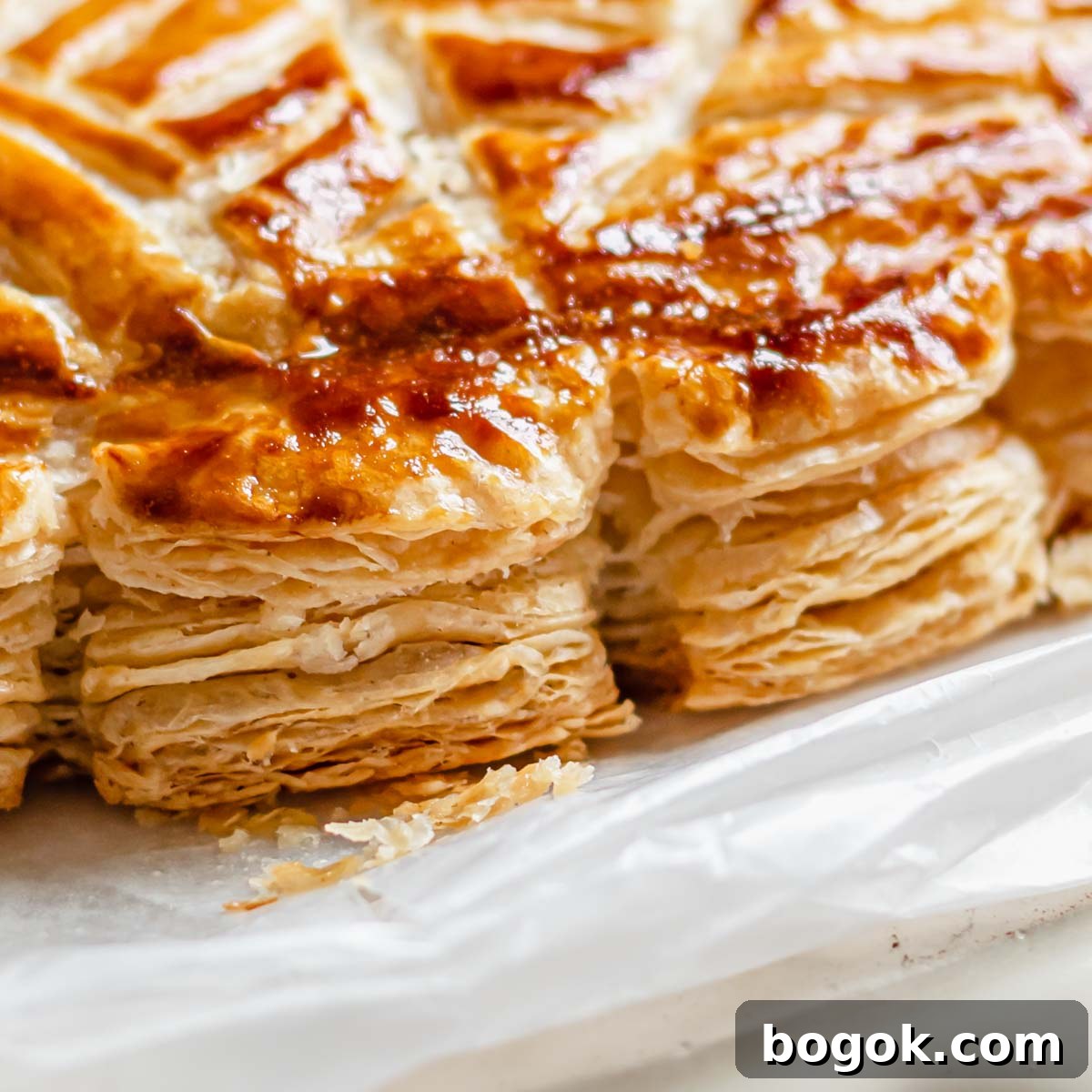
This quick flaky pastry recipe, also called rough puff pastry, produces crisp, layered results in a fraction of the time of traditional puff pastry. Made entirely by hand with just butter, flour, water and a pinch of salt, this dough comes together in about an hour and substitutes perfectly for store-bought puff pastry in both sweet and savory recipes.
Published 5/22/20; Republished 1/30/22
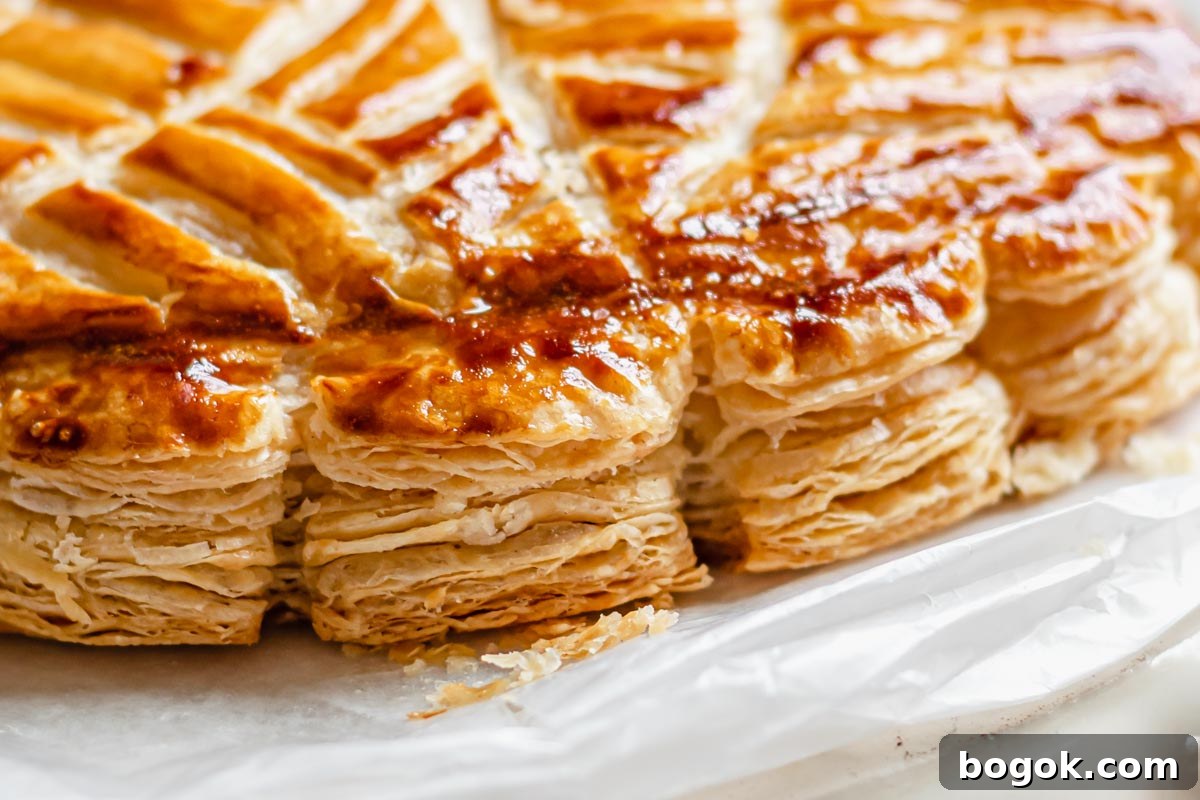
Rough puff pastry is a buttery, flaky dough that crisps into distinct layers when baked. It contains no yeast or eggs and is made entirely by hand—no food processor required. The ingredient list is delightfully short: unsalted butter, all-purpose flour, kosher salt and ice water.
The method is straightforward but requires short chilling periods between three series of folds. Total time can be as little as one hour, though allowing two hours ensures the butter stays properly chilled. Active hands-on time is roughly 30 minutes and will decrease as you gain experience.
This reliable rough puff pastry recipe gives you an easy way to make flaky pastry for any recipe that calls for puff pastry. Use it for tarts, danishes, turnovers, pot pie tops, sausage rolls or any application where you want crisp, layered pastry without the intensive labor of classic puff pastry.
What is Rough Puff Pastry?
Rough puff is essentially a shortcut to classic puff pastry. Instead of creating a separate butter sheet and enclosing it in dough, you break the butter into small pieces and coat it with flour, then form a shaggy dough. The dough is rolled and folded three times to create many alternating layers of dough and butter. The result is a very similar, flaky texture with far less effort.
How the Flaky Layers Are Created
As you fold and roll the dough, the butter is distributed into many thin sheets and pockets. During baking, the butter melts and releases steam, which separates and lifts the dough layers to create that characteristic flakiness. The butter also helps crisp the dough for golden, crunchy edges.
What Can You Make with Rough Puff Pastry?
Rough puff pastry can replace store-bought puff pastry in virtually any recipe. Use it for fruit danishes, galettes, turnovers, tarts, hand pies, pot pie tops, sausage rolls and more. It’s versatile for both sweet and savory preparations and often yields superior flavor because this version uses all butter instead of shortening or margarine.
Ingredient Notes
The fat-to-flour ratio for this recipe is 1:1 by weight. Choosing all-butter produces rich flavor and excellent crisping.
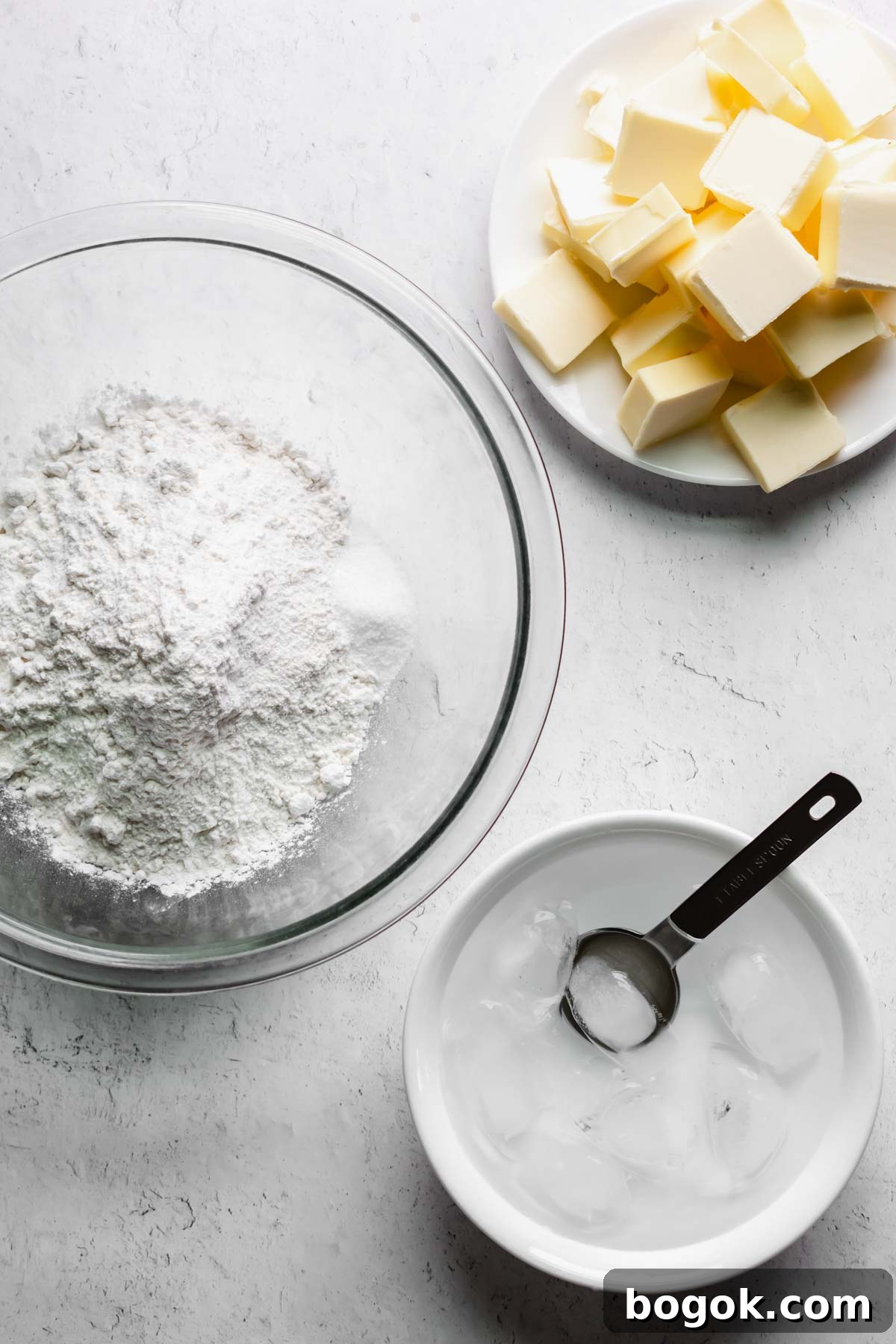
- Unsalted butter: Keep the butter cold and cut into tablespoon-sized pieces. Use 300 grams (about 1 cup + 4 tablespoons or 2 ½ sticks).
- All-purpose flour: 300 grams (about 2 ½ cups).
- Kosher salt: 1 teaspoon to enhance flavor.
- Ice water: A bowl of ice water is used to keep the dough cold while bringing it together. Add water by the tablespoon as needed.
Necessary Tools
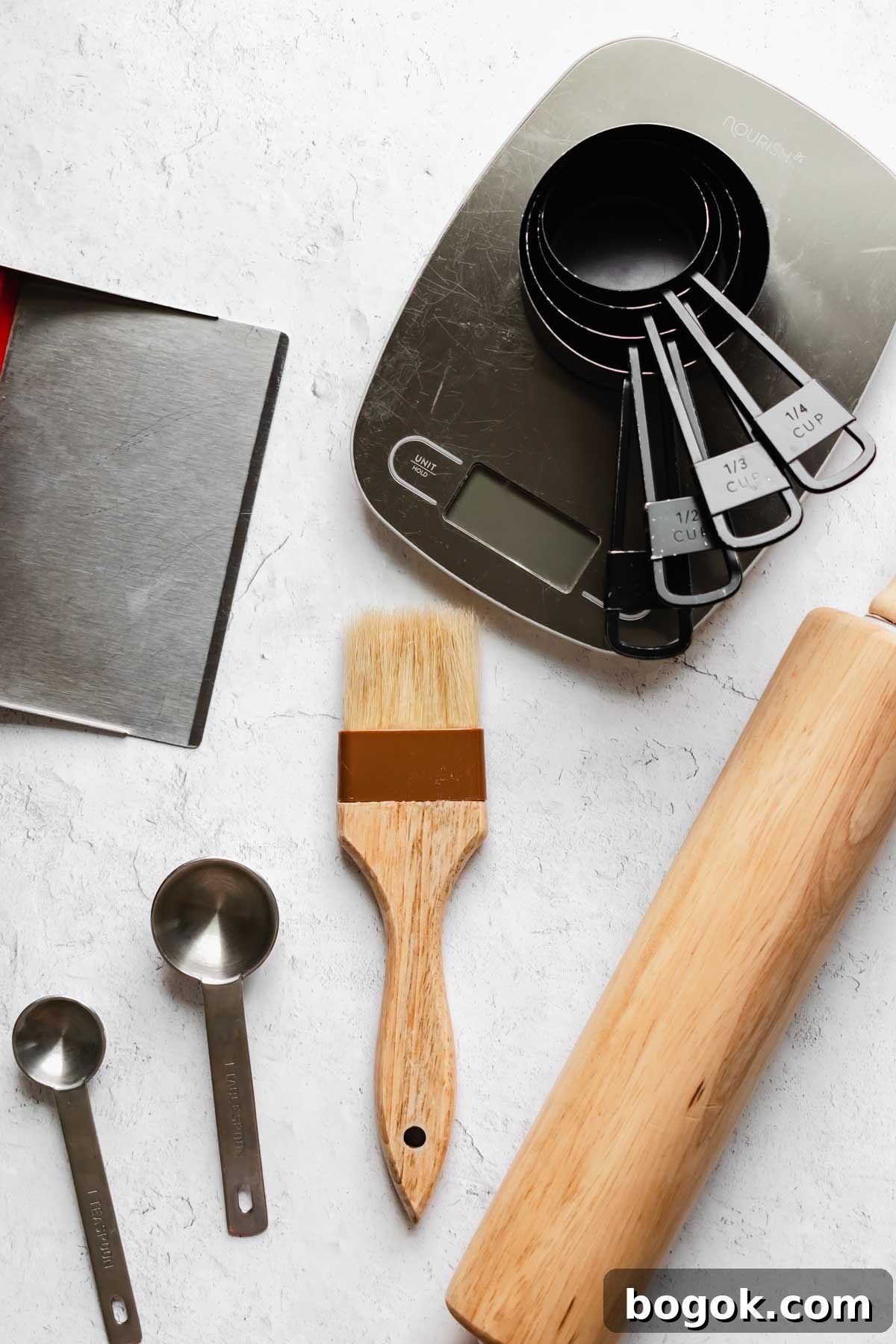
Basic tools make the process smoother:
- Large bowl
- Small bowl or cup for ice water
- Tablespoon and teaspoon measures
- Scale or measuring cups
- Rolling pin
- Pastry brush (soft-bristle; if unavailable, a crumpled paper towel works)
- Bench scraper (very helpful)
- Plastic wrap
-

Tools needed. -
Butter, flour, salt, and ice water.
How to Make Rough Puff Pastry
Read through the steps before you begin and have your tools and ingredients ready. Chill time between folds helps keep the butter firm; while it’s possible to skip chill time after practice, it’s best to follow it until you’re comfortable working quickly.
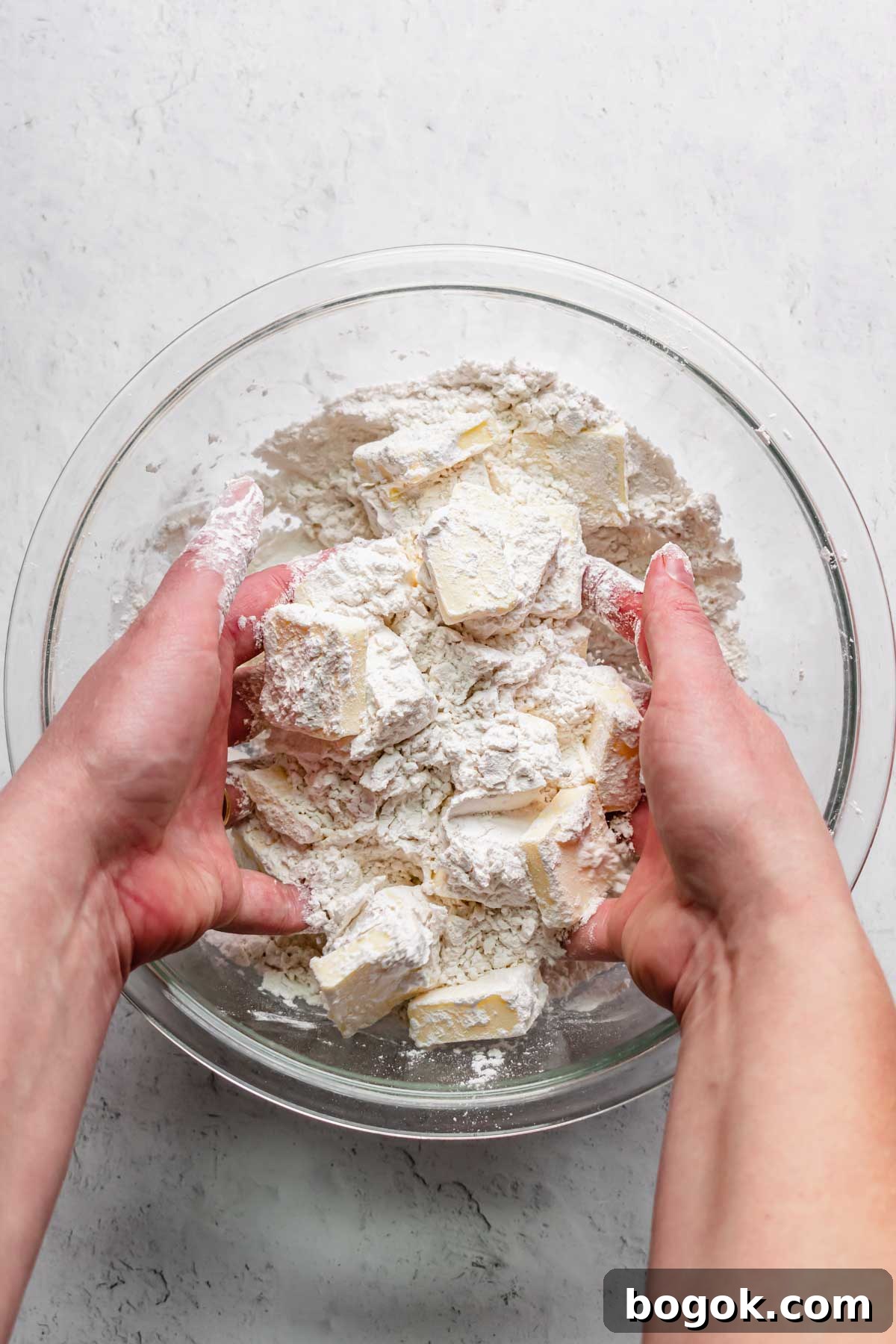
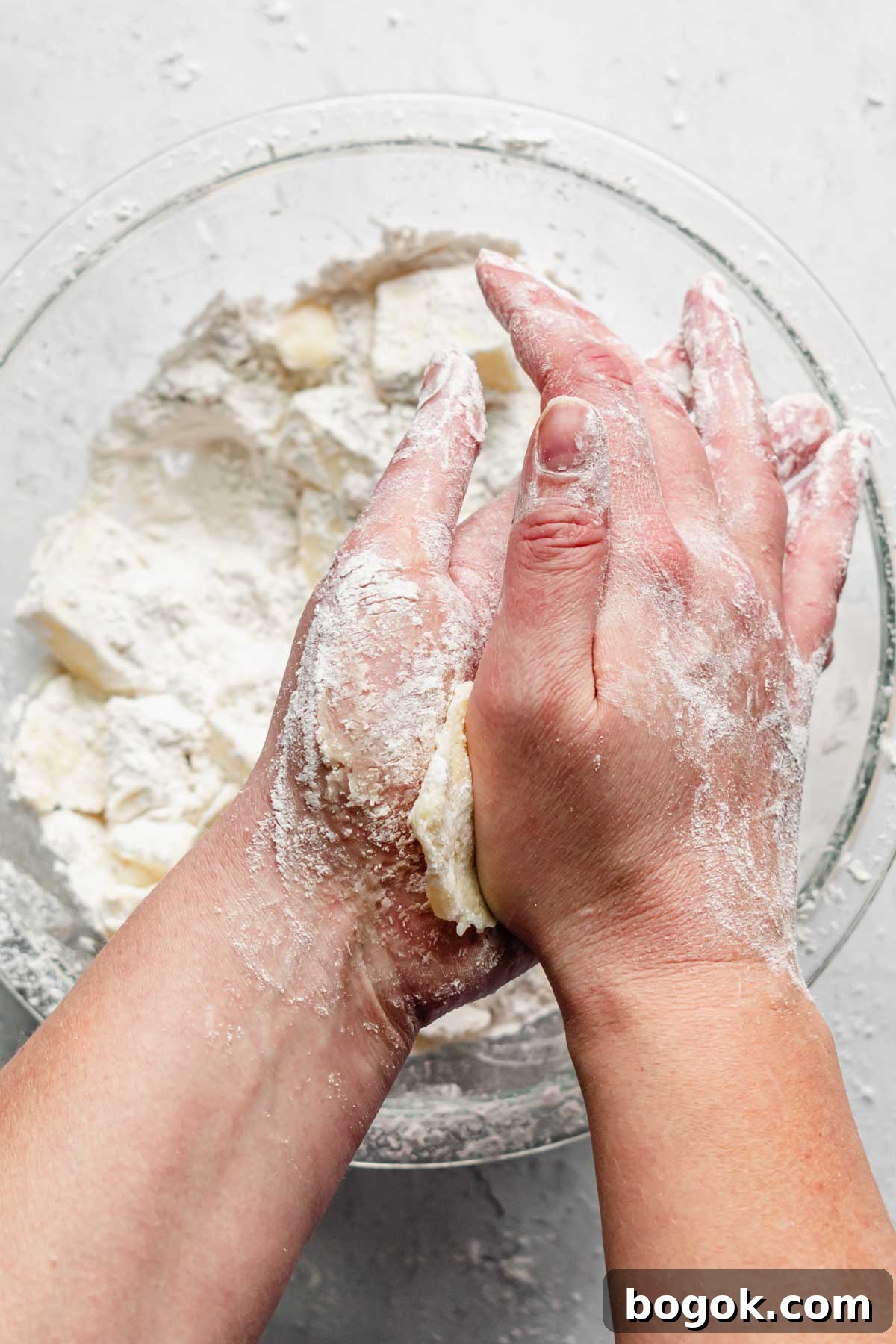
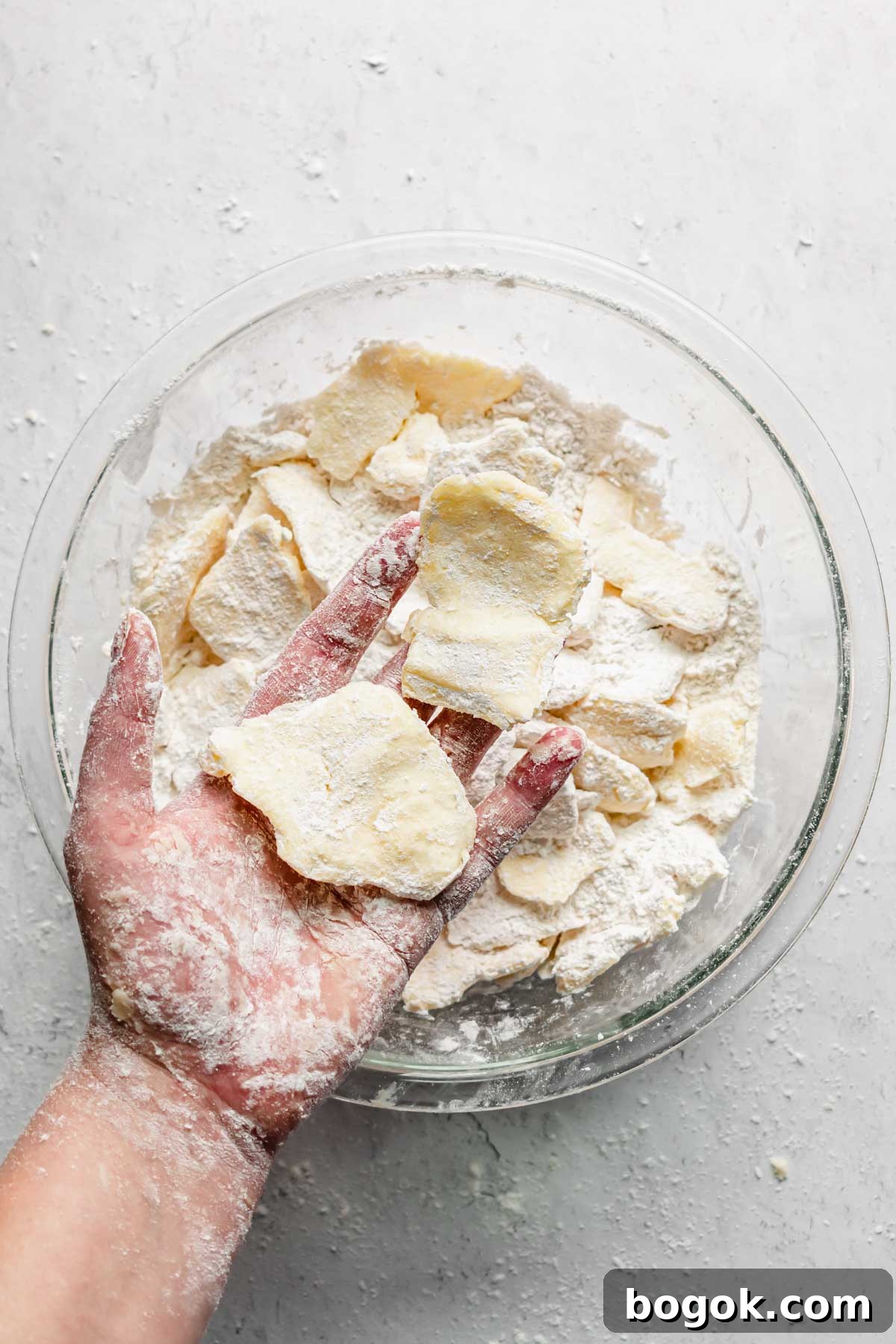
STEP 1: Cut the cold butter into tablespoon pieces and add them to the flour mixed with salt. Toss with wide fingers so each butter piece is coated in flour. Working quickly, flatten each piece of butter slightly between your fingertips or the heels of your hands; flour your hands if needed to prevent sticking.
-
Toss the butter to coat with flour. -
Flatten the pieces of butter. -
Flatten all pieces of butter and toss with flour.
Forming the Dough
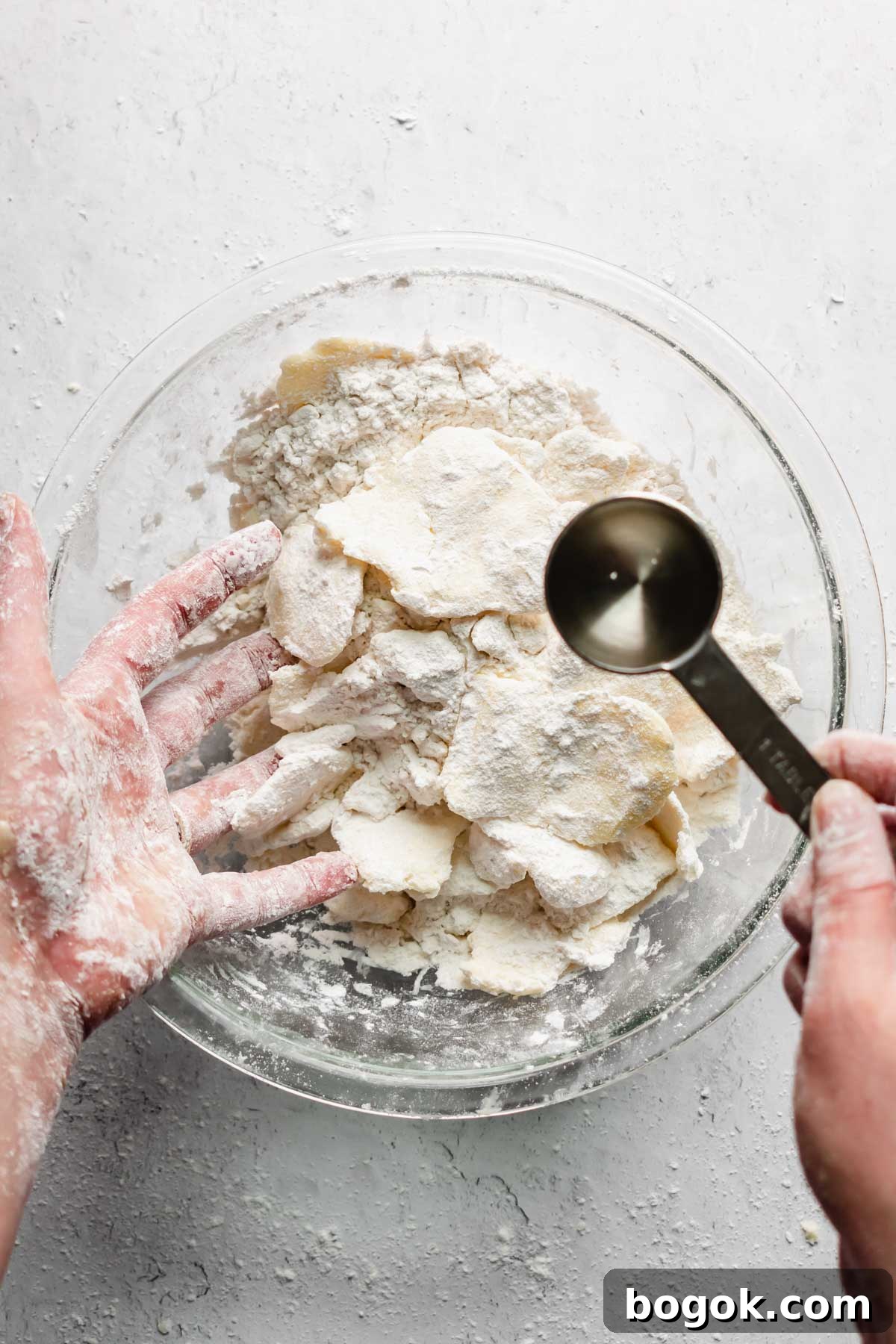
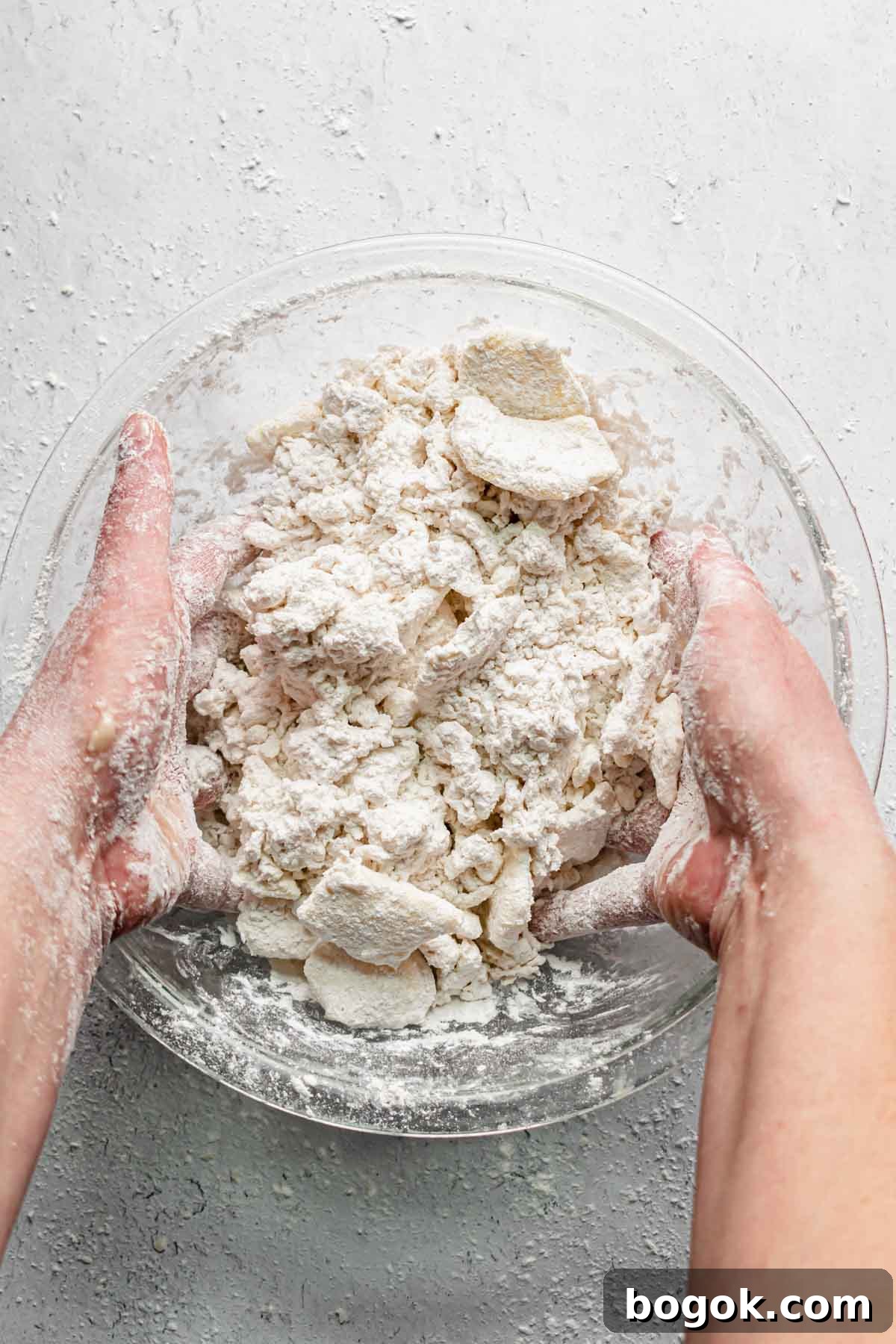
STEP 2: Toss the flattened butter pieces to ensure they’re fully coated. Drizzle one tablespoon of ice water at a time around the mixture, tossing with claw-like fingers between additions. After about 5 tablespoons the mixture will look shaggy. Add only enough water so the dry bits come together into a cohesive, non-sticky dough. The exact amount varies; stop when squeezing the dough causes it to hold together without crumbling.
-
Add a tablespoon of water and toss. -
Continue adding water and toss. -
Dough after 5 tablespoons of water added.
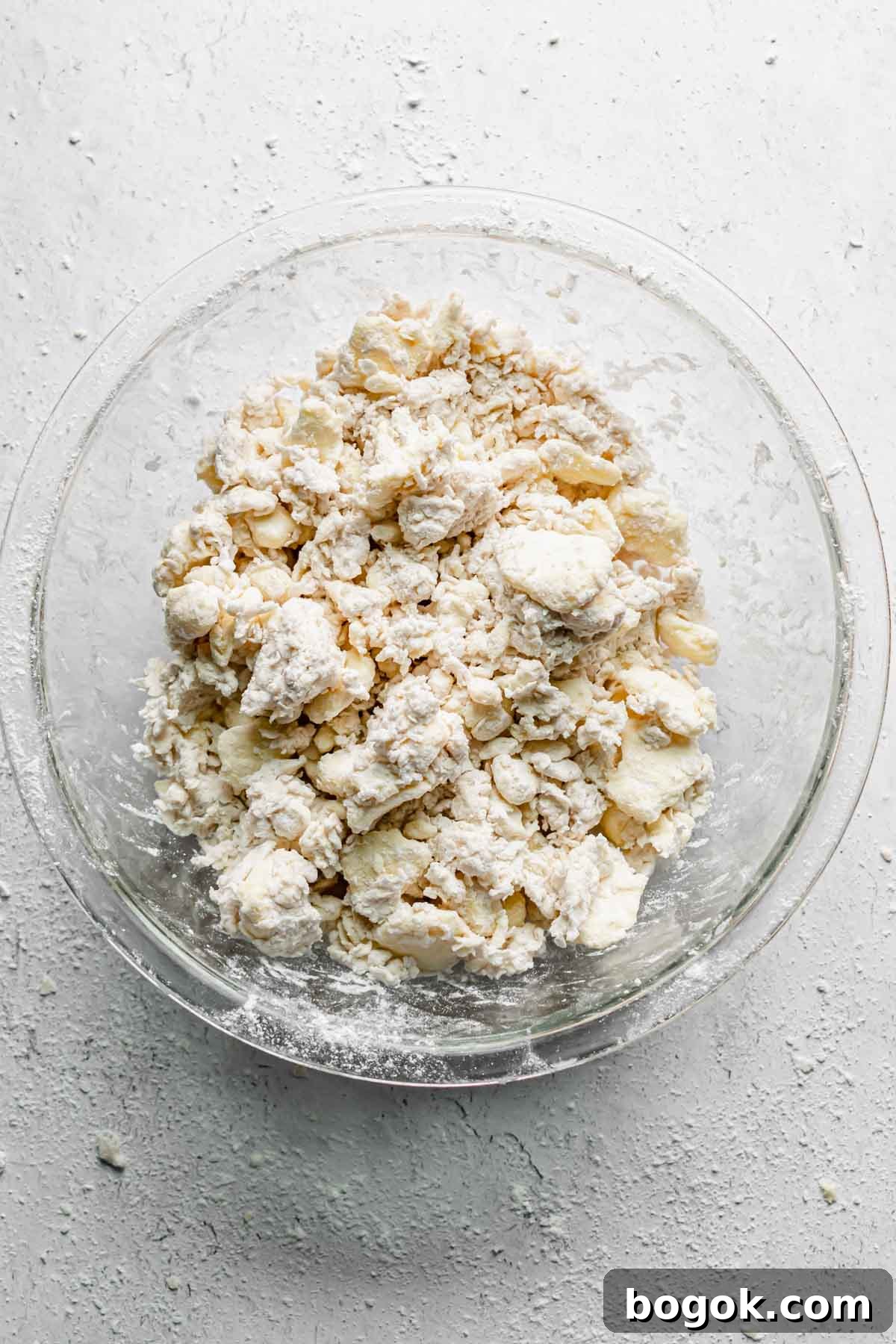
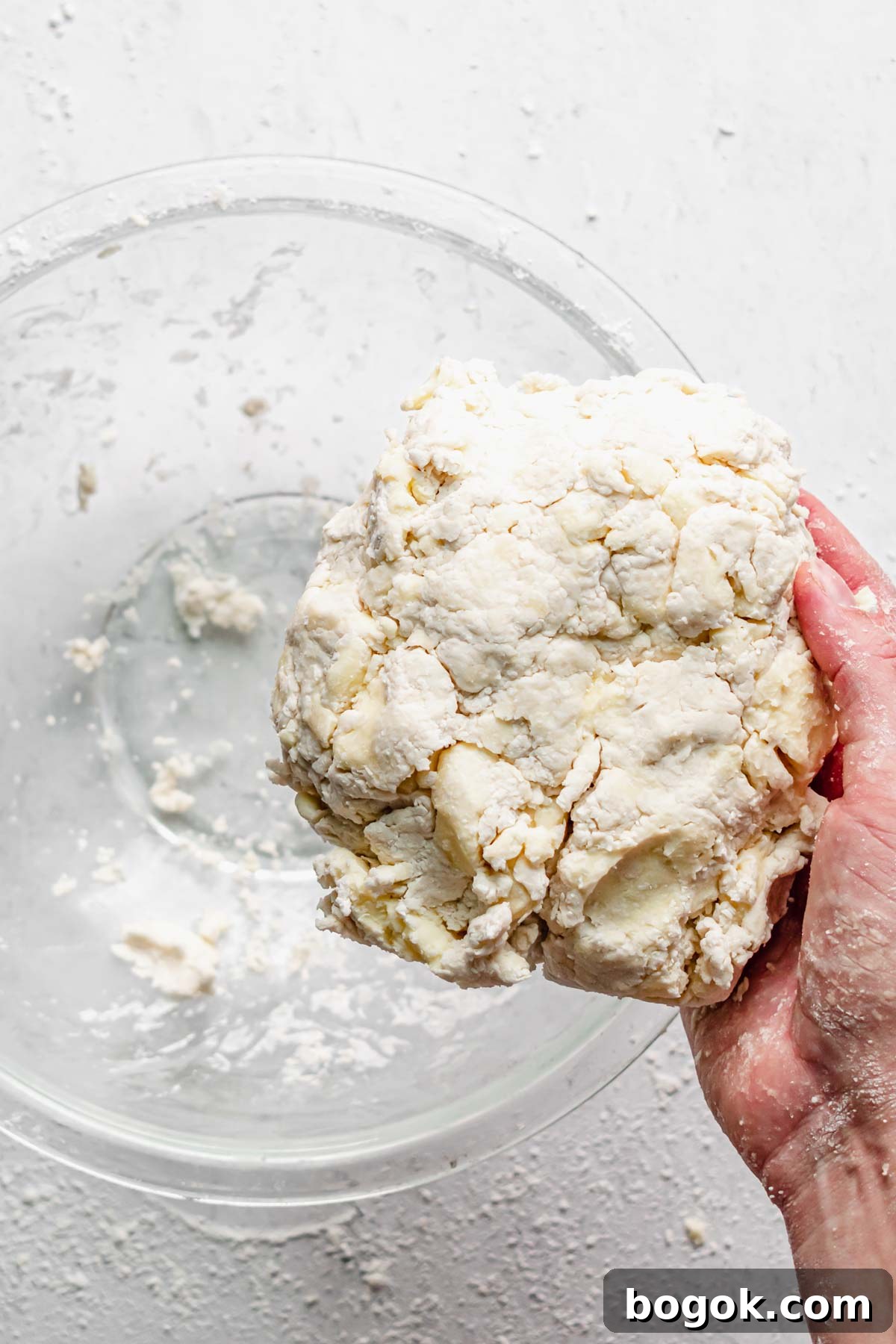
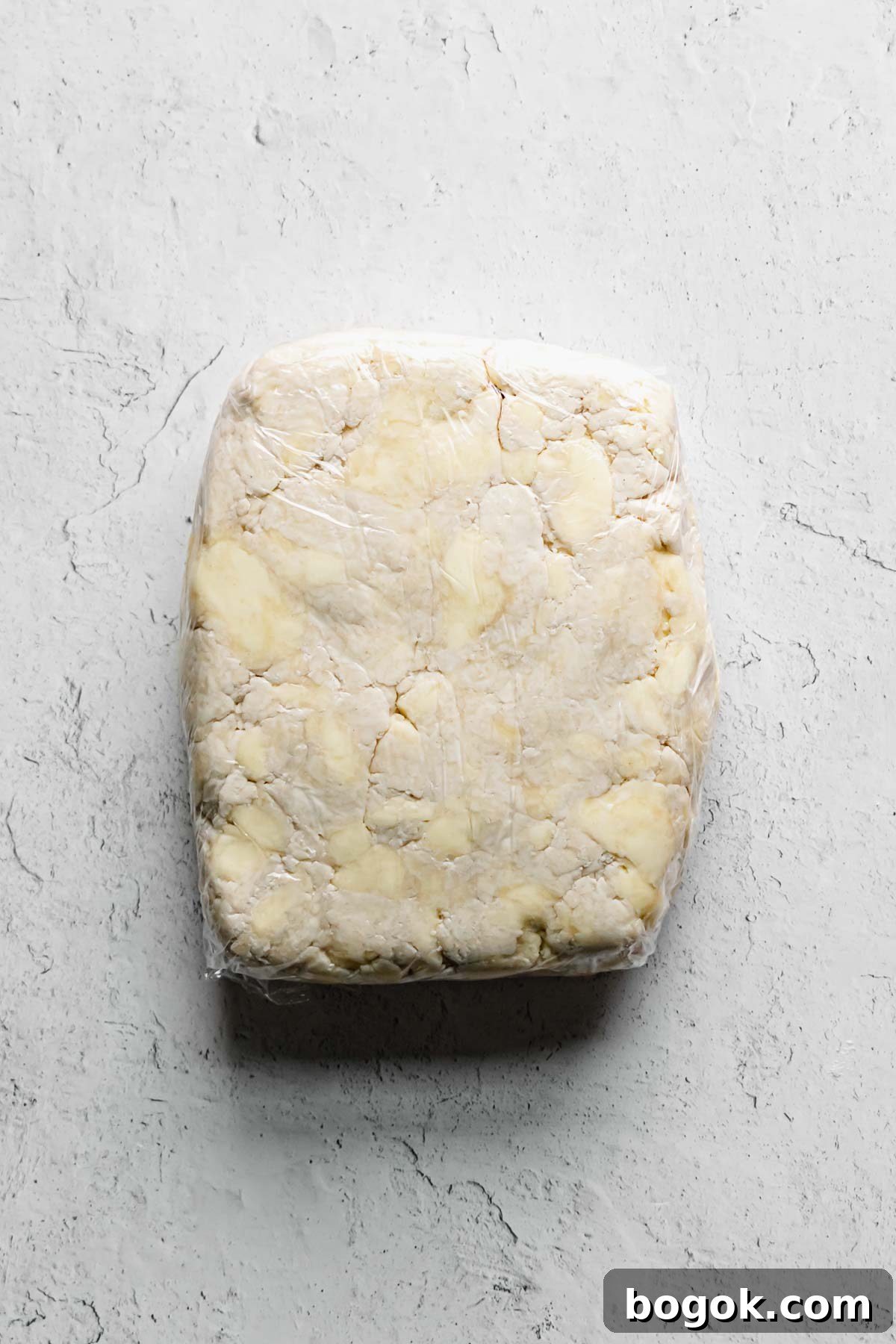
To confirm readiness, squeeze the mixture with both hands. If it holds together with no crumbs remaining and isn’t sticky or wet, it’s ready. Wrap the dough tightly in plastic and shape it into a rectangle to make rolling easier, then chill in the refrigerator for 20 minutes.
-
When the dough can hold together, it’s ready. -
Wrap in plastic and form into a rectangle.
Trifold or Envelope Fold (Pastry Fold #1)
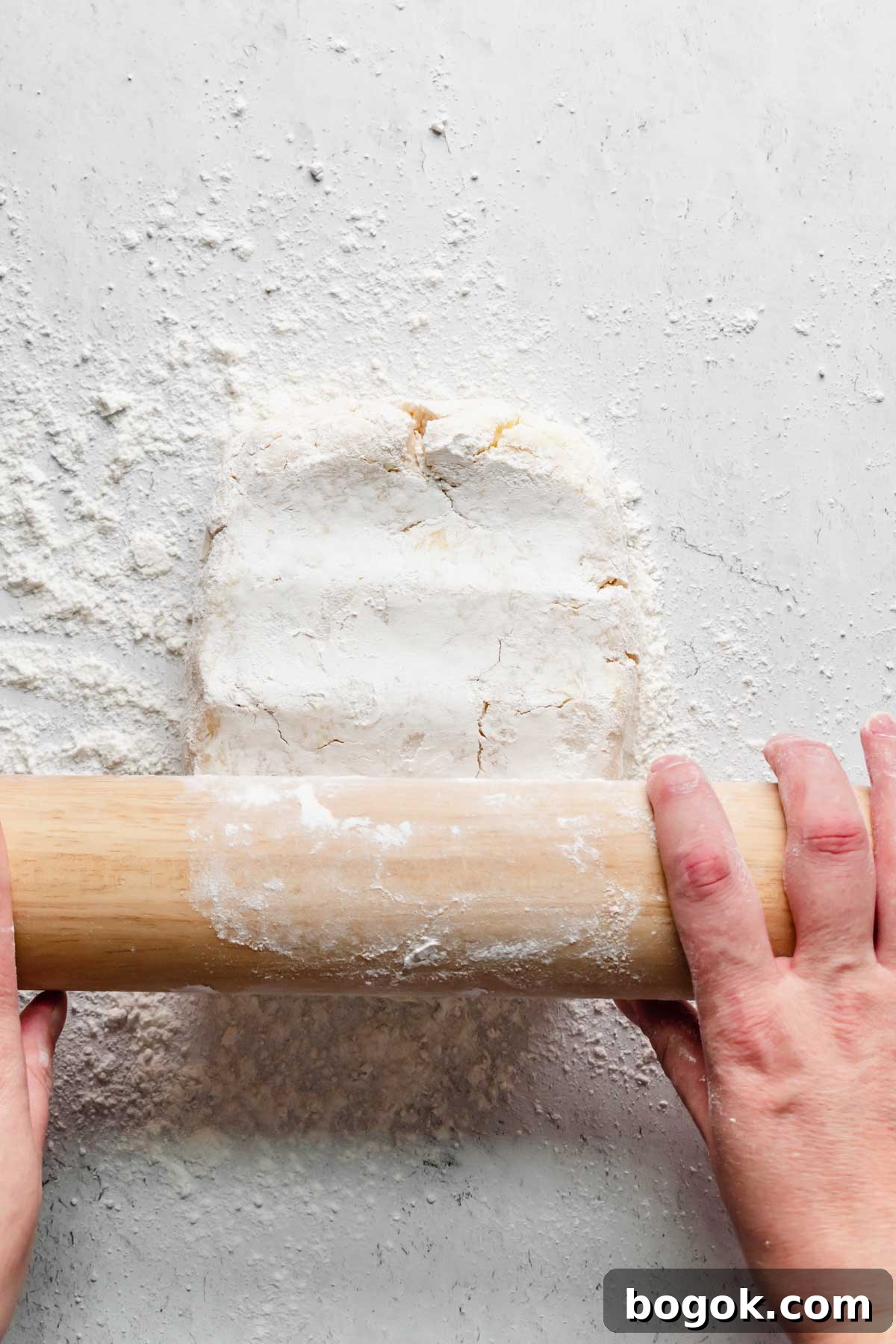
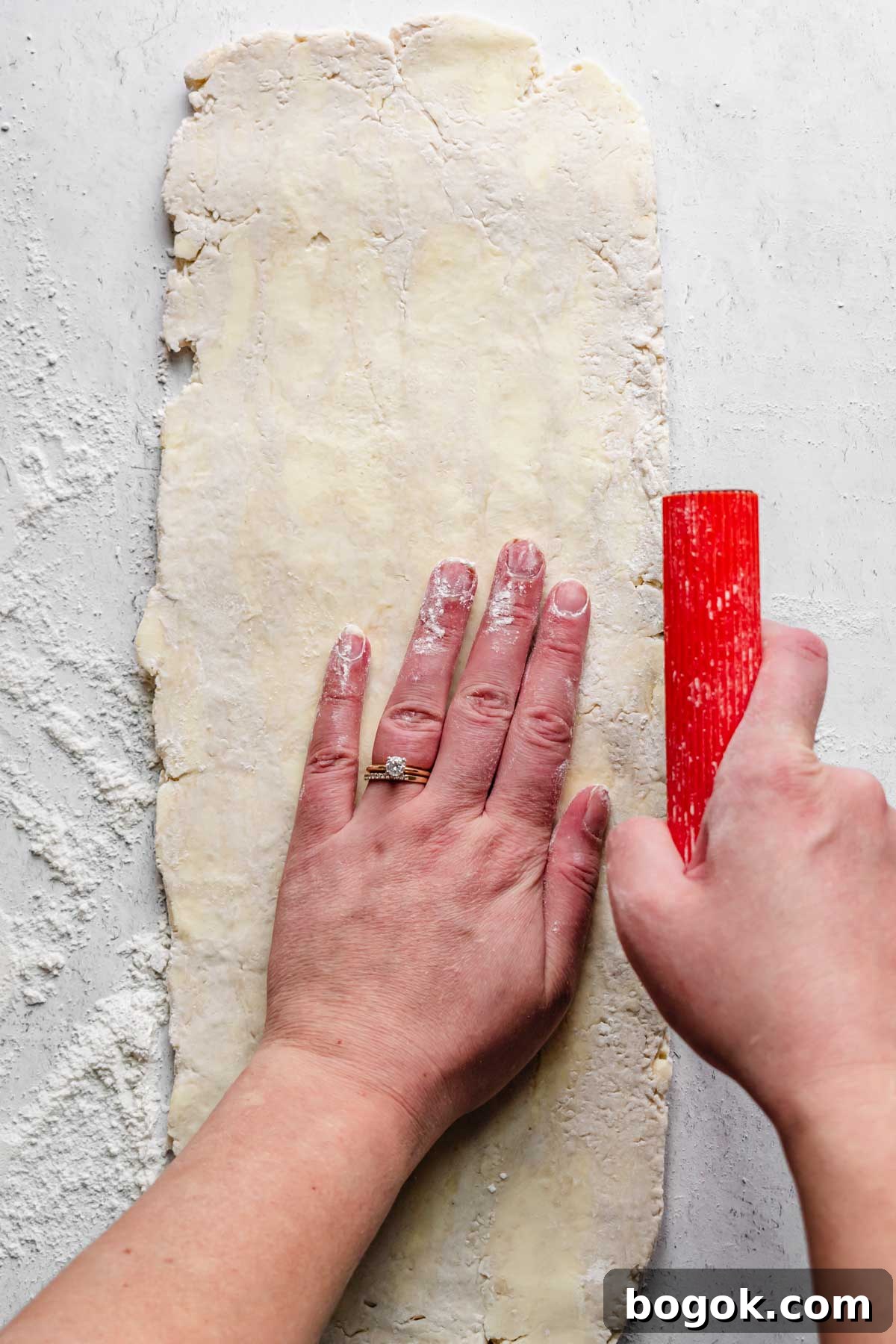
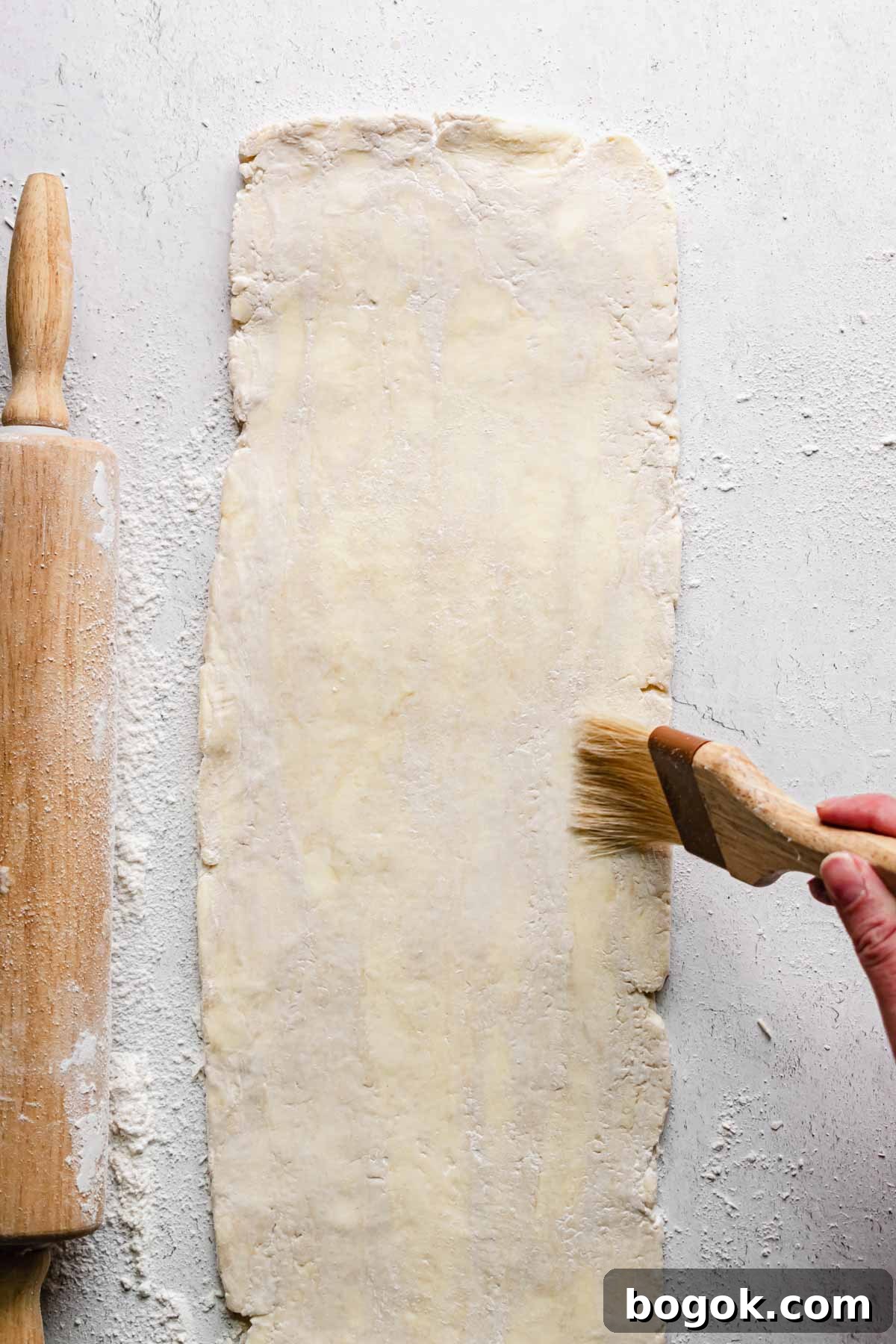
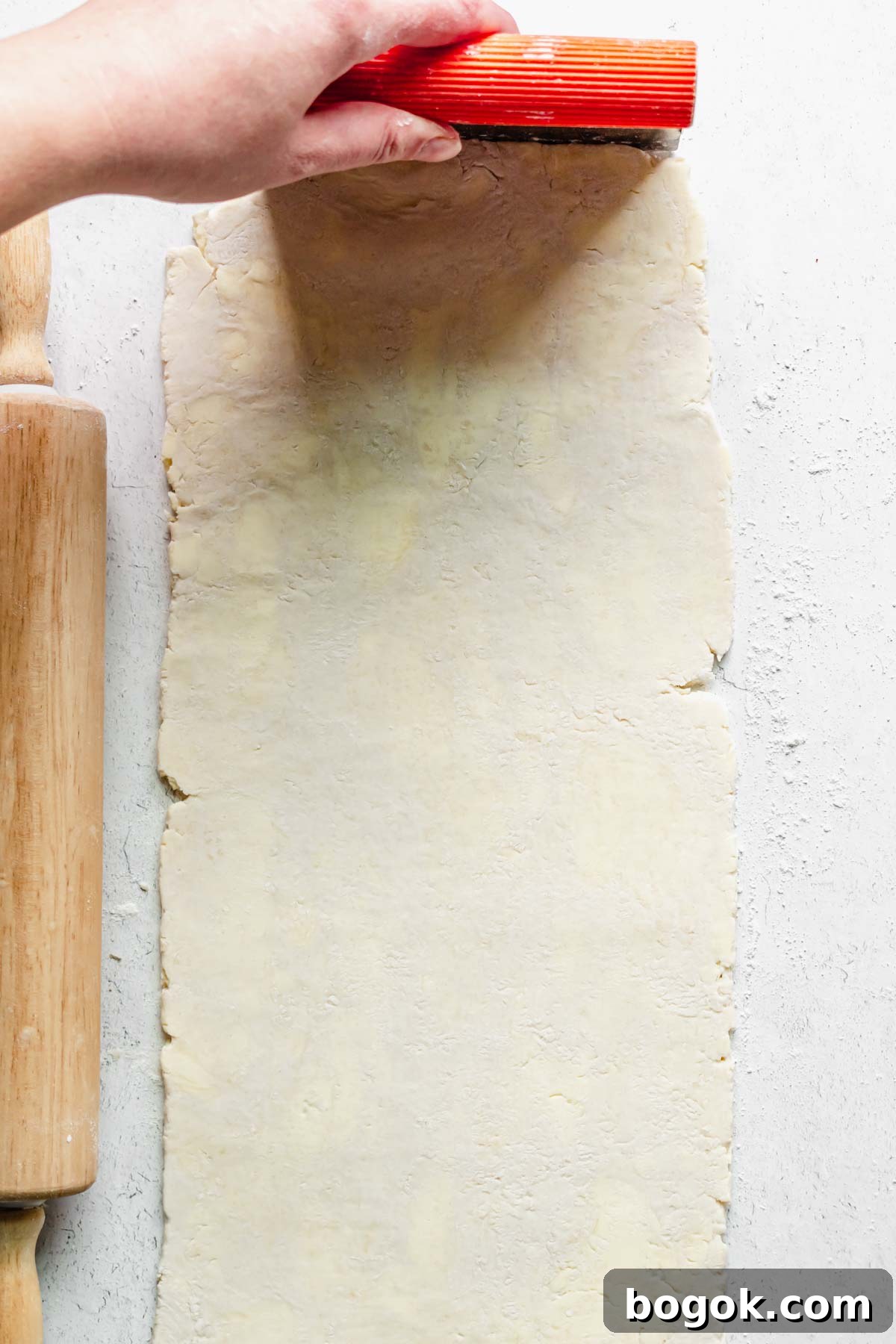
STEP 3: Unwrap and lightly flour your work surface and rolling pin. Roll the dough into a long rectangle about 1/4″ thick, using a bench scraper to keep clean edges. Brush excess flour off the top, then perform a trifold (like folding a letter): fold the top third down, brush off flour, fold the bottom third up and brush again. Turn the dough over, brush off flour, rewrap in plastic and chill for 15 minutes.
-
Flour a surface and begin to roll. -
Use a bench scraper to keep the edges clean. -
Remove excess flour with a pastry brush.
Book Fold (Pastry Fold #2)
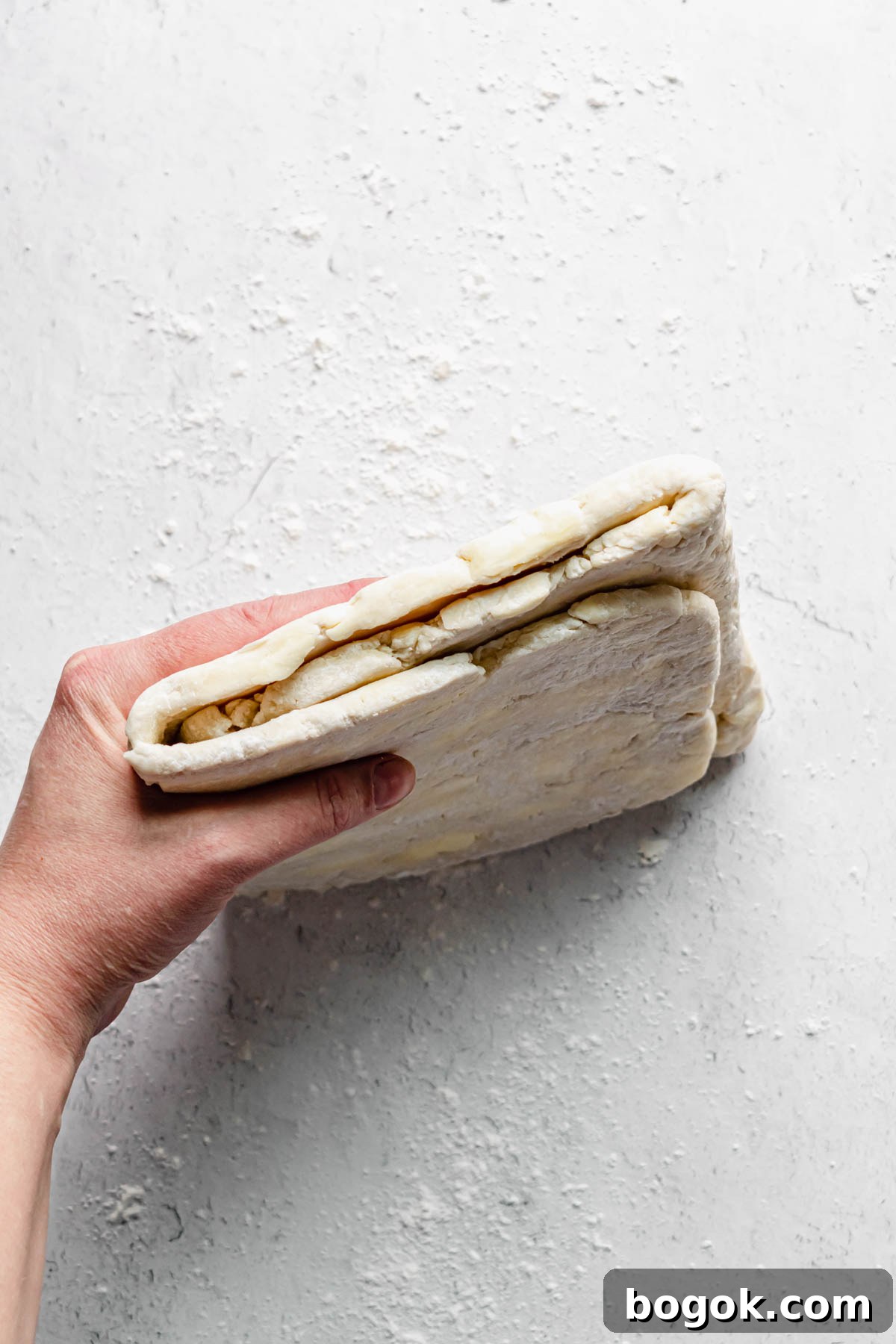
STEP 4: Remove the dough, place it so the folded cross-section faces you, and roll out again to the same dimensions. Brush off excess flour, then make a book fold: fold the top down to the middle, brush, fold the bottom up to meet it, then fold the dough like closing a book. Brush off any flour, wrap and refrigerate for 15 minutes.
-
Place the exposed edge towards the body for the next roll. -
Roll the dough out for the second time and square up the edges. -
Fold the top quarter down to half.
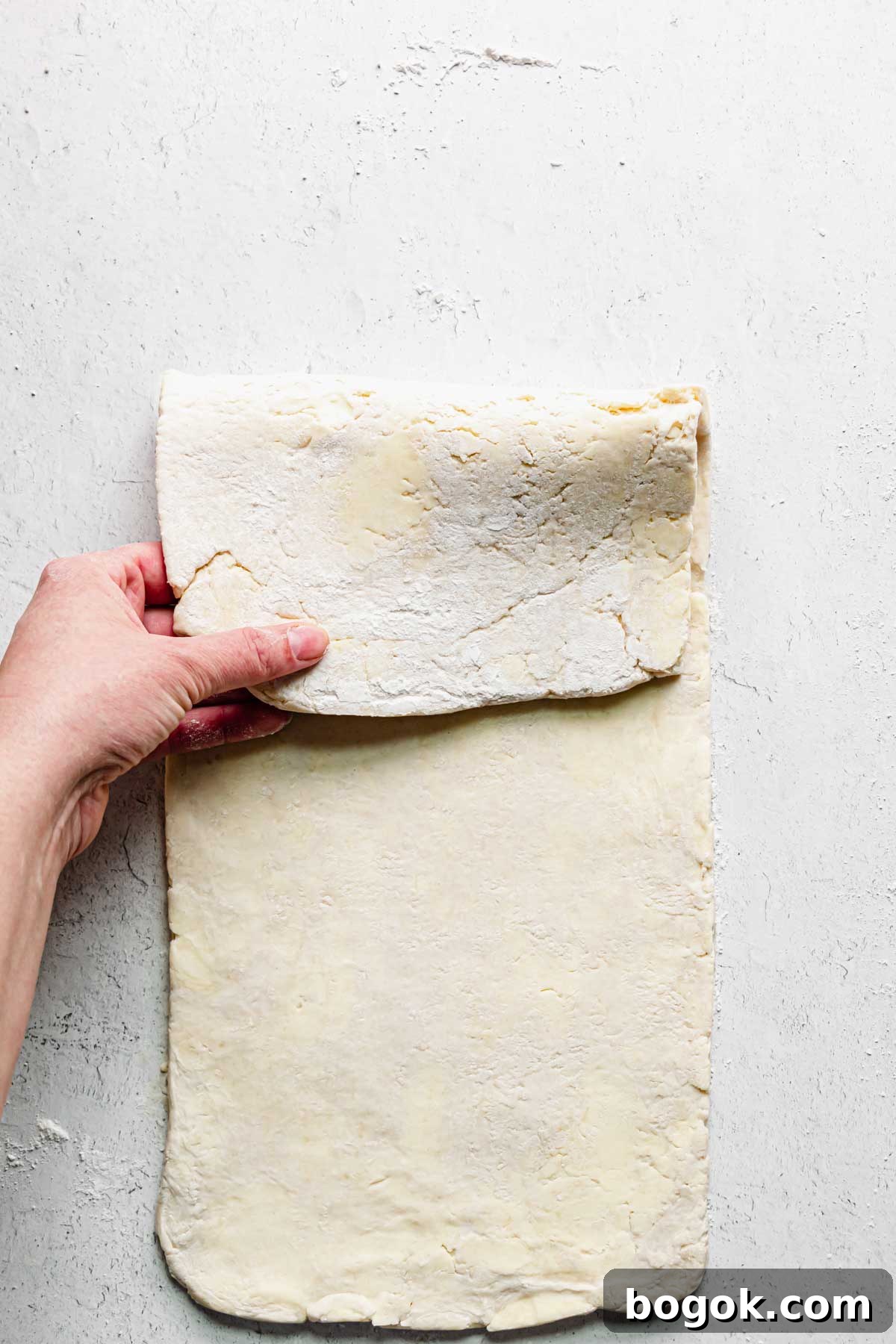
Book Fold (again) – Pastry Fold #3
STEP 5: Repeat the roll and book fold one more time. After this final fold, wrap the dough and chill another 15 minutes. At this stage the dough will feel soft and pliable but still cool. Clean your work surface before the final rollout.
-
Place the exposed edge towards the body for the next roll. -
Push the rolling pin into the dough a few times to start the roll. -
Roll out the dough and use a bench scraper to edge the sides.
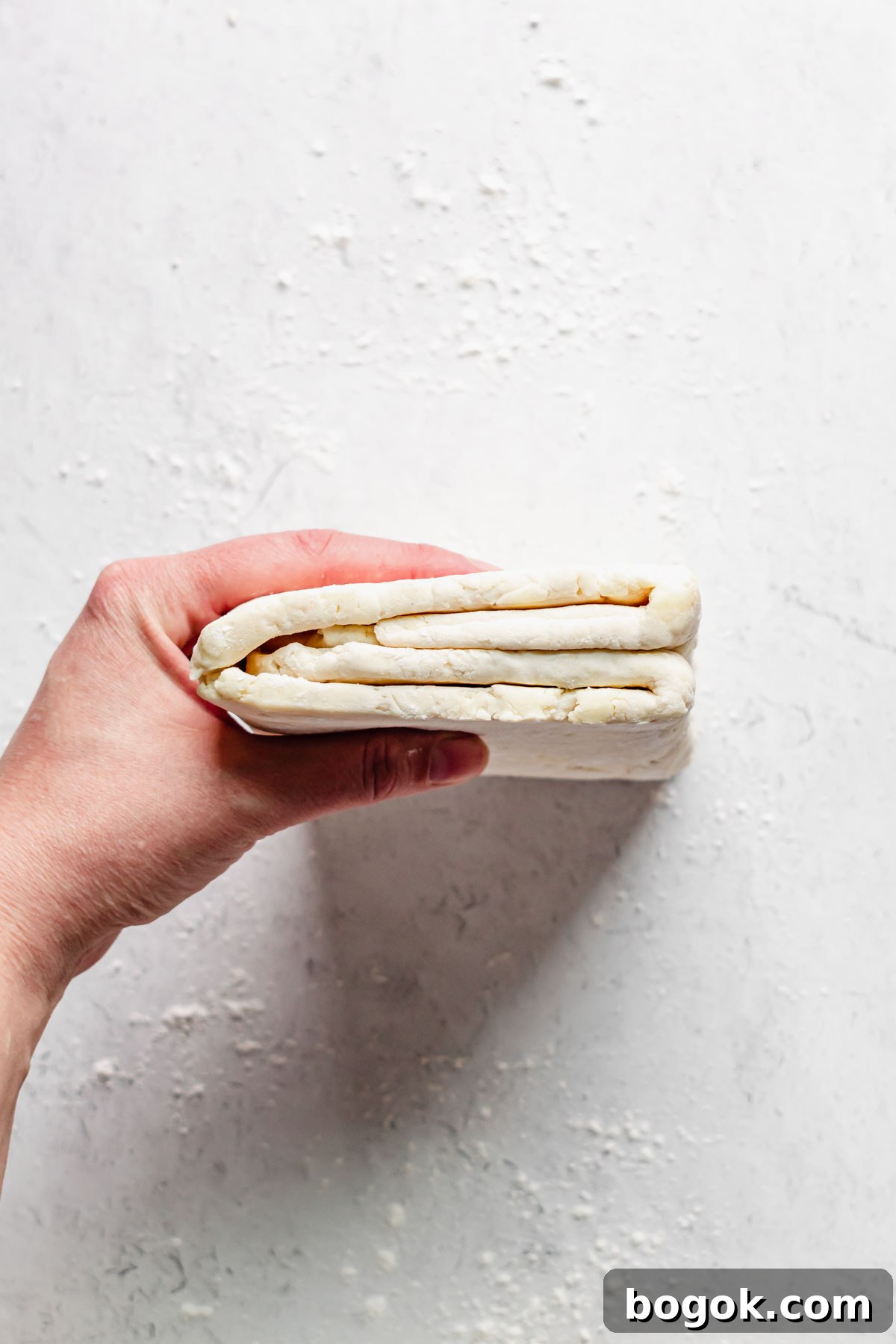
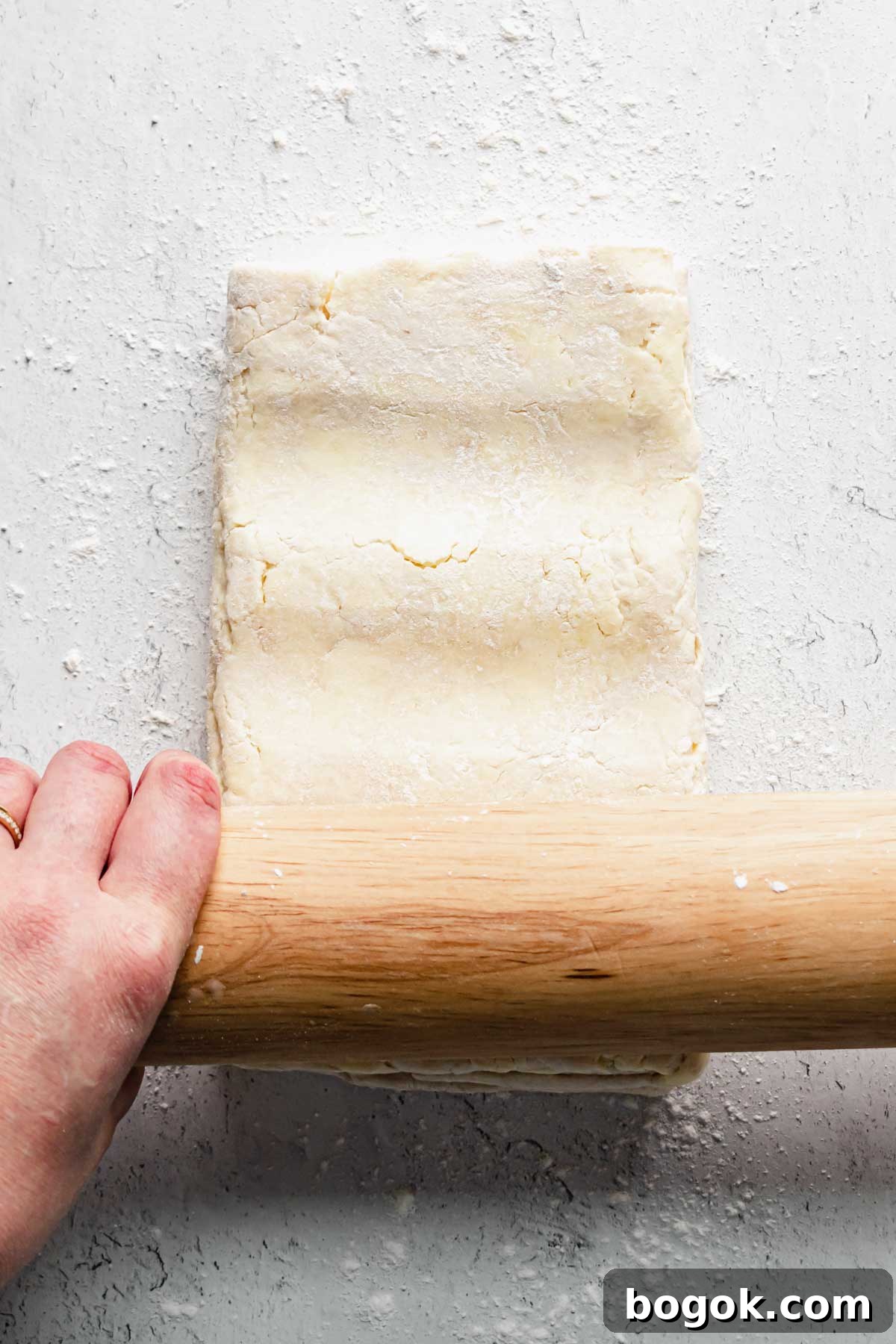
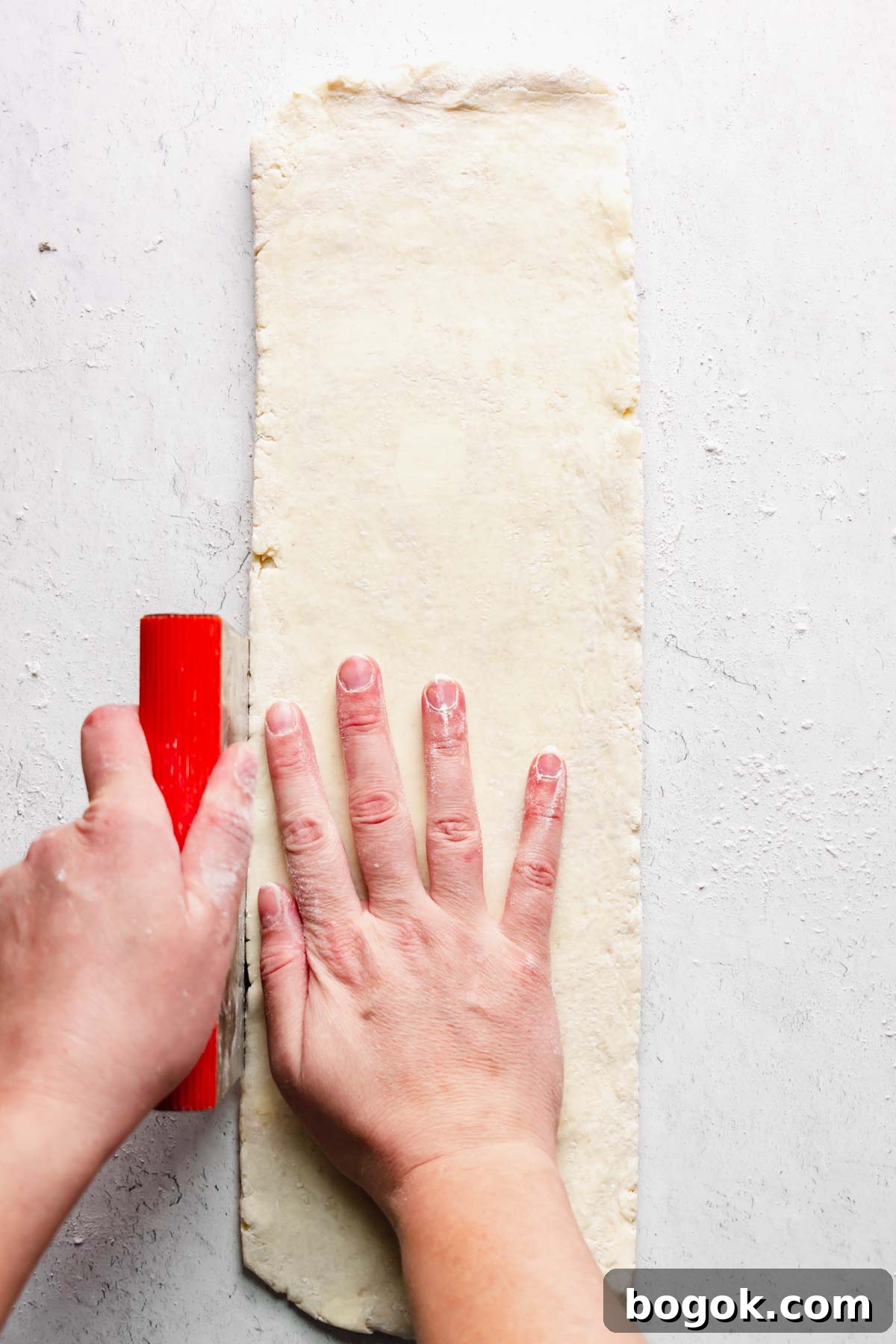
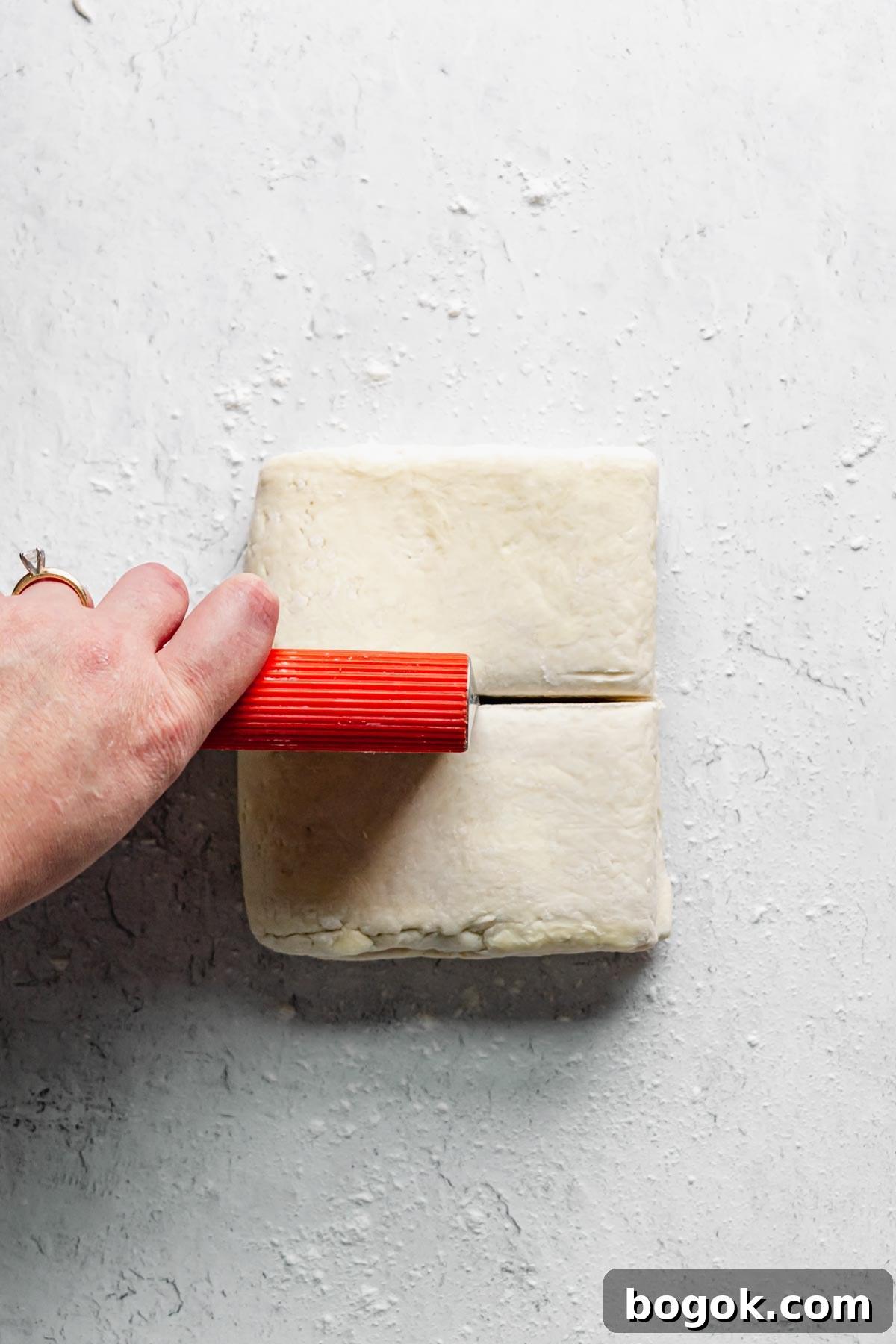
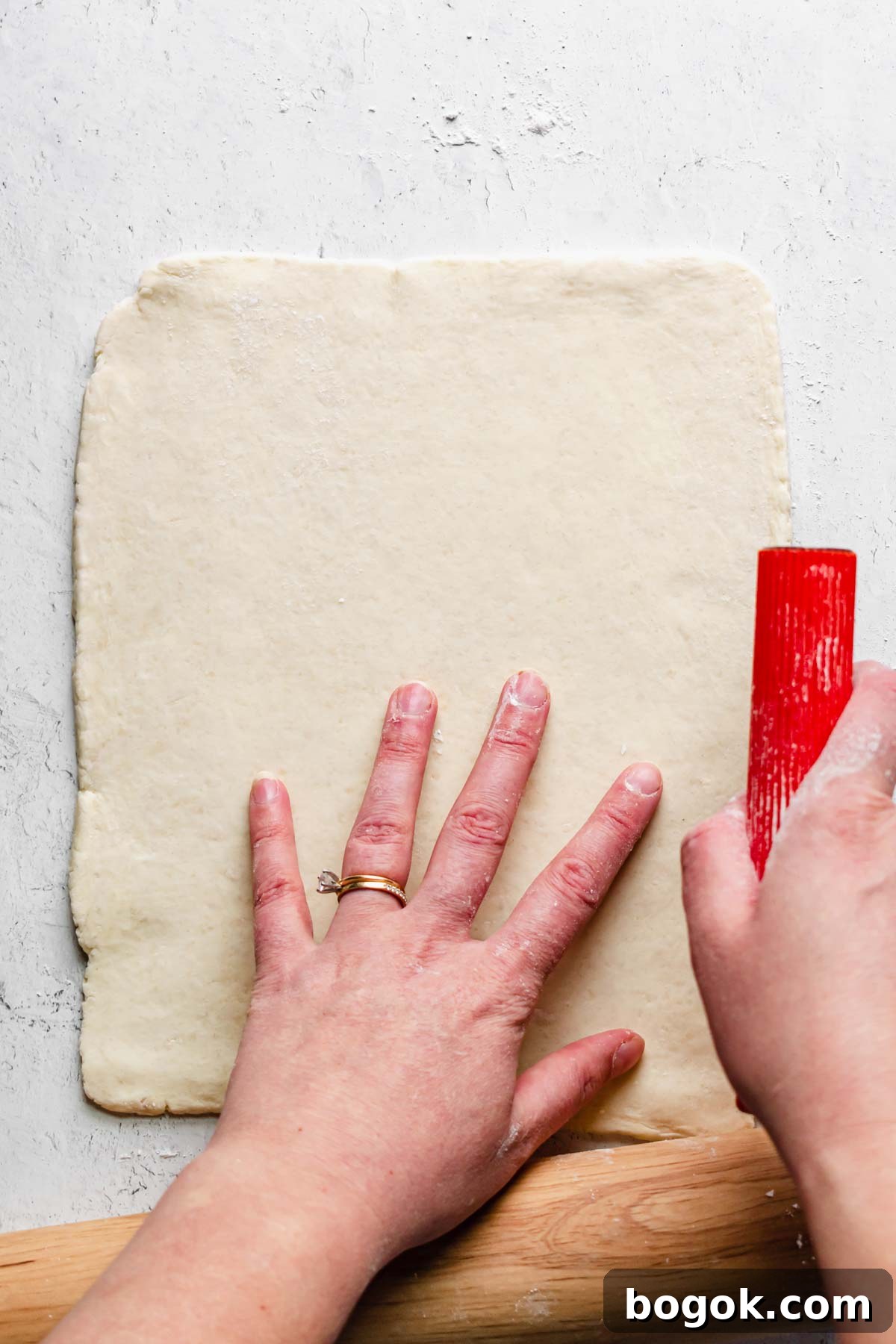
Now the dough can be rolled thin—about 1/8″ to 1/16″—and cut to shape for immediate use. Alternatively, roll to 1/4″ thickness, cut in half and fold or wrap for storage or freezing.
-
Cut the folded dough in half to create two pieces of pastry. -
Roll the dough out into a large rectangle to use or store.
How to Use and Bake the Rough Puff Pastry
After the final chill, place the dough with the folded edge facing you and roll it into a large sheet, turning it 90 degrees every few rolls to maintain a rectangular shape. Gently stretch and even the sides as needed, brushing off any excess flour. Cut to the desired shapes and follow the recipe you’re using for filling and baking.
How to Store Rough Puff Pastry
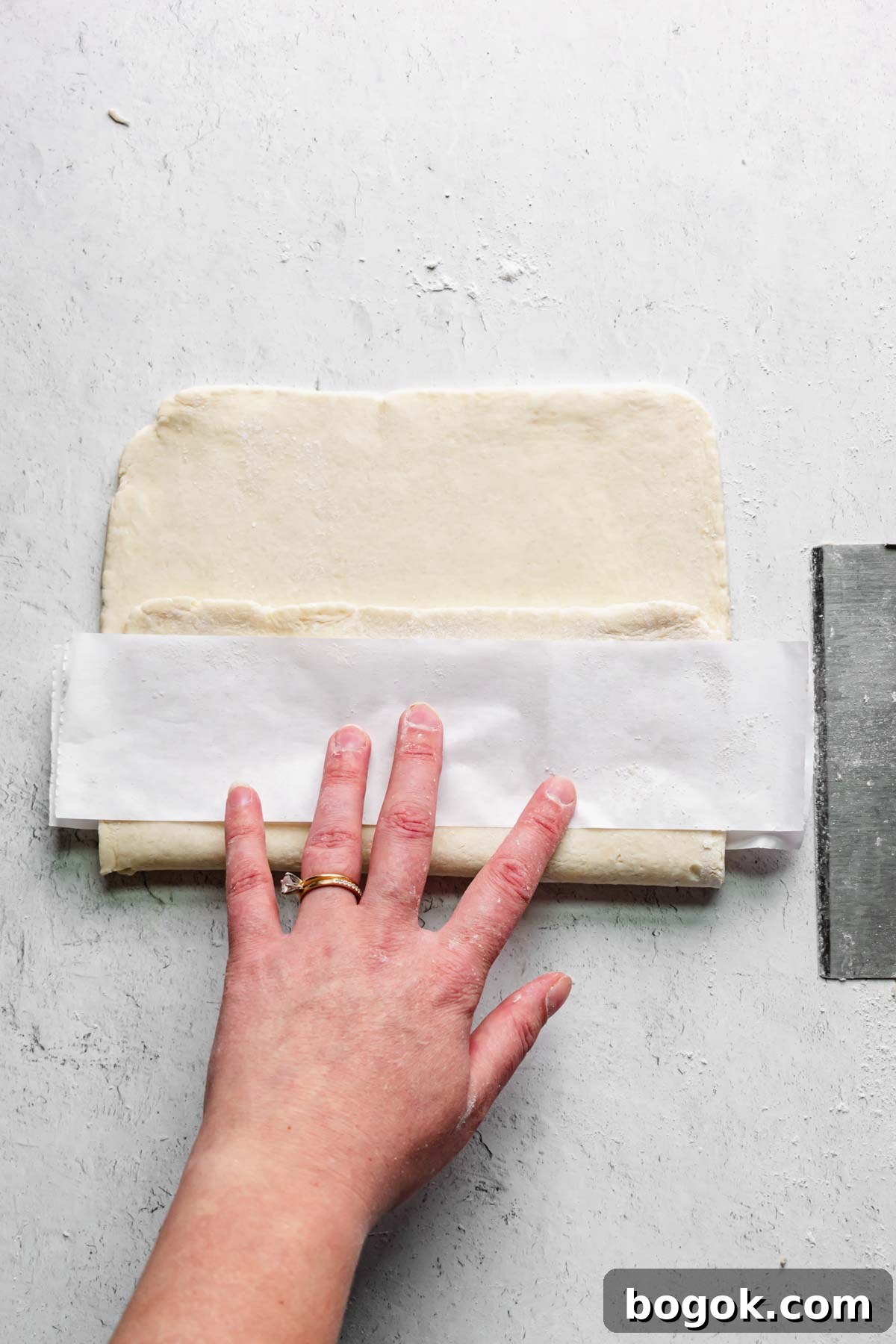
- Roll each finished piece to a 1/4″ thick rectangle.
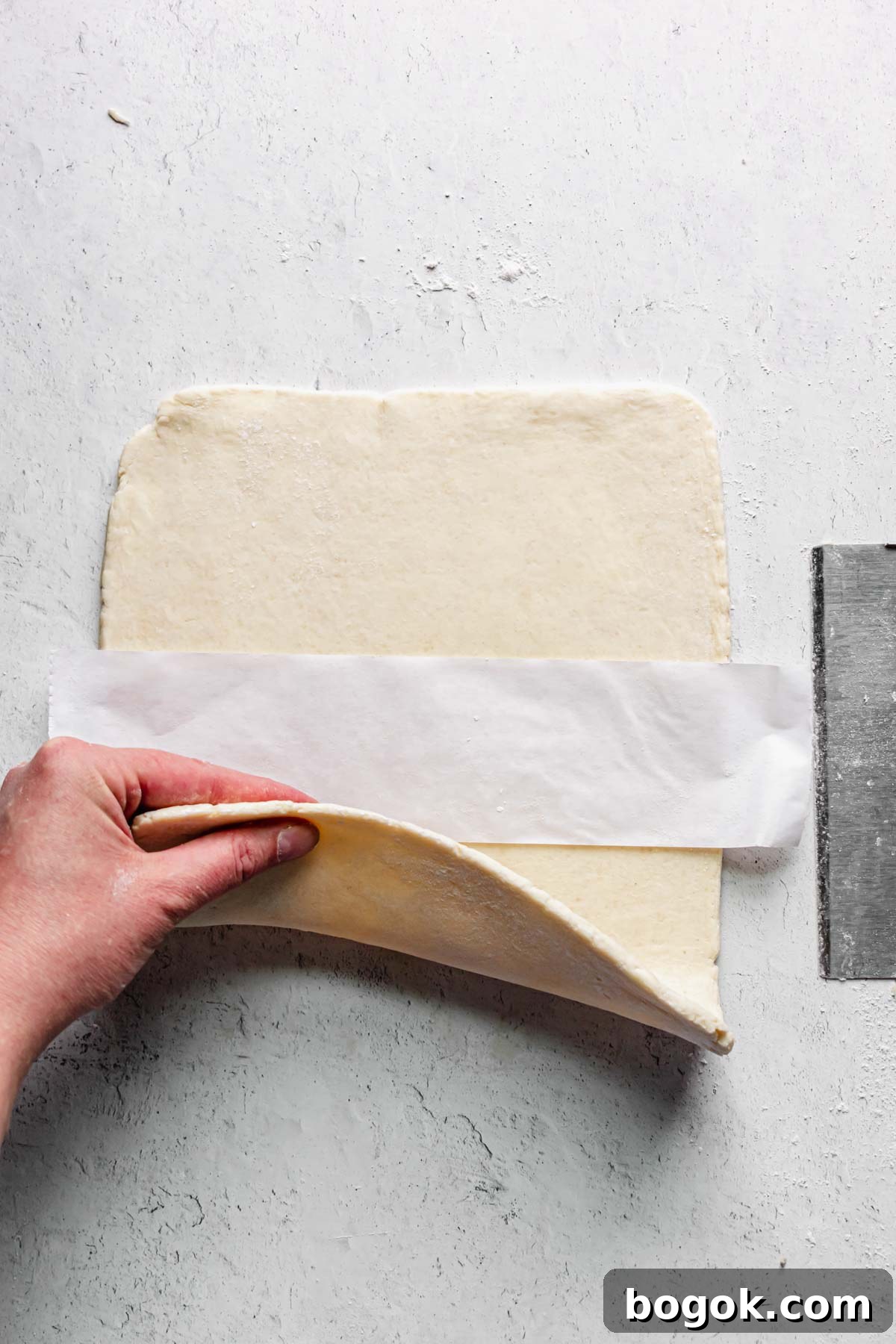
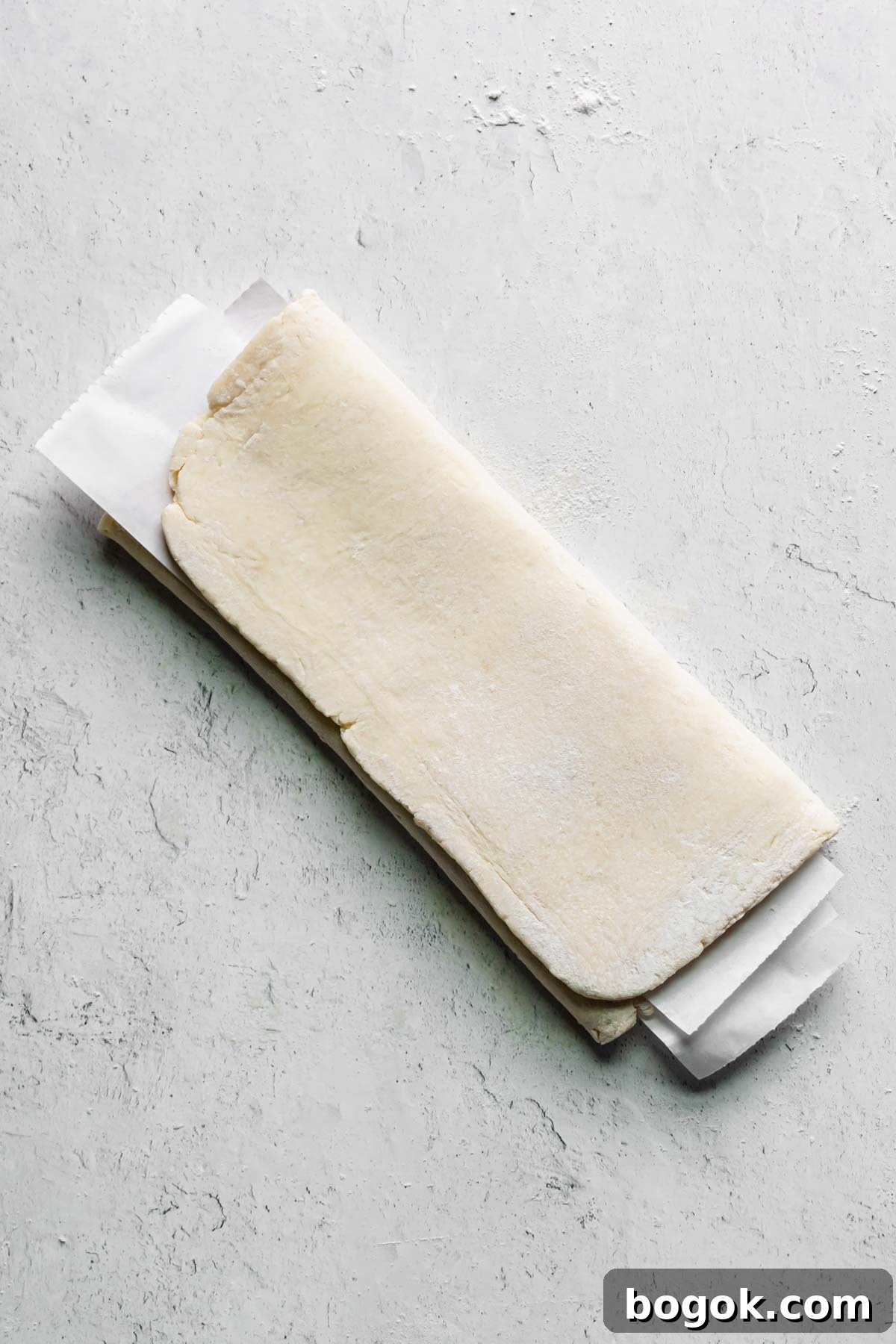
- Cut four 3-inch strips of parchment paper and place one in the center of each piece before performing a tri-fold.
- Wrap each folded piece tightly in plastic wrap, place in a gallon zip-top bag and refrigerate for up to 2 days or freeze for up to 2 months.
-
Add a strip of parchment to the center. -
Fold one third over and add another strip of parchment. -
Close the trifold and store in a ziptop bag.
Best Tips
- Handle the dough as little as possible—just enough to bring it together initially. Avoid overworking or squashing it into a ball.
- If butter appears on the dough surface while rolling, press a little flour onto it to prevent it from melting out and creating a greasy pastry.
- Lift the dough periodically while rolling and dust flour underneath as needed. Use a bench scraper to slide under the dough rather than your hands to keep it cold.
- Brush off excess flour between every fold. Too much incorporated flour will dry the dough and cause cracks.
- Chill the dough about 15 minutes between folding sessions. If it feels too soft, add 5–10 more minutes in the fridge; if too firm, rest 5 minutes at room temperature before rolling.
- Keep your work surface and tools clean of dry bits between folds and reuse the same plastic wrap for each chill session.
Further Baking Tips
- Avoid touching the cut edges after trimming—handling can seal layers and reduce rise. If an edge is pressed, recut it if possible.
- If using an egg wash, don’t get it on cut edges or it may seal them and prevent proper lift.
- Chill assembled pastries for at least 15 minutes before baking so the butter is cold and produces maximum steam and rise.
Storing and Freezing
To use refrigerated dough, let it sit at room temperature for about 5 minutes, then carefully unfold it. Repair any small cracks by gently pressing or moistening a fingertip and smoothing seams. Roll to 1/8″–1/16″ thickness for baking.
To use frozen dough, thaw in the refrigerator overnight or at room temperature for about an hour before unwrapping and rolling. Brush off any excess flour before assembling and baking.
FAQs
Roll the dough to about 1/8″ thickness and follow your recipe. Chill prepared pastry for 15 minutes before baking to ensure the best rise.
Bake at a high temperature, typically between 400°F (204°C) and 425°F (218°C), so the butter melts quickly and steam puffs the layers.
Use scraps to make mini turnovers, bake them flat as crisps, cut strips and twist with sugar and cinnamon, or freeze scraps to use as a topping for pot pie or other dishes.
Sometimes. Blind baking is used when you need a fully baked shell (for example, some tarts) or when making vol-au-vents.
Yes. Properly wrapped and stored, it keeps well in the freezer for up to two months. Thaw in the refrigerator then roll and use as directed.
Related Pastry Recipes
- All-Butter Pie Crust
- Sweet Tart Crust (Pâté Sucrée)
- Chocolate Sweet Tart Crust (Pâte Sucrée)
Did you make this recipe? Tag me on Instagram or Facebook and leave a star rating below. For more ideas, save it to your boards.
📖Recipe
Rough Puff Pastry (with video)
Callan Wenner
Equipment
- Large bowl
- Small bowl or cup
- Tablespoon measure
- Teaspoon measure
- Scale or measuring cups
- Rolling pin
- Pastry brush
- Bench scraper
- Plastic wrap
Ingredients
- 300 grams unsalted butter, cold (about 1 cup + 4 tbsp or 2 ½ sticks)
- 300 grams all-purpose flour (about 2 ½ cups)
- 1 teaspoon kosher salt
- Ice water, as needed
Instructions
- Cut the butter into tablespoon pieces and place on a plate. Combine flour and salt in a large bowl and prepare a bowl of ice water.
- Add the butter to the flour and toss with wide fingers so each piece is coated.
- Quickly flatten each butter piece slightly with your fingertips or between the heels of your hands; flour your hands if needed.
- Toss again, then drizzle 1 tablespoon of ice water at a time, tossing between additions. After 4–6 tablespoons the mixture should look shaggy; add just enough water so the dough holds together without becoming sticky.
- Squeeze the mixture—if it holds together without crumbling and isn’t sticky, it’s ready. If too wet, sprinkle 1 tablespoon flour and incorporate.
- Place the dough on plastic wrap, press into a rectangle, wrap tightly and chill 20 minutes.
- Unwrap, lightly flour the surface and rolling pin, and roll to about 1/4″ thick into a long rectangle. Brush off excess flour and perform a trifold (top third down, bottom third up), brushing off flour between each step. Rewrap and chill 15 minutes.
- Roll again with the folded cross-section facing you, brush off flour and complete a book fold (top to middle, bottom to middle, then fold like a book). Wrap and chill 15 minutes.
- Repeat the roll and book fold once more, then chill 15 minutes.
- Final roll: place the folded edge toward you and roll to desired thickness—about 1/8″ for immediate use. Cut and assemble according to your recipe.
Video
Notes
This recipe yields two standard store-bought-sized puff pastry sheets; halve it to make one sheet. For best results weigh ingredients with a digital scale to maintain the 1:1 ratio. If using cups, measure flour correctly by spooning and leveling.
During rolling, use a bench scraper to lift the dough and add a light dusting of flour underneath if it begins to stick. If butter becomes exposed, rub a little flour onto it and continue rolling. Brush off excess flour between folds. If you don’t have a pastry brush, a crumpled paper towel works well.
Freezing instructions:
- Roll the finished dough to 1/4″ thickness and cut in half.
- Place a 3-inch strip of parchment in the center, fold in a tri-fold, and repeat with the second piece.
- Wrap each piece in plastic wrap, place in a gallon zip-top bag and freeze up to 3 months. Thaw in the refrigerator overnight or at room temperature for about an hour before rolling and using.