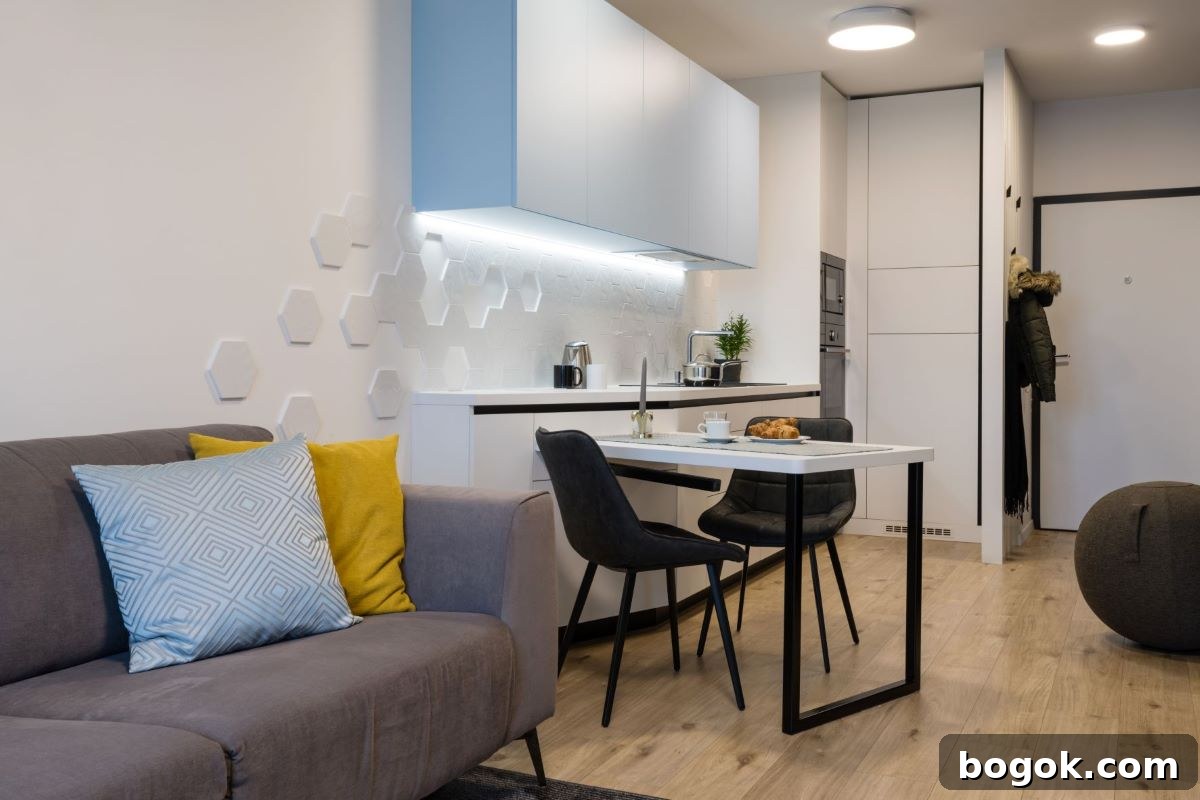
More of us live in smaller homes due to affordability and practicality. Here are practical small-space living tips to make the most of your home.
As Australians we have long favoured large homes — multiple bedrooms, studies, ensuites, separate living areas and backyards — but many families now find smaller homes more practical or affordable. We live in a three-bedroom townhouse: not tiny, but noticeably smaller than the classic family home and without a backyard. Visitors sometimes tell me they couldn’t live in such a compact space. In reality, smaller homes can be comfortable and efficient with the right approach.
Smaller homes are becoming more common due to affordability, environmental concerns and growing urban populations, and that shift brings both advantages and challenges. Thoughtful planning and clever use of space — including considerations like soundproofing — make a big difference.
Benefits of Small Space Living
Smaller homes offer many practical benefits:
- Lower purchase price and smaller mortgages reduce financial stress.
- Reduced energy costs because there’s less space to heat and cool.
- Less cleaning and maintenance saves time and money.
- Strata or body corporate arrangements often cover major external repairs.
- Living with less encourages sharing, which can build cooperation and reduce waste.
- Apartments and townhouses are often closer to amenities and public transport, cutting travel costs and sometimes removing the need for multiple vehicles.
- Shorter commutes free up more family time.
- Smaller homes force smarter consumption habits, saving money on unnecessary purchases.
- Residents tend to use public spaces more, which can enrich community life.
Challenges to Small Space Living
There are real challenges too, especially for growing families. We often rearrange furniture nightly to eat at the dining table, and large cooking sessions sometimes require placing pans on stairs to clear bench space. My work desk sits in the lounge, so I frequently juggle client calls while children are nearby. Lockdowns highlighted how difficult compact homes with no outdoor area can be.
- Lack of storage and limited bench or counter space.
- Finding private, quiet spaces for adults and children can be hard.
- Home offices or project space may be limited or non-existent.
- Parking in built-up areas can be problematic.
- Noise can be an issue without good soundproofing.
Small Space Living is an Artform
One helpful concept is negative space — the unused or underutilised areas around objects. Applying this idea to a home means spotting opportunities in vertical and hidden spaces: walls, ceilings, the area under beds, the landing, even the space above stairs. The goal is not to fill every nook but to use these zones creatively to increase function while keeping clutter minimal.
Use floating shelves, hooks and ceiling racks where appropriate. The trick is to balance added storage with open areas so the home doesn’t feel claustrophobic.
More Space or Less Clutter?
Before investing in more storage or upsizing, consider decluttering. Regularly clearing out items you don’t use frees a surprising amount of space. Small-space living encourages more mindful consumption and reduces the time and money spent maintaining possessions.
Digitising documents, using streaming services instead of physical media, reading on e-readers or borrowing from libraries, and using downloadable music and games can dramatically reduce physical clutter. Many storage problems can be solved simply by owning fewer things.
Multi-Purpose Space and Multi-Functional Furniture
Thinking of rooms as multi-purpose expands your usable area. Spaces that sit empty for much of the day can be repurposed: a garage can become a combined storage, laundry, craft and play area; a bedroom can serve as a daytime workspace or hobby room with some organisation.
Consider multi-functional furniture and clever design ideas:
- Beds, sofas, ottomans and benches with built-in storage.
- Hutches that double as office space and close up to hide clutter.
- Extendable dining tables, fold-down desks and pull-out sofas.
- Bookcases with fold-down tables, loft beds, bunk beds and loft-style beds with integrated storage.
- Foldable chairs, daybeds and futons for flexible seating and sleeping options.
You don’t always need bespoke furniture: a dining table can serve as an office, craft bench, extra prep area or play space. Creative thinking often beats purchasing specialised items.
Tips for Making Your Small Space Feel Bigger
How a room is arranged has a big impact on how spacious it feels. When I lived in a college dorm, my room seemed larger simply because I organised furniture to maximise floor space. Useful techniques include:
- Position furniture around the room’s edges to open central floor space.
- Choose furniture scaled to the room rather than oversized pieces.
- Maximise natural light with sheer curtains and, where possible, reduce heavy window treatments.
- Install shelving to the ceiling to increase storage and draw the eye upward.
- Use light, coordinated colours and simple patterns to keep the space feeling airy.
- Prefer furniture with exposed legs to create visual openness.
- Use strategically placed mirrors to add depth.
- Keep surfaces tidy and minimise clutter to preserve perceived space.
- Add plants to bring a sense of freshness and life.
Tips for Maintaining Privacy and Sanity in a Small Space
Privacy and quiet time are essential. Good headphones are a small investment that can make a huge difference, helping people work, study or relax without disturbing others. For children, choose headphones with volume limits to protect hearing.
Other practical privacy solutions include:
- Room dividers that include storage.
- Internal curtains as a cost-effective alternative to permanent partitions.
- Using large closets or under-stair spaces as private nooks.
- Designating a small personal corner for each person, even if it’s just a desk or shelf, and teaching respect for those boundaries.
- Bed canopies or bed tents and makeshift hideaways using clothes racks for temporary privacy.
- Agreeing on household rules such as respecting closed doors.
Often the solution isn’t moving to a larger home but rethinking the space you have. Decluttering, reorganising and investing in a few flexible solutions can save significant costs associated with upsizing, including larger mortgages, higher maintenance and added utilities. With creativity and planning, small-space living can be comfortable, efficient and liberating.