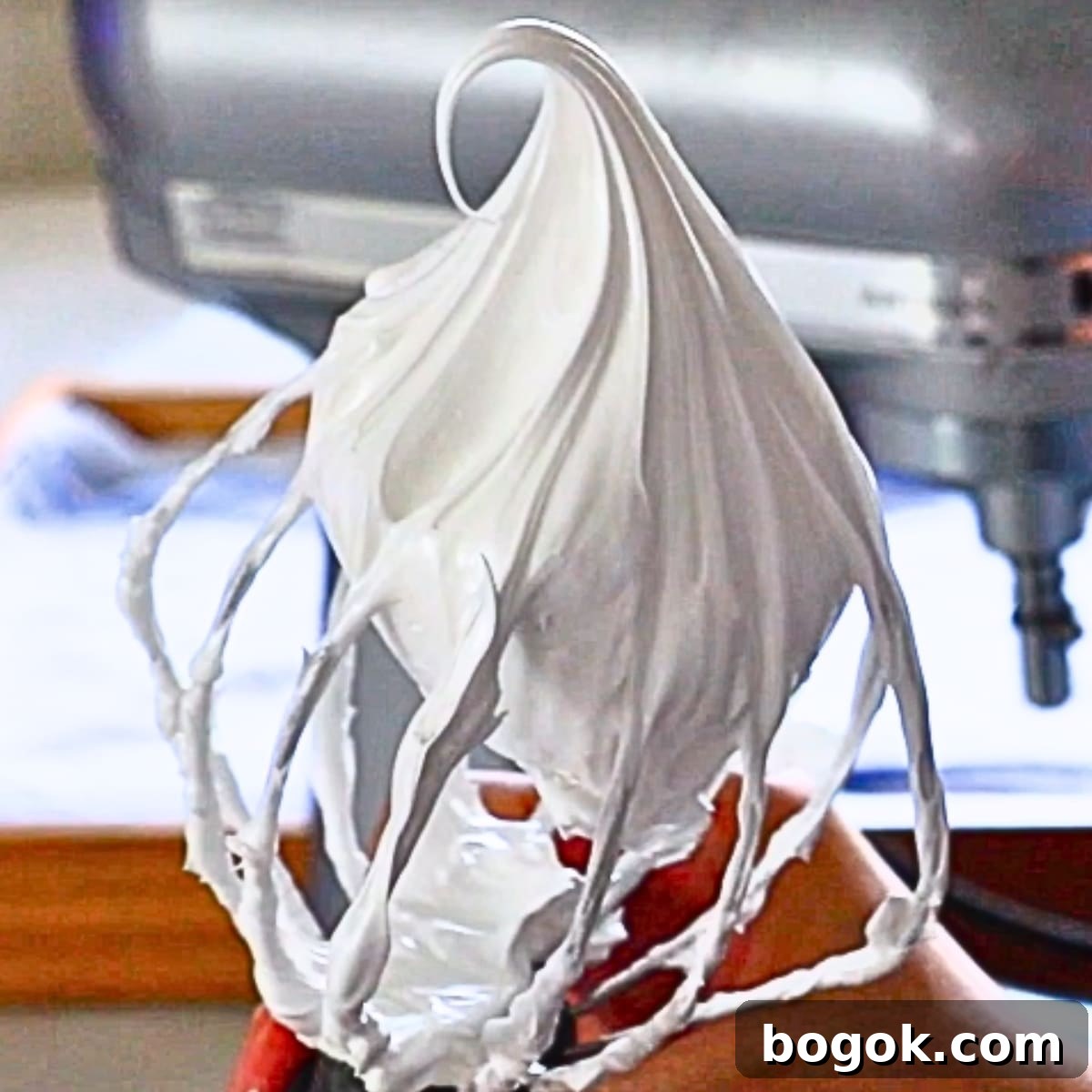
Learn how to make the perfect Swiss meringue for a wide range of desserts. This guide covers the essential tips and clear steps to produce a smooth, stable meringue every time.
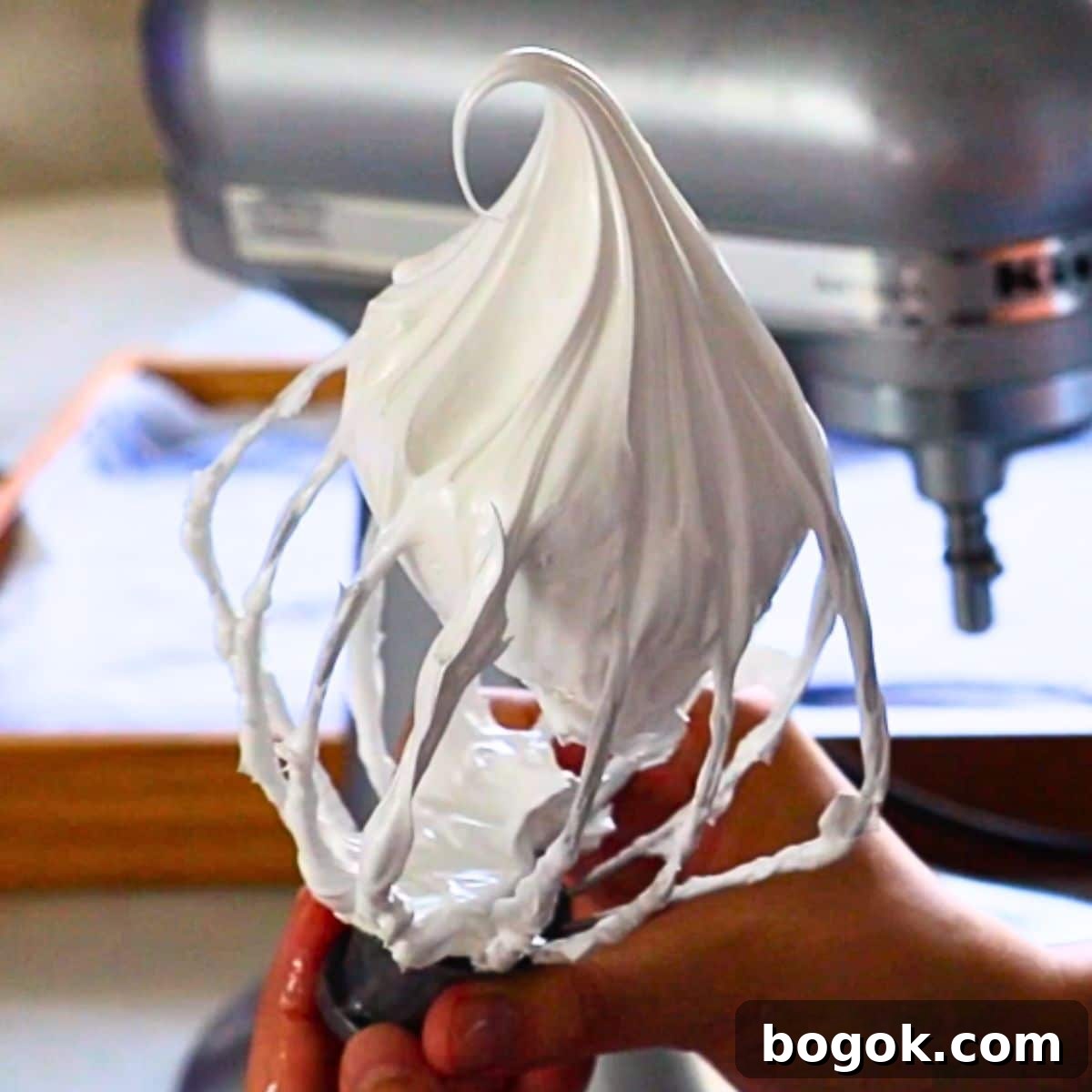
Why You’ll Love This Recipe
- Simple and reliable – Just two main ingredients and five straightforward steps produce a smooth, stiff Swiss meringue suitable for many uses.
- Versatile – Use this Swiss meringue as a base for buttercream, meringue cookies, macarons, mousses, or as a decorative topping for tarts and cakes.
- Practical tips included – The guide focuses on the techniques and temperature control you need to make stable, glossy meringue at home.
What is Swiss Meringue?
Swiss meringue is made by gently heating egg whites and sugar over a water bath, then whipping the warmed mixture to stiff peaks. The heating step dissolves sugar and partially stabilizes the proteins so the meringue holds shape longer and is less fragile than an unheated (French) meringue.
How Swiss meringue differs from other meringues
1. Italian meringue
Italian meringue is formed by streaming hot sugar syrup into whipped egg whites; it is very stable and commonly used in mousses and buttercreams. It requires cooking the sugar to a specific temperature before combining with the whites.
2. French meringue
French meringue is made by whipping raw egg whites with sugar directly. It is the simplest method but also the least stable because it isn’t heated. It works well for baked meringue cookies and some cakes where crisp texture is desirable.
8 Tips For Perfect Swiss Meringue
- Clean, dry tools are essential – Any oil, grease or residue prevents egg whites from whipping properly. Even a small speck of yolk will reduce volume.
- Use a gentle water bath – Heat the egg white and sugar mixture slowly over simmering water without letting the bowl touch the water. This prevents overheating and curdling.
- Stir constantly while warming so sugar dissolves evenly and the whites don’t cook unevenly, especially near the bowl edges.
- Target 160°F (71°C) for a stiff, stable meringue. Lower temperatures yield softer meringue; higher temperatures risk cooking the whites and producing a grainy texture.
- Check with a thermometer or by rubbing a small amount between your fingers — it should feel smooth, not grainy.
- Whip immediately when warm — warmer whites incorporate more air. Start whipping as soon as the mixture reaches temperature.
- Stop when cooled to room temperature — the meringue will lose volume if overwhipped. It should be glossy, elastic and hold stiff peaks.
- Use right away — Swiss meringue is best incorporated or piped immediately; it will firm and may collapse if rewhipped after resting.
Video: Follow Along
Step-by-step video demonstrations are helpful for mastering timing and texture. Look for tutorials showing warming the whites to 160°F (71°C) and the immediate transition to whipping.
2 Simple Ingredients
- Egg whites – Take care to avoid any yolk contamination. Pasteurized eggs reduce risk for recipes that will not be fully cooked later. Reserve yolks for other uses.
- Granulated sugar – Fine sugar or caster sugar dissolves faster; granulated sugar also works when heated thoroughly.
5 Steps To Make Swiss Meringue
Preparation
- Separate eggs carefully so no yolk gets into the whites.
- Bring water to a simmer in a saucepan to prepare a double boiler.
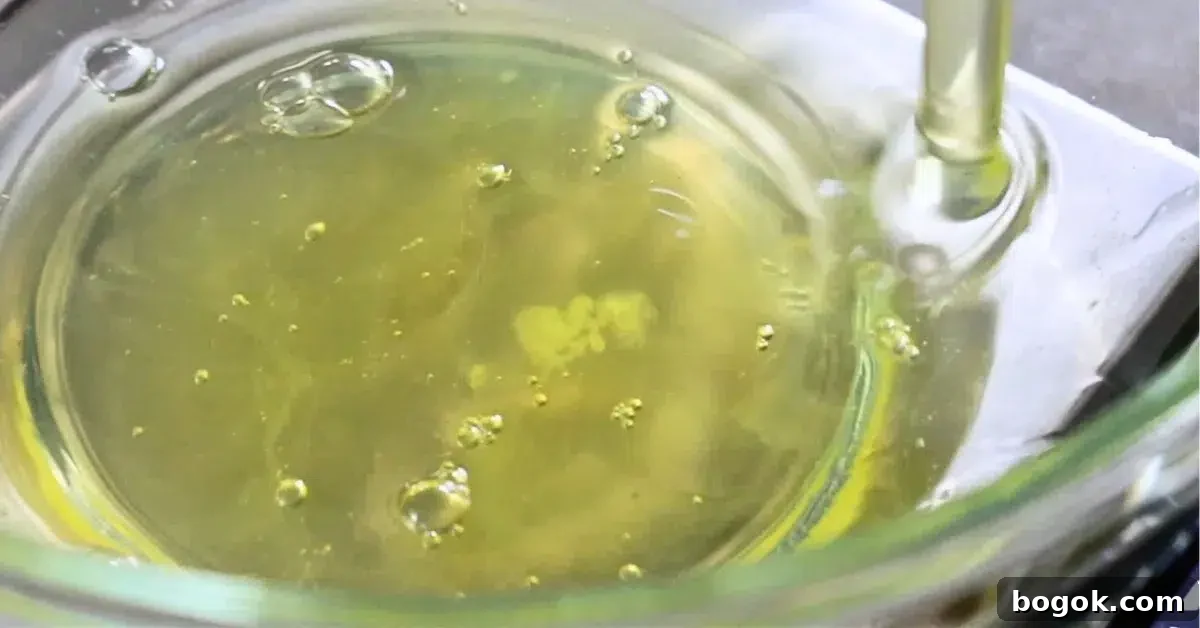
Heat egg whites and sugar
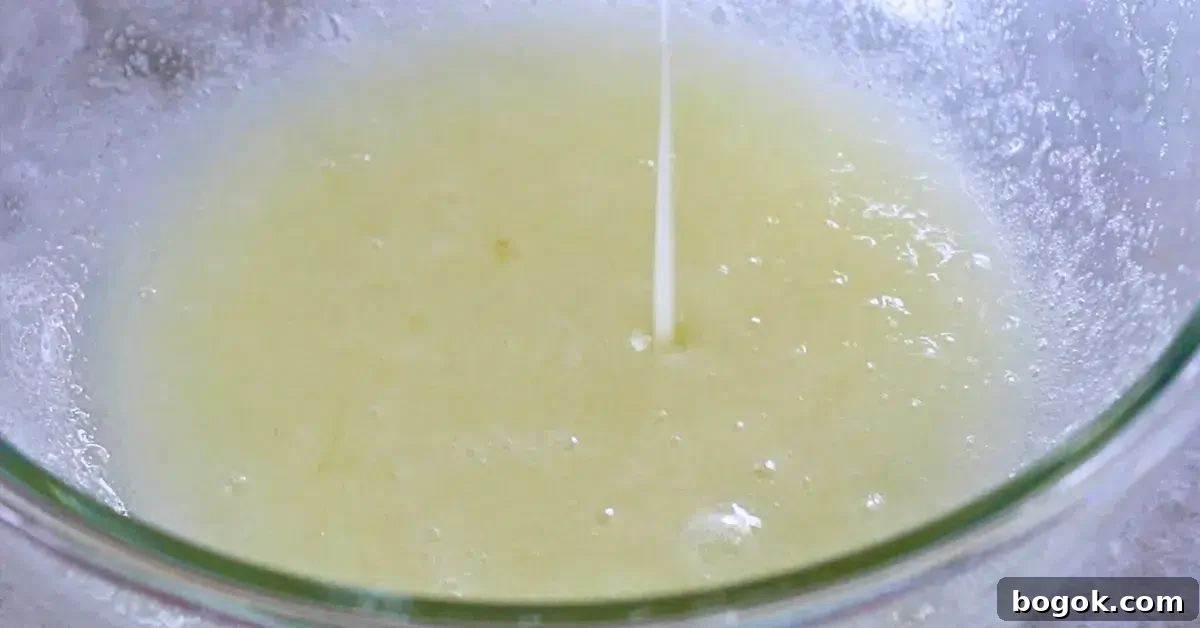
- Step 1: Whisk the egg whites and sugar together in a large, heatproof bowl until combined.
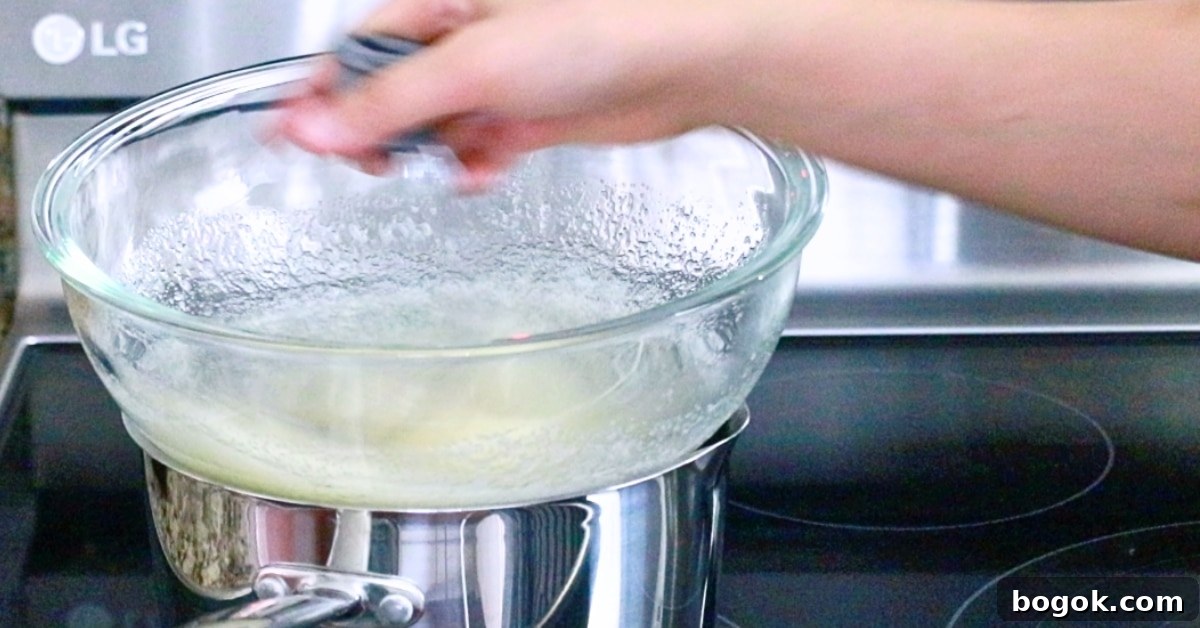
- Step 2: Place the bowl over simmering water and stir constantly. Remove from heat immediately when the mixture reaches 160°F (71°C).
Whip the egg white mixture
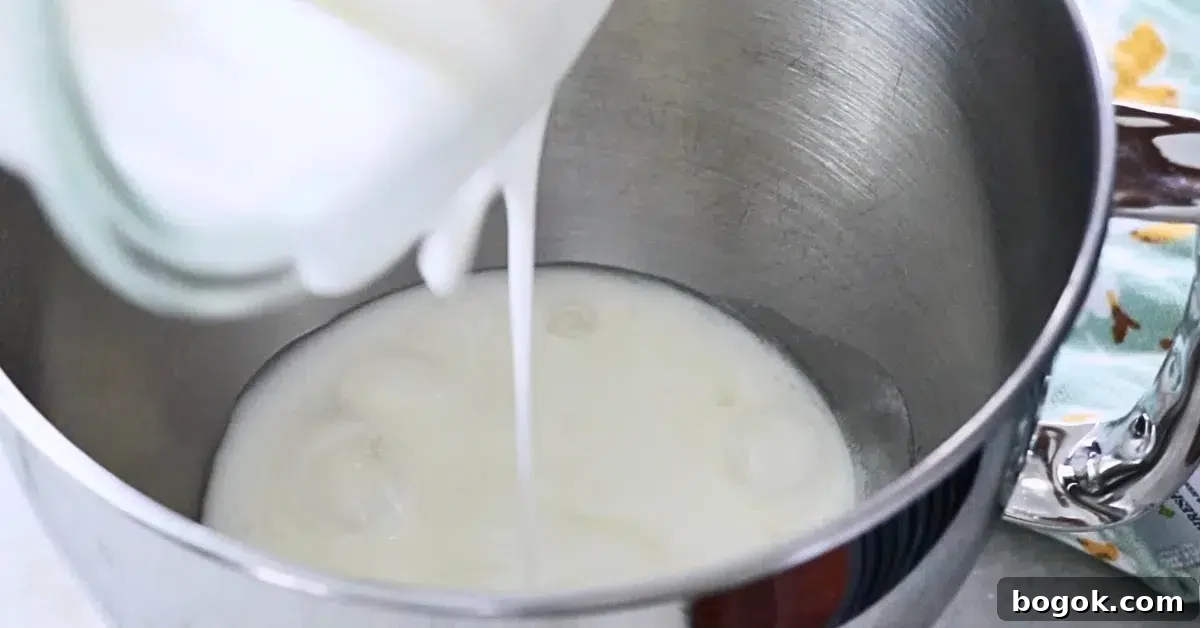
- Step 3: Wipe away any condensation from the bottom of the bowl. Transfer the warm mixture to a mixer and whip at high speed with the whisk attachment immediately.
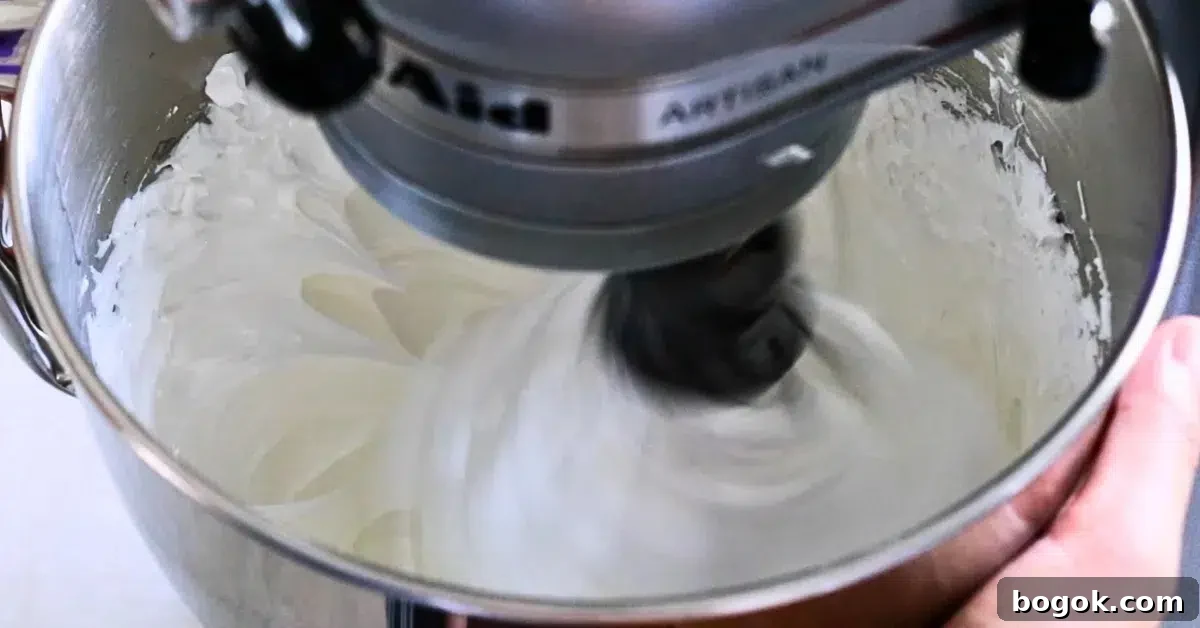
- Step 4: As the meringue cools, reduce the mixer speed in stages. When it feels comfortably warm, lower to medium; when slightly warm, lower to low–medium.
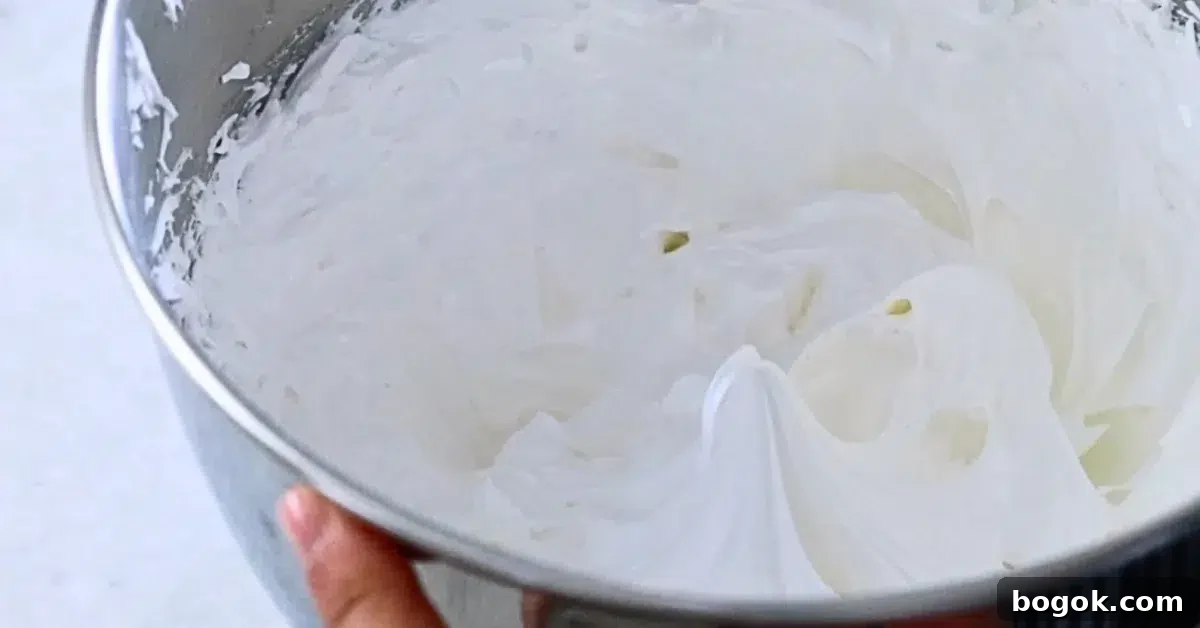
- Step 5: Stop whipping when the bowl or meringue reaches room temperature or is slightly warm. The finished meringue should be glossy, elastic and hold firm peaks. Use immediately for best results.
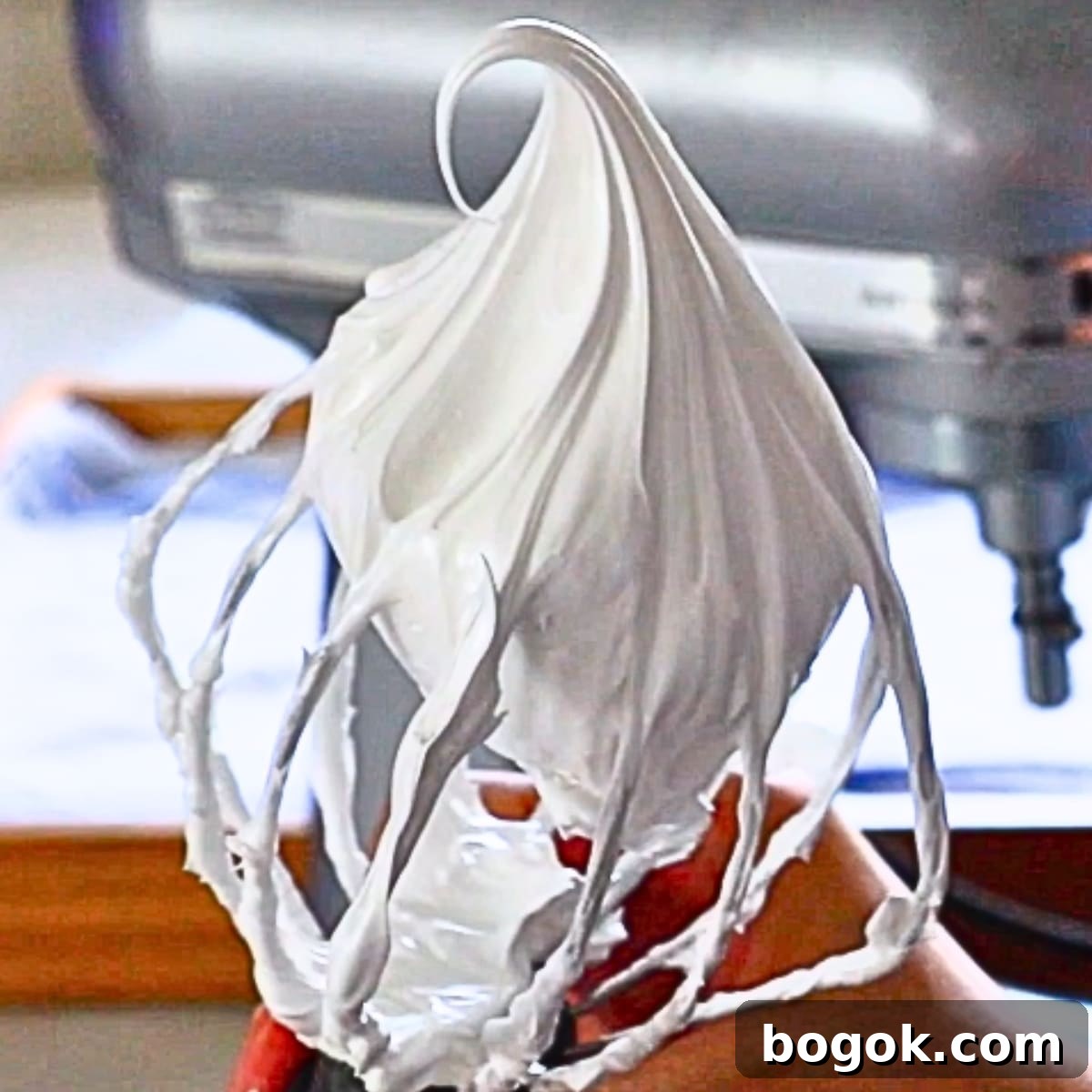
The tips should curl when lifted with a whisk; the texture should be smooth and elastic rather than grainy.
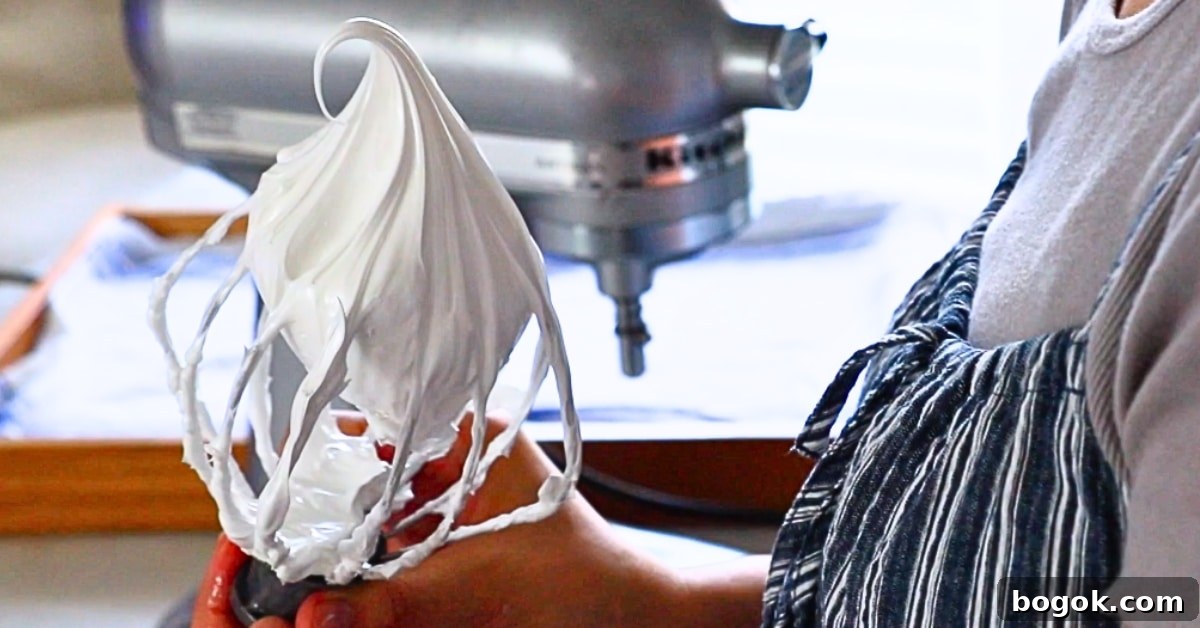
Why might the Swiss meringue be loose?
- Underheated – If the mixture never reached the proper temperature, the meringue will be soft and less stable.
- Contamination – Any oil, yolk, or residue in tools or bowl interferes with whipping.
- Delayed whipping – If the warmed mixture cools before whipping, it will not incorporate as much air.
- Overmixing – Whipping beyond the point when the meringue cools to room temperature can cause volume loss.
Why is my Swiss meringue grainy?
Graininess results from partially cooked egg whites or undissolved sugar. Stir continuously while heating, do not let the bowl touch the simmering water, and stop heating the moment the sugar has dissolved and the mixture reaches the target temperature.
Uses for Swiss Meringue
Swiss meringue adapts well to many desserts and decorations:
- Swiss buttercream — light, silky and stable when combined with butter.
- Meringue cookies — glossy, crisp and slightly less fragile than those made from French meringue.
- Tarts and pies — a fluffy Swiss meringue topping pairs well with fruit tarts and pies.
- Decorations — pipe shapes for plated desserts or cake accents; torch for color and texture when desired.
- Macarons (Swiss method) — produces shiny shells and a slightly different texture compared to other meringue methods.
- Mousse and frostings — adds stability and body to mousses and can be used as a frosting on layer cakes.
Frequently Asked Questions
Yes. Cakes frosted with Swiss meringue can be refrigerated for a few days. Cover to prevent drying.
No. Swiss meringue is best used immediately. It will lose stability and may collapse if stored and rewhipped later.
Yes. Add small amounts of extracts, cocoa, matcha or powdered flavorings. Avoid adding too much liquid, which can loosen the structure.
Reducing sugar reduces stability and sweetness. Minor decreases are possible, but aim to keep enough sugar to support structure.
Yes, a hand mixer works, but it requires more time and effort. A stand mixer with a whisk attachment makes the process easier and faster.
Yes, though very small batches may be harder for a whisk attachment to pick up. Use a smaller bowl and whip while the mixture is still hot to ensure good volume.
Yes. Gel or powdered colors are best as they add color without diluting the meringue.
A thermometer provides reliable, repeatable results. You can sometimes judge readiness by touch — the mixture should feel smooth rather than grainy — but a thermometer is recommended.
More Frosting Recipes
If you enjoy working with Swiss meringue, consider exploring other meringue-based frostings and buttercreams to expand your repertoire.
Did you try the recipe?
Share your feedback in the comment section below. I’d love to hear how your Swiss meringue turned out and how you used it for special occasions.
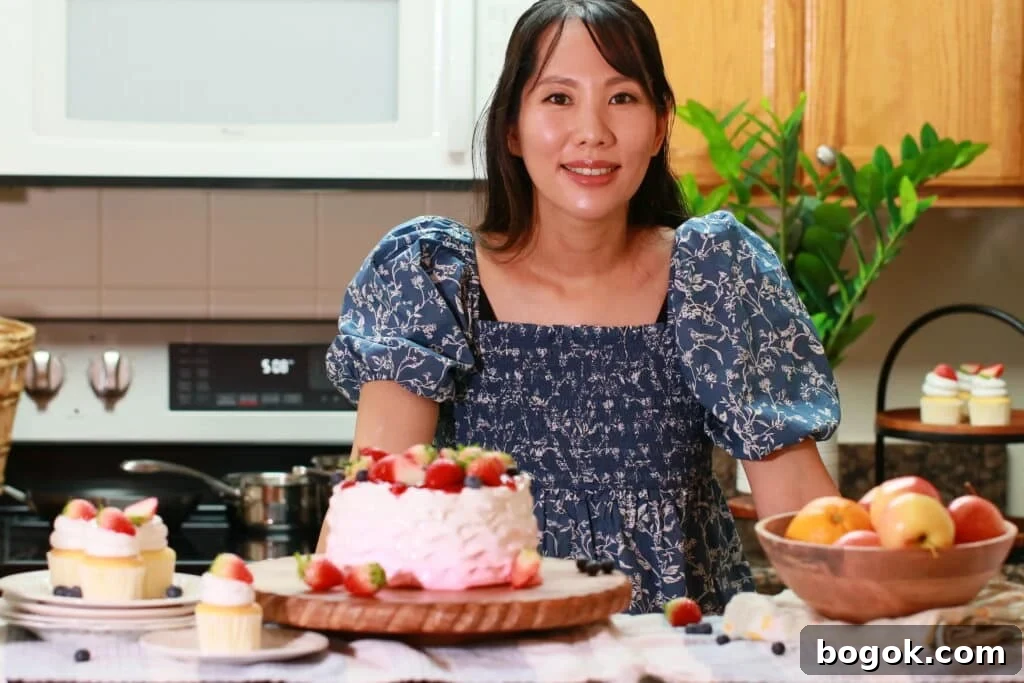
Thank you! – Aya
Perfect Swiss Meringue
Ingredients
- 150 g (5 small to medium eggs) Egg white
- 225 g (1 ⅛ cups) Granulated sugar
NOTE: For consistent results, weigh ingredients. This recipe is provided with gram measurements; cup volumes are approximate.
Equipment
- Saucepan
- Heatproof bowl
- Thermometer
- Stand mixer with whisk attachment or hand mixer
- Spatula
Method
-
Separate the eggs and place the whites in a clean, dry bowl. Bring a saucepan of water to a gentle simmer for the double boiler.
-
Combine 150 g egg whites and 225 g granulated sugar in the bowl and whisk briefly to mix.
-
Set the bowl over the simmering water and stir continuously until the mixture reaches 160°F (71°C) and the sugar feels dissolved. Remove from heat immediately.
-
Wipe away any steam or condensation from the bowl. Transfer the warm mixture to your mixer and whip at high speed with a whisk attachment until glossy and voluminous.
-
As the meringue cools, reduce the speed in stages: high to medium when comfortably warm, then to low–medium when slightly warm. Stop whipping when the bowl reaches room temperature and the meringue holds firm peaks.
-
Use the meringue immediately in your recipe. It should be stiff, elastic and smooth, with tips that curl when lifted by the whisk.
Notes
Tips Summary
- Keep everything spotless and dry to maximize volume.
- Heat gently and stir constantly until the sugar dissolves and the thermometer reads 160°F (71°C).
- Whip immediately while warm for best aeration and stability.
- Reduce mixer speed as the meringue cools and stop at room temperature.
- Use the meringue right away for piping, folding into batters, or combining with butter for Swiss buttercream.