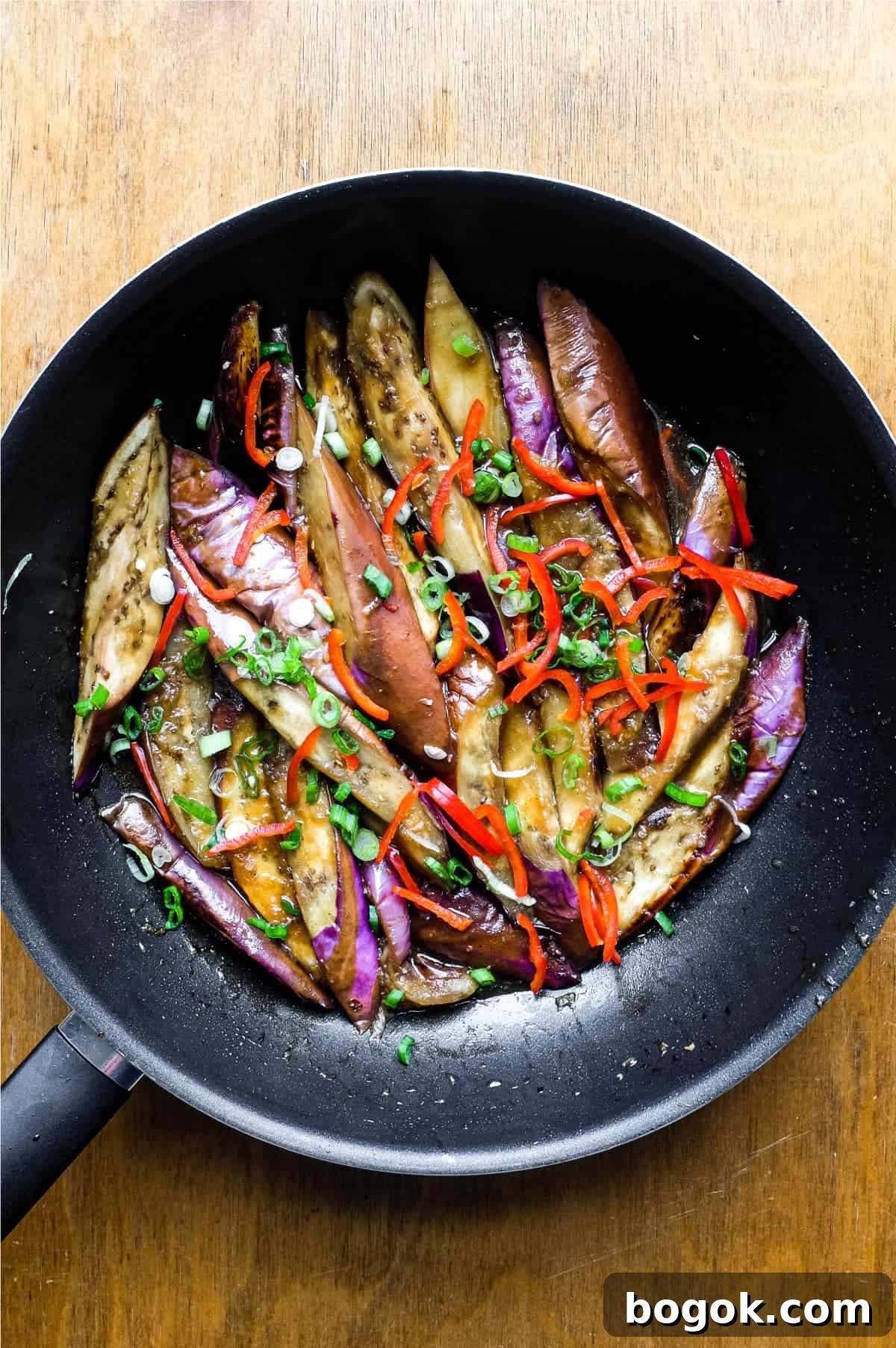
Chinese Eggplant
By Lee Jackson ↣ Published on: July 23, 2019
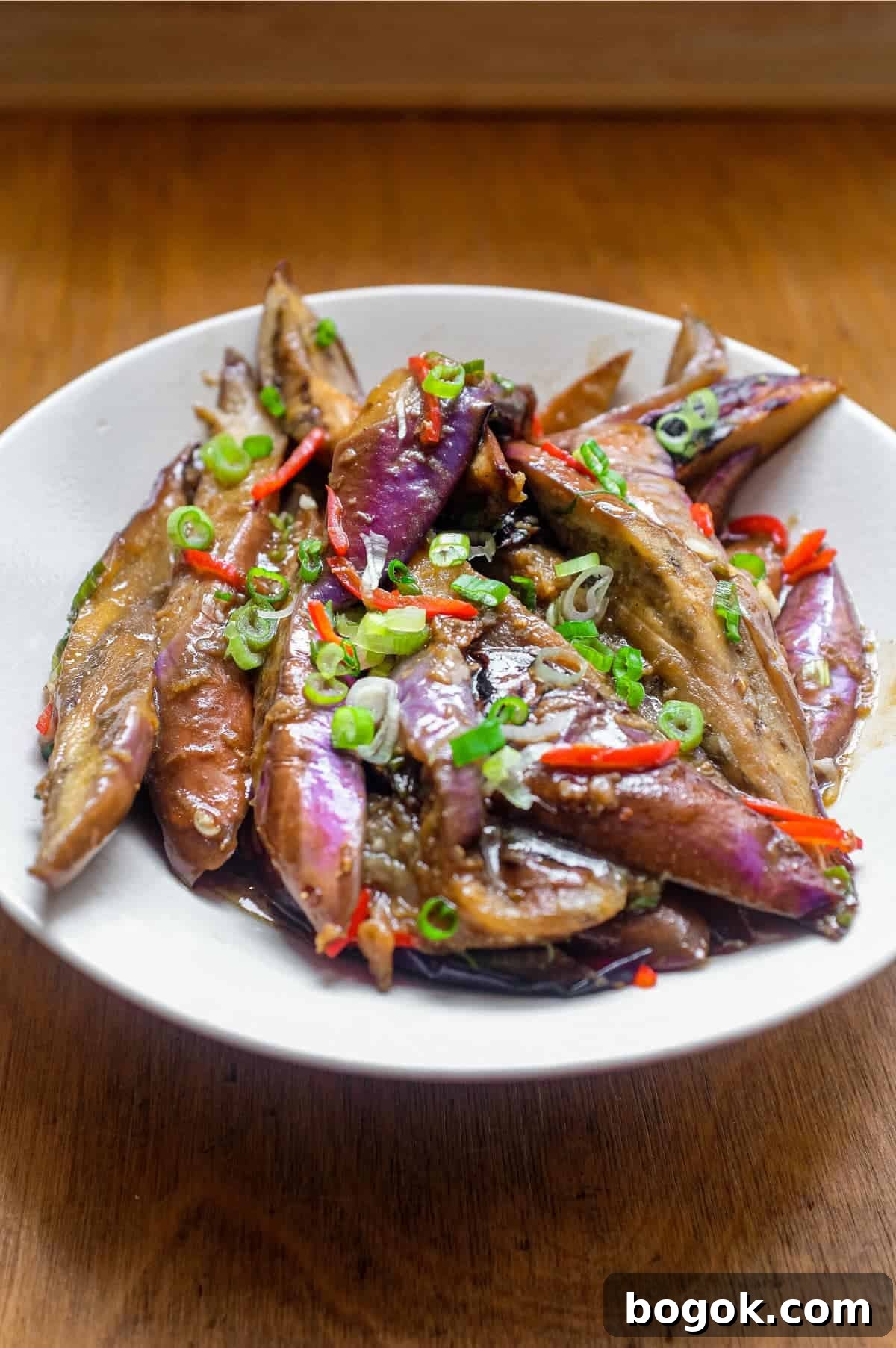
My creamy Chinese eggplant is a comforting, umami-rich stir fry. A glossy, sweet-and-salty sauce clings to tender eggplant pieces, making it a quick, satisfying dish for weeknights or a simple dinner on rice.
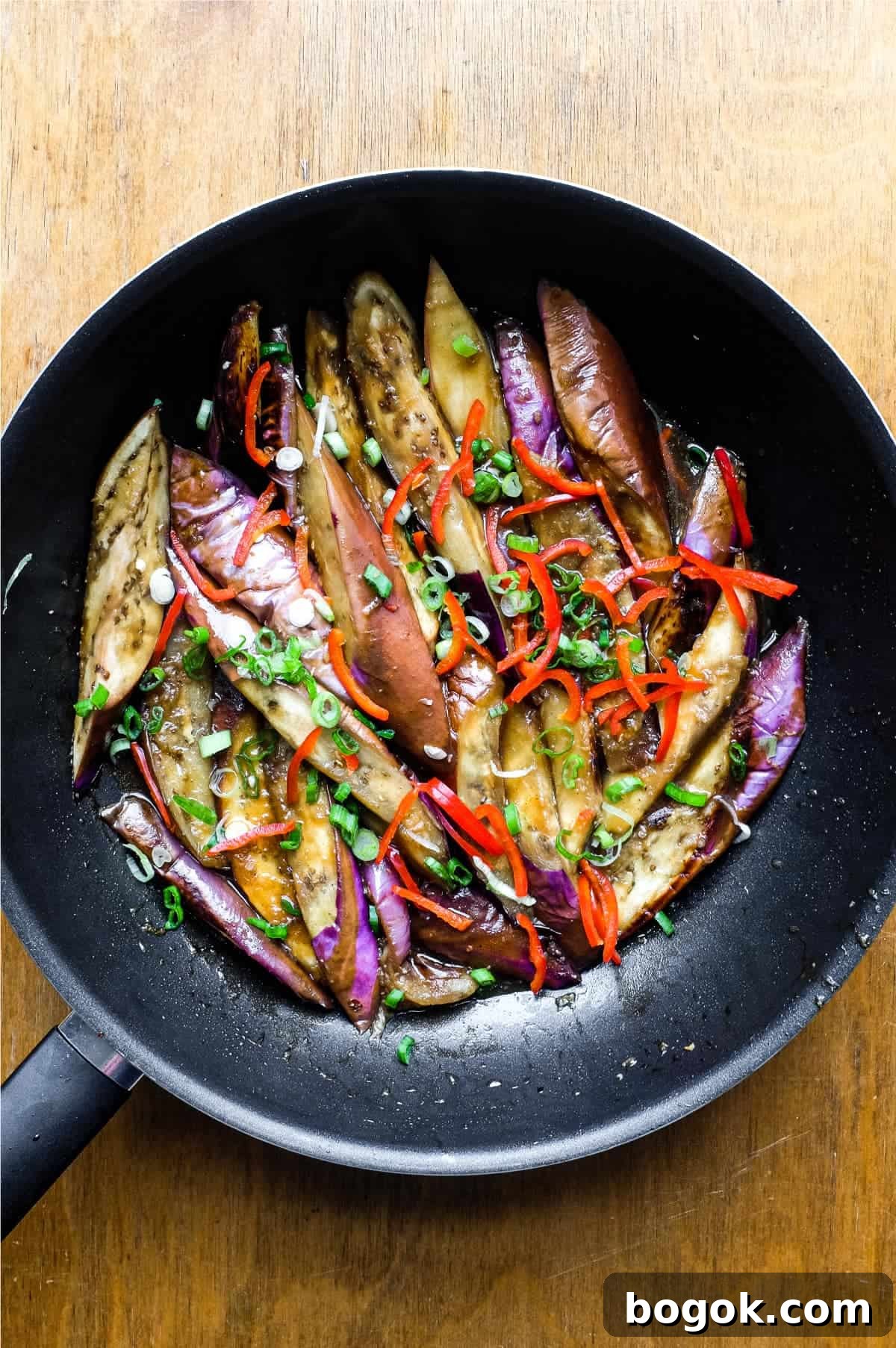
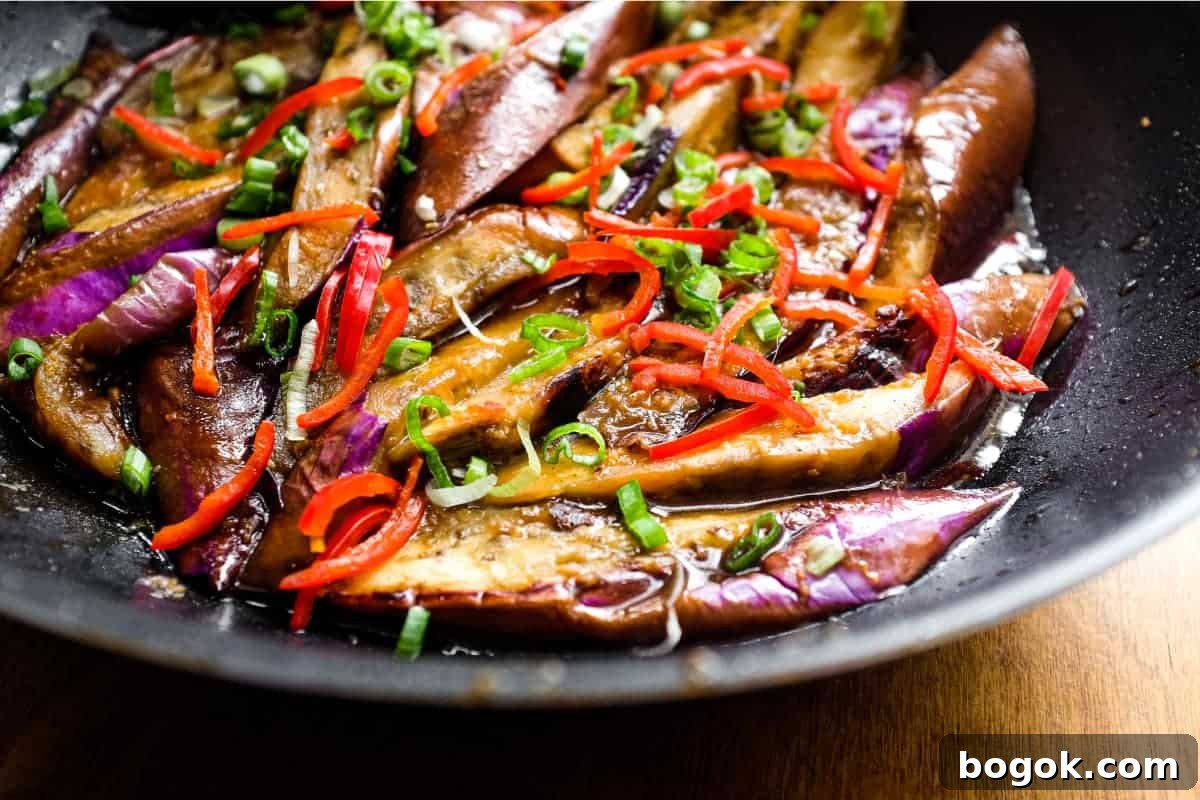
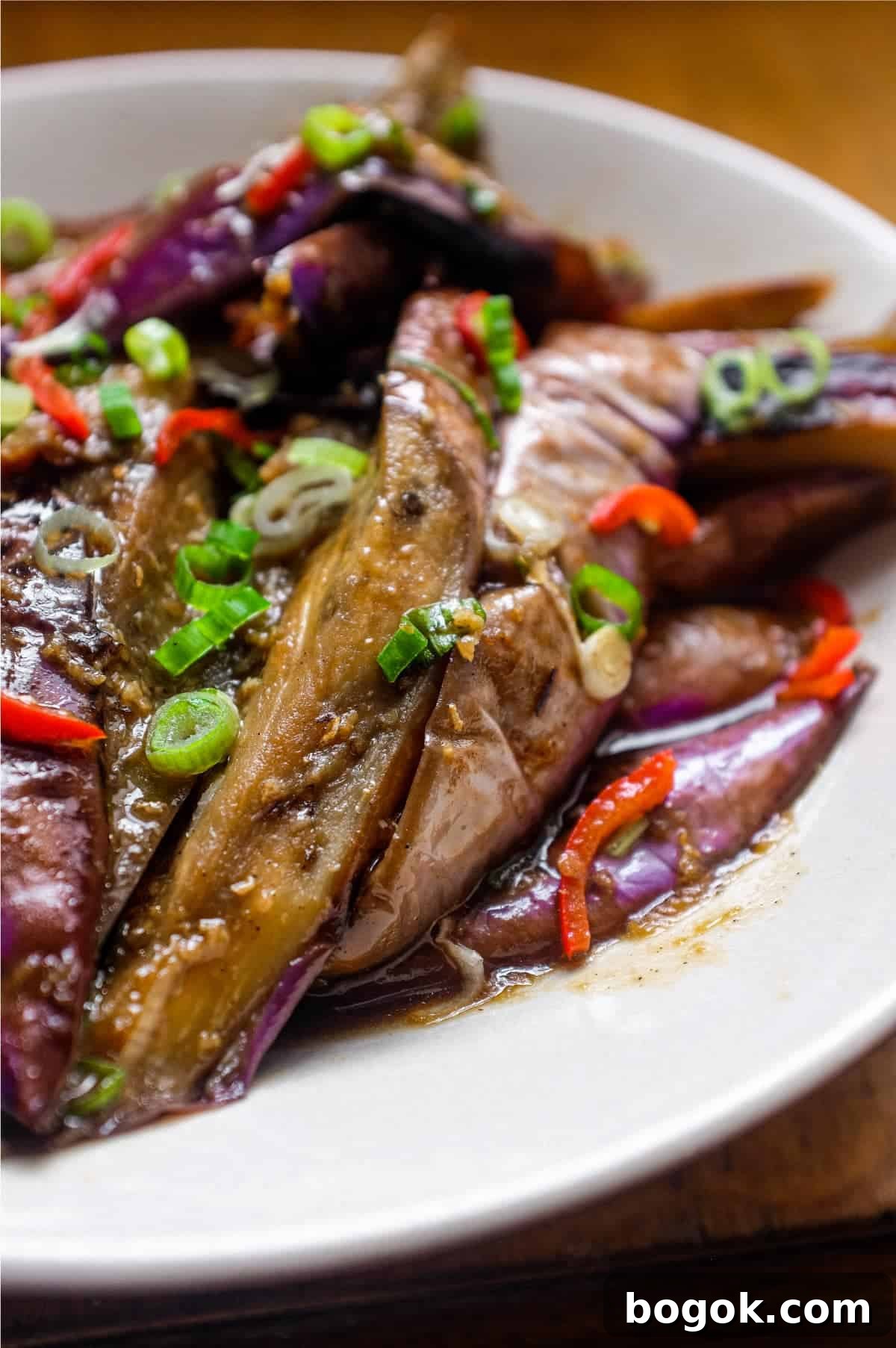
This simple eggplant dish is a restaurant favourite and a home staple. It’s quick to prepare and works well on its own or with other Chinese dishes. When the eggplant softens, it becomes silky; combined with the umami-sweet sauce, the result is indulgent yet easy.
This recipe is part of collections celebrating bright Asian flavours and straightforward stir-fries.
I like it best spooned over steaming rice. It takes about 20 minutes from start to finish — just enough time for rice to cook while the sauce bubbles up and the eggplant becomes tender.
What’s ahead?
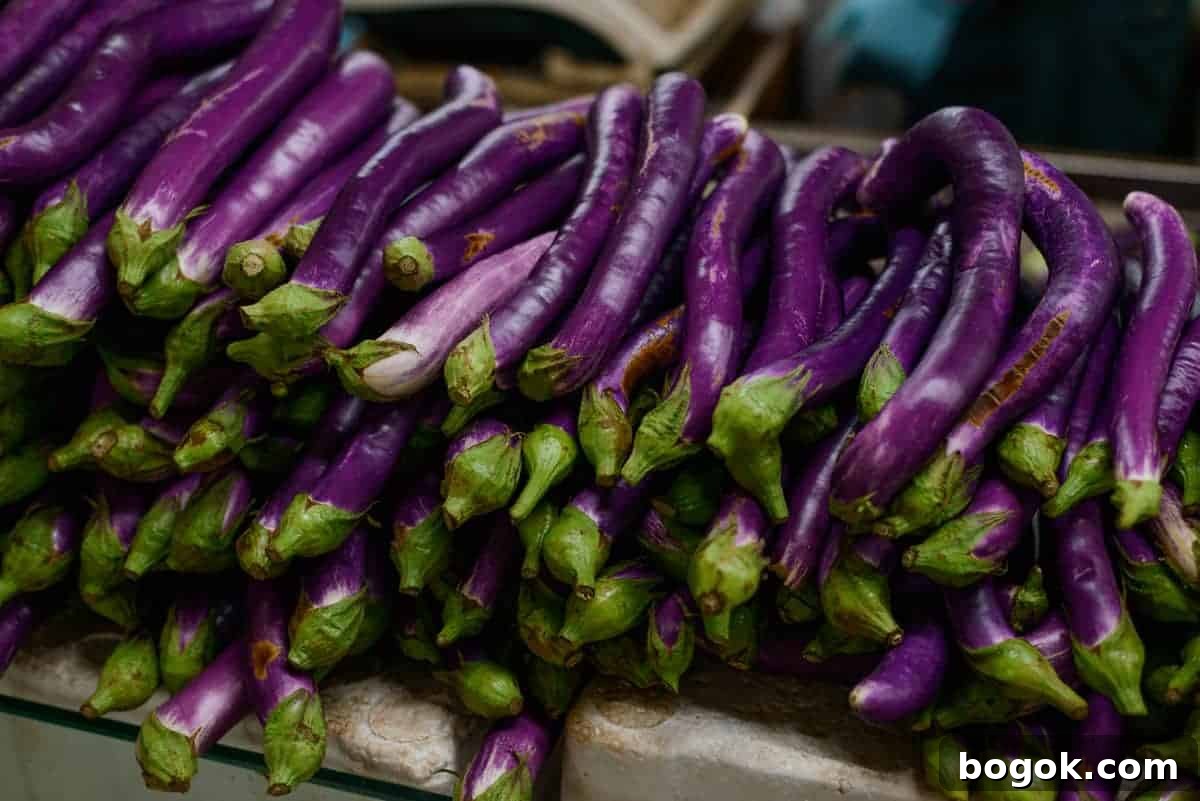
What is Chinese eggplant?
Chinese eggplant refers both to a style of preparation — typically stir-fried in a sweet-and-salty sauce — and to a specific variety of eggplant. The Chinese variety is long, thin and bright purple, with fewer seeds than larger European eggplants. That lower seed content means less bitterness and a silkier texture when cooked, which suits this dish perfectly.
Why it works
It’s fast: Ready in about 20 minutes for a restaurant-style result at home.
It’s creamy: The eggplant softens to a silky texture that pairs beautifully with rice.
It’s umami-rich: Soy and a touch of sugar deliver a deep, balanced savoury-sweet flavour.
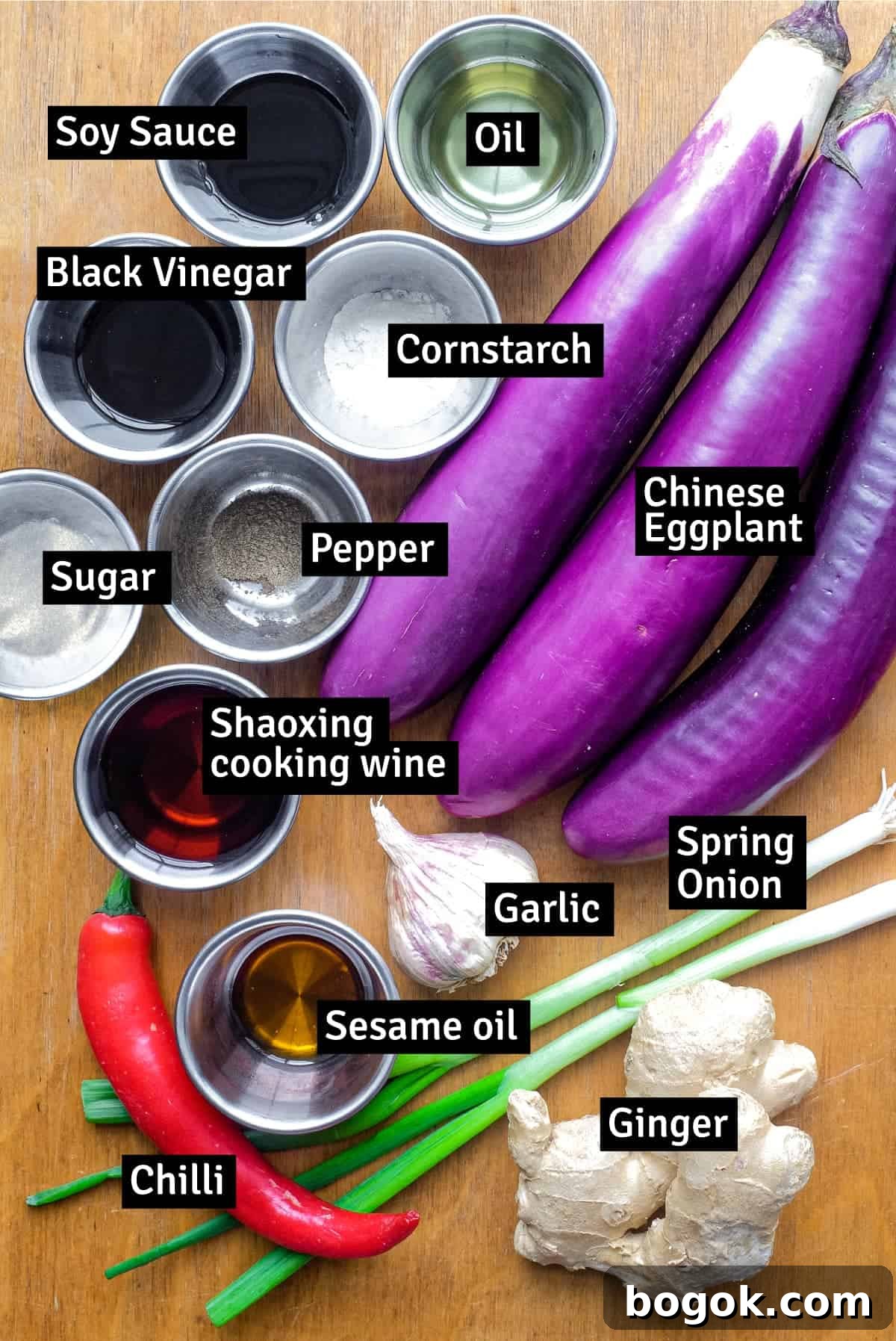
Stuff you’ll need
This recipe uses common pantry items. If you can’t find something at a regular supermarket, most ingredients are available at Asian markets. Substitutions are noted below.
- Chinese eggplants: Choose long, thin eggplants. If using larger varieties, consider salting to reduce bitterness.
- Shaoxing cooking wine: Adds depth; dry sherry can substitute in a pinch.
- Sesame oil: For a nutty finish.
- Soy sauce: Provides the main umami note; light soy is recommended.
- Sugar: Balances the saltiness of the soy.
- Ginger & garlic: Aromatics to brighten the sauce.
- Chinese black vinegar: Adds tang and complexity.
- Cornstarch: Thickens the sauce into a silky glaze.
Step by Step
This stir-fried Chinese eggplant is straightforward and quick to make.
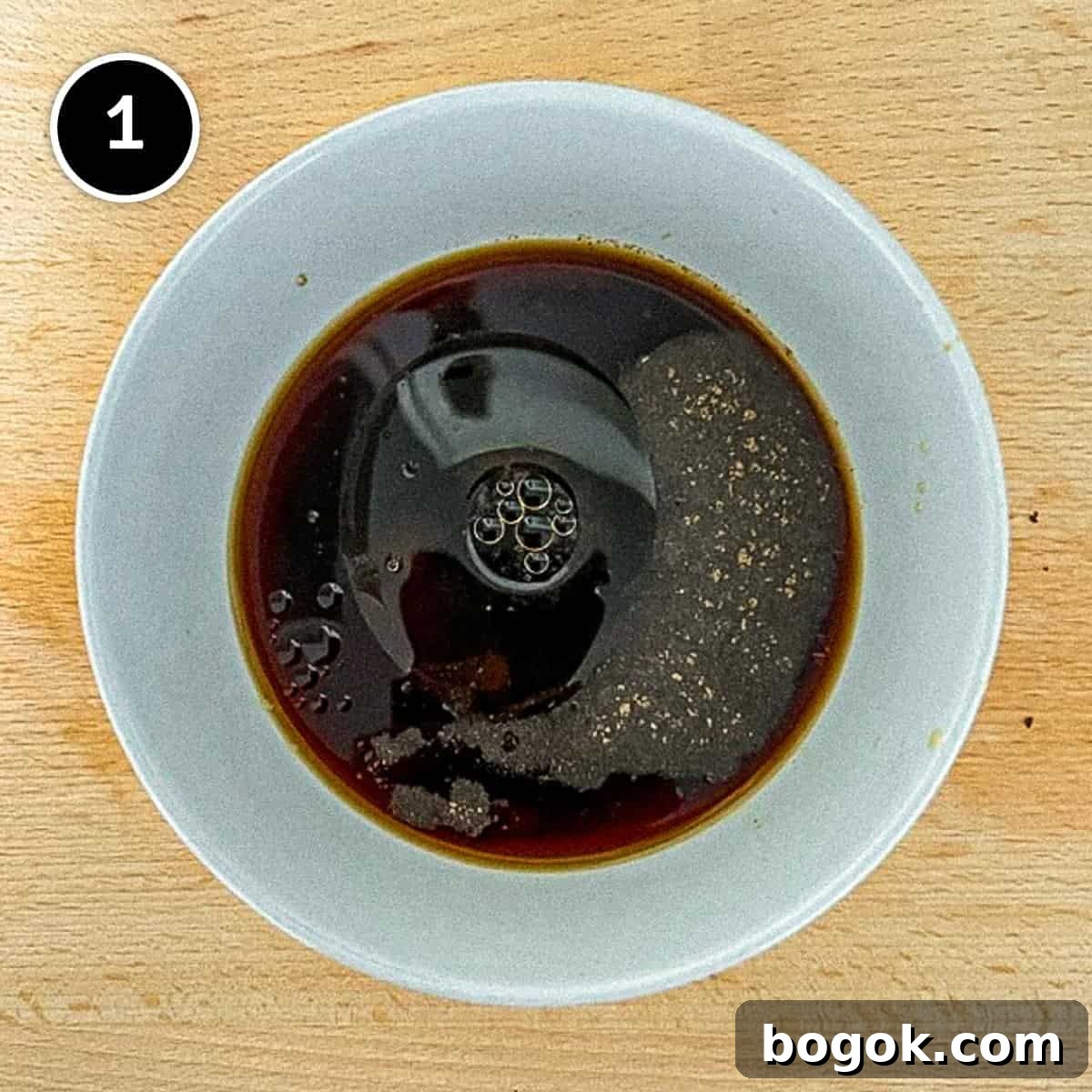
- Step 1 – Mix all the sauce ingredients together.
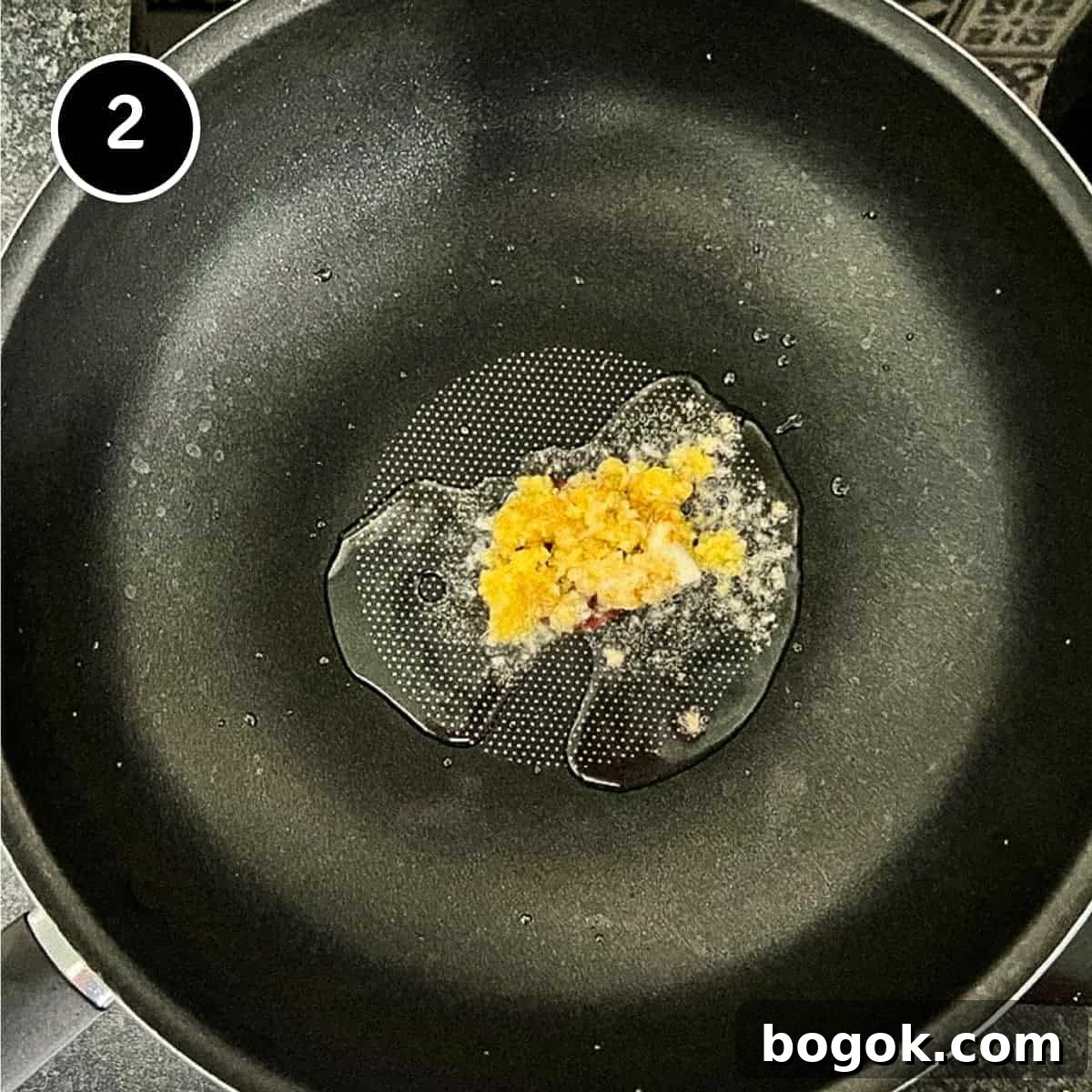
- Step 2 – Heat oil and briefly fry the garlic and ginger until fragrant.
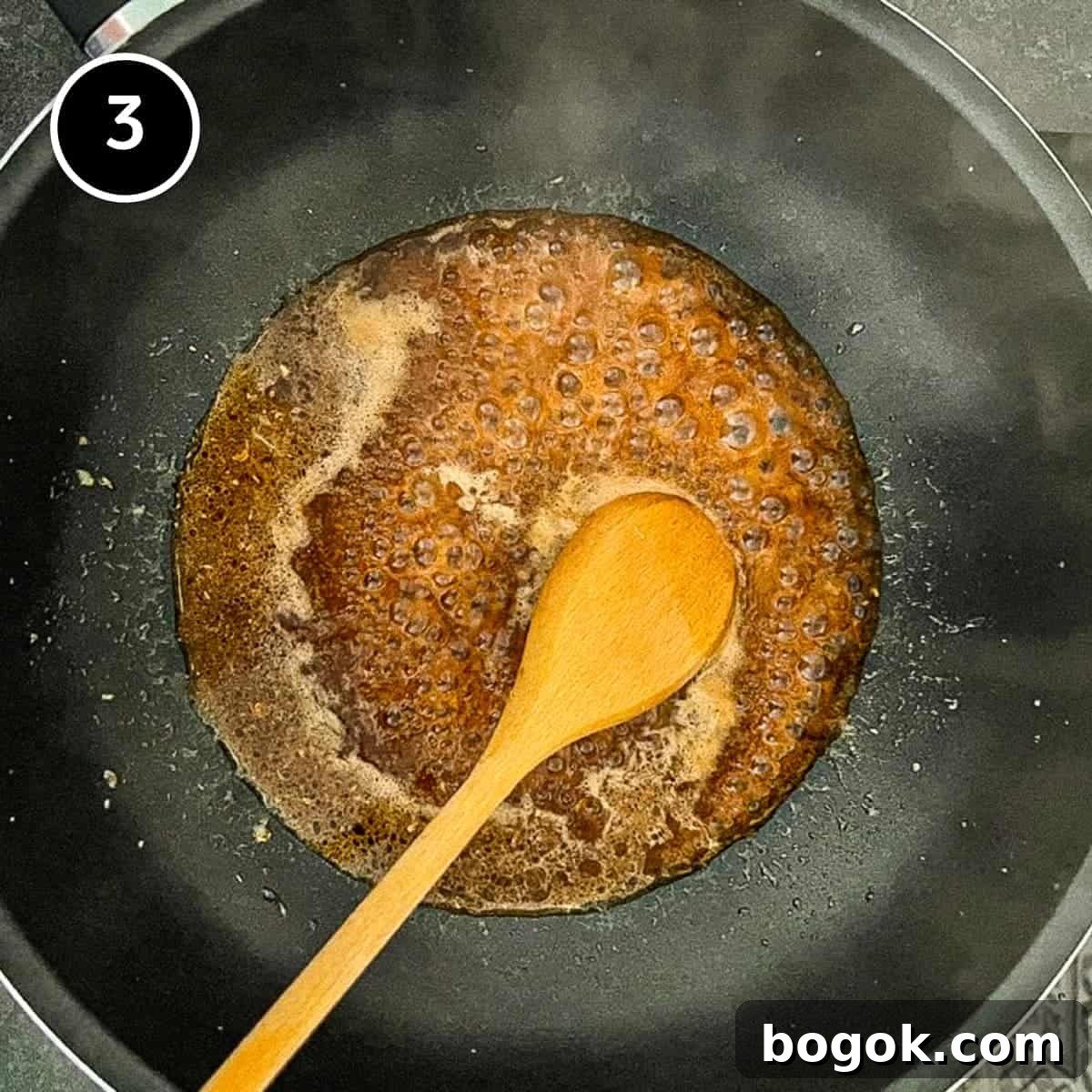
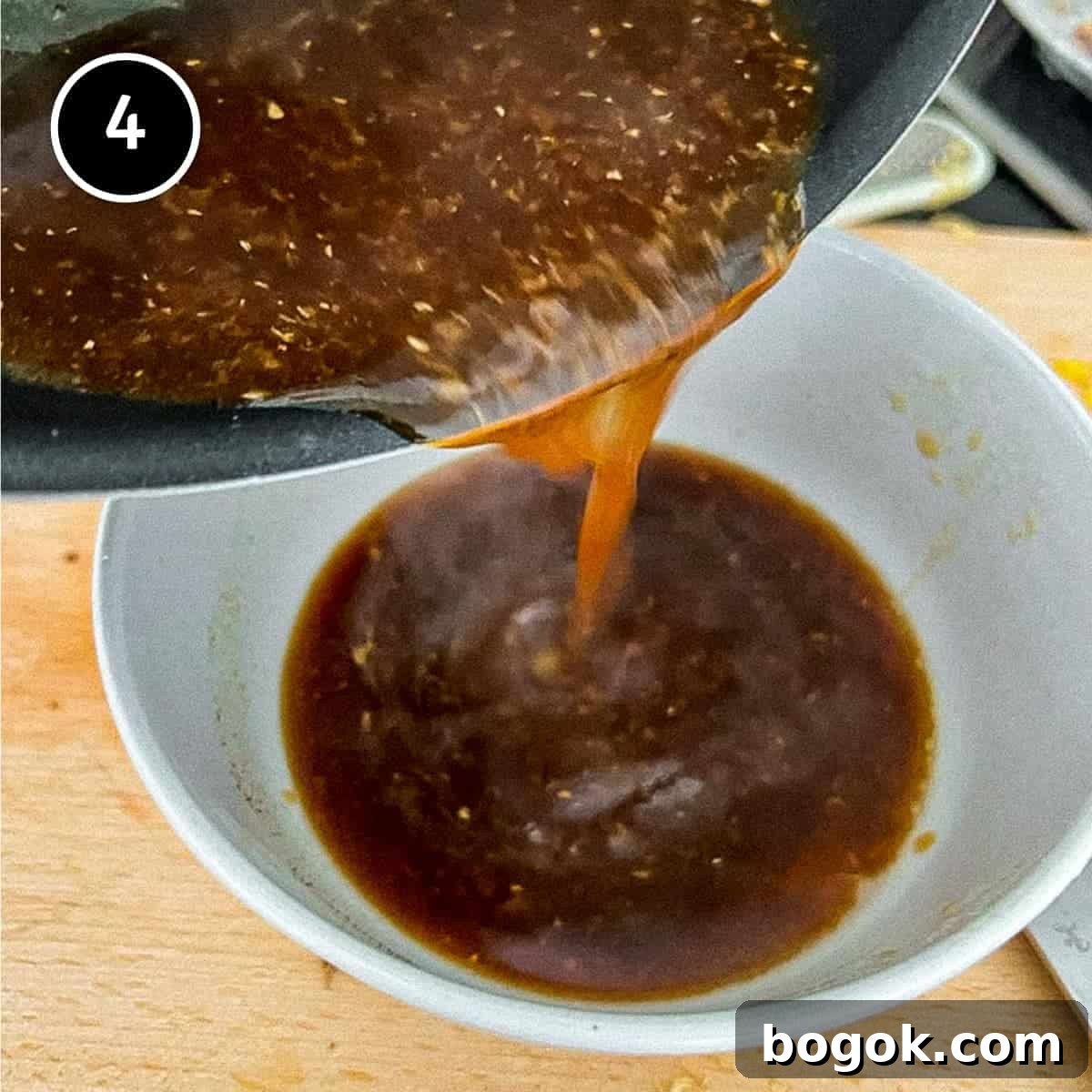
- Step 3 – Add the sauce, simmer briefly to thicken, then pour into a bowl and wipe the wok clean.
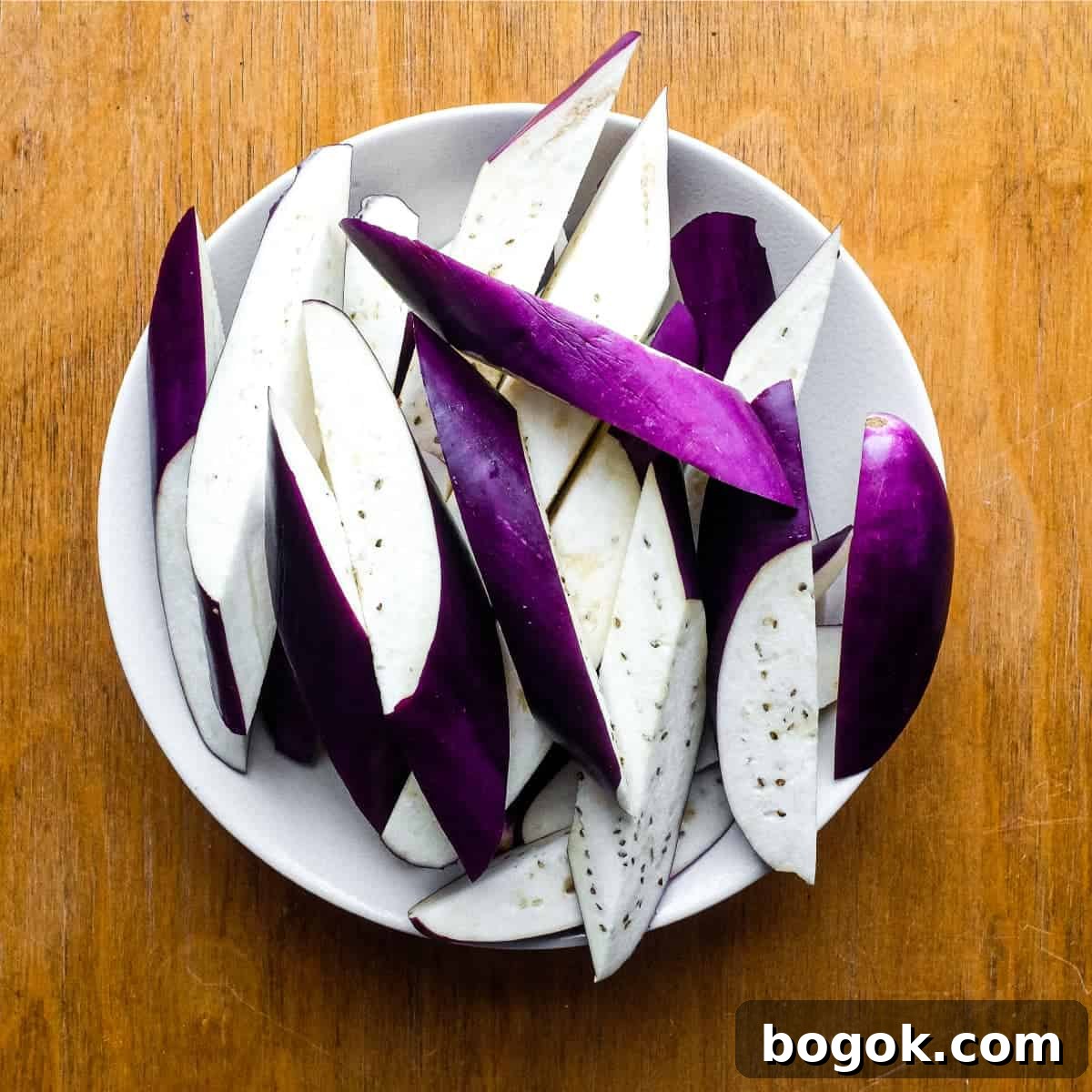
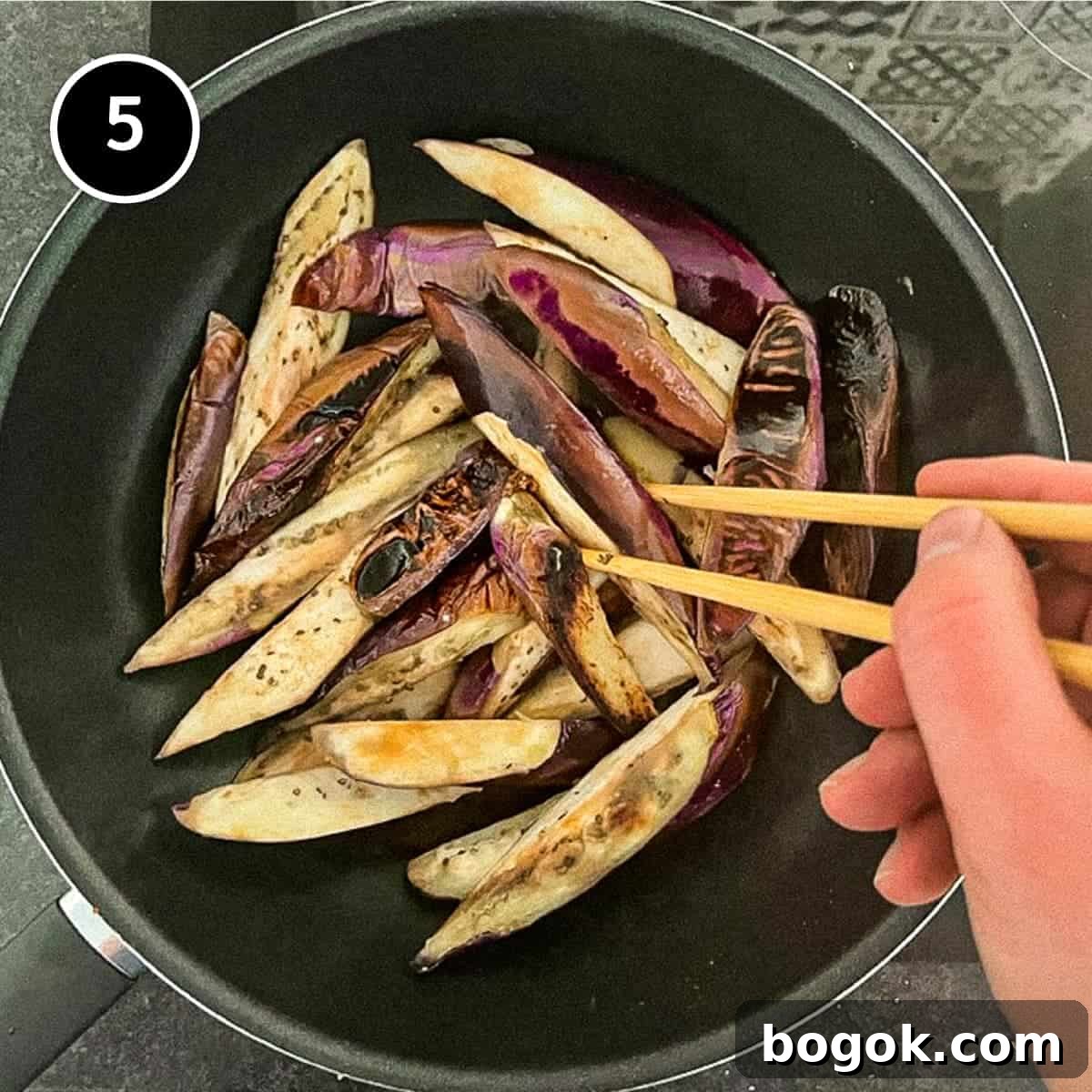
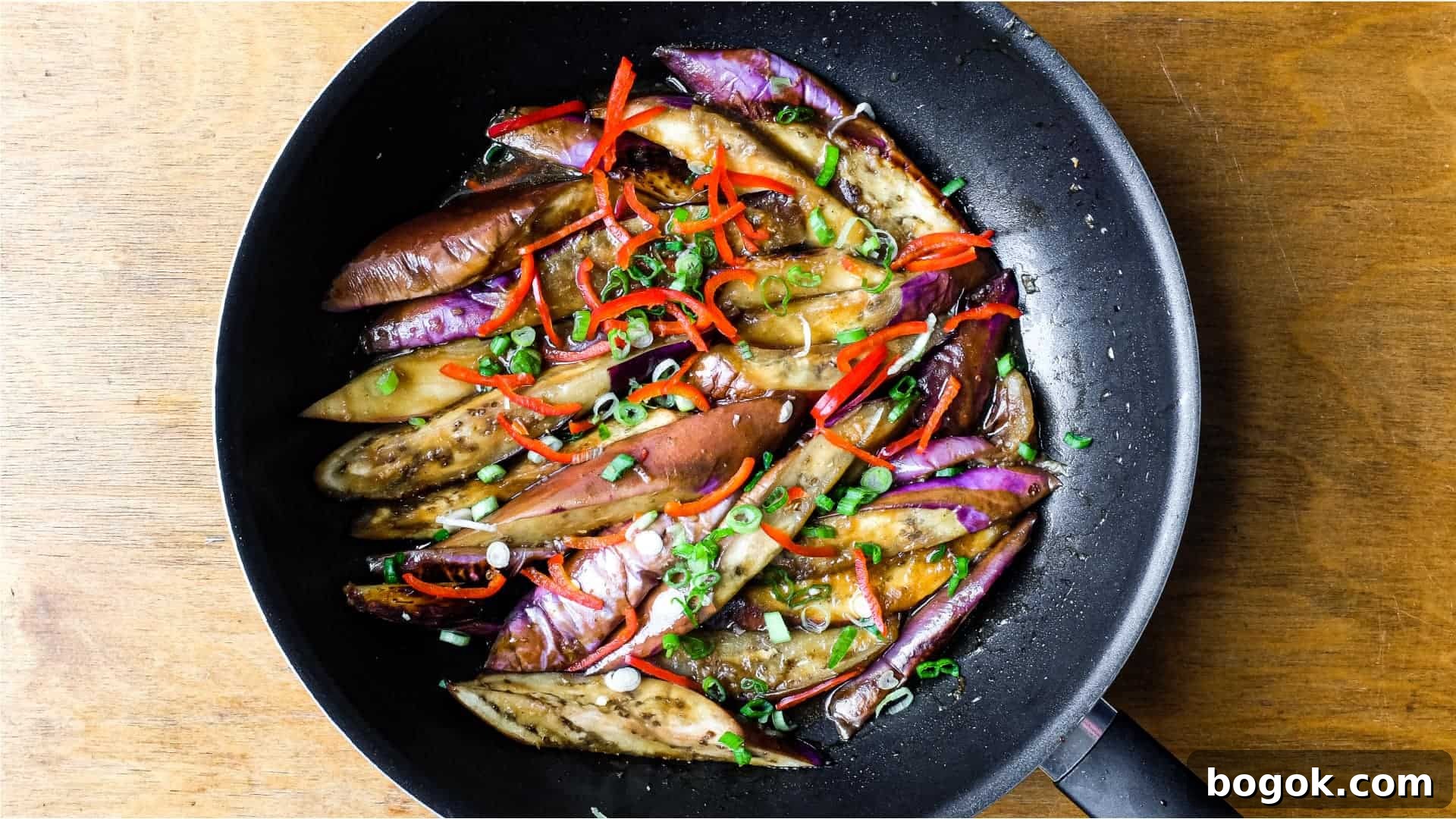
- Step 4 – Heat oil, stir-fry the eggplant until the edges char slightly and the pieces begin to soften.
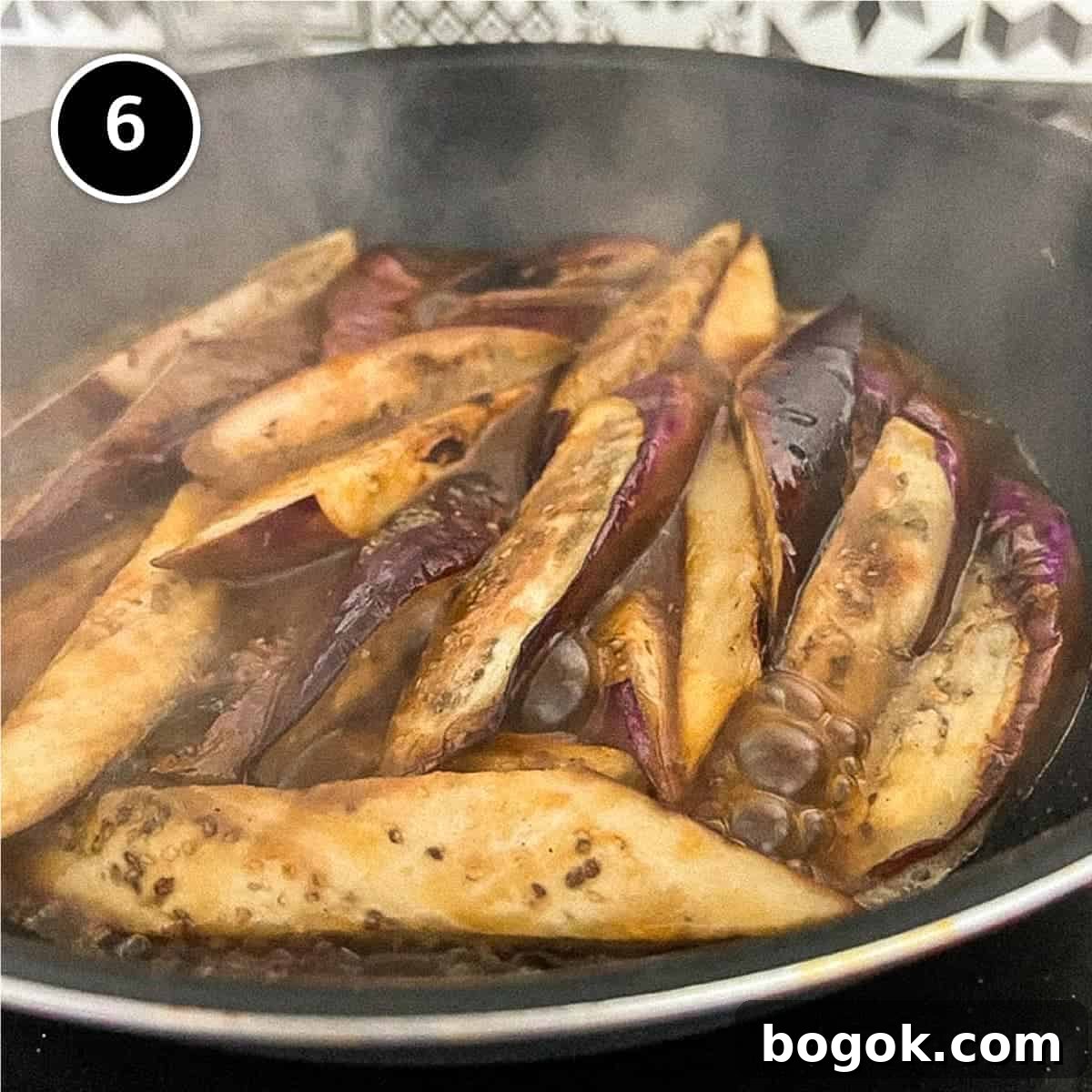
- Step 5 – Return the sauce to the wok, add a splash of water if needed, cover briefly, then simmer uncovered until the eggplant is soft and the sauce clings to it.
Pro Tips to make your life easier
- Leave the skins on: The thin skin of Chinese eggplant softens when cooked and adds nutrients and structure.
- Beware of heat: The dish retains heat; let it cool slightly before digging in to avoid burning your mouth.
- Salting (optional): If using larger, seedy eggplants, sprinkle with salt for 20 minutes, then blot dry to reduce bitterness and moisture.
- Substitutes: Japanese eggplant is a good alternative; if necessary, use regular eggplant and adjust as above.
Serving and storing suggestions
I usually serve this as part of a larger meal, but it’s also excellent simply spooned over steamed or fried rice.
- Fridge: Keeps well in the refrigerator for up to a week and reheats nicely.
- Freezer: Fresh is best for this dish; freezing is not recommended as texture and sauce quality decline.
Ready to get cooking?
This stir-fried Chinese eggplant is simple, flavourful and full of umami. It’s an excellent go-to recipe when you want a comforting, quick meal. Enjoy!
Any Questions? (FAQ)
Have a question about this Chinese eggplant recipe? Leave a comment and I’ll respond.
Is Chinese eggplant the same as regular eggplant?
It’s the same species but a different variety. Chinese eggplant is typically longer and thinner with fewer seeds, which reduces bitterness.
Should Chinese eggplant be peeled?
No — the skin is thin, nutritious and softens during cooking, helping the pieces hold their shape.
Can I substitute Chinese eggplant?
Yes. Japanese eggplant is a good substitute; if necessary use a regular eggplant and consider salting it beforehand.
More Chinese recipes
If you enjoyed this recipe, you might like other Chinese dishes from the same collection.
- Chinese Snow Pea Shoots with Garlic
- Chicken Egg Foo Young
- Pork Rib Soup with Noodles
- Chinese Shandong Roast Chicken
- Chinese Oxtail Soup
- Duck Congee
- Taiwanese 3-Cup Chicken (San Bei Ji)
- Chinese Braised Pork Belly – Hong Shao Rou
- Chinese Cucumber Salad
- Chinese Xinjiang Lamb Skewers
Chinese Eggplant
Rate this recipe
Ingredients
For the sauce
- 1 tbsp vegetable oil
- 1 tbsp finely grated ginger
- 2 garlic cloves, finely grated
- ¼ cup Shaoxing cooking wine (or dry sherry)
- 1 tsp sesame oil
- 2 tsp sugar
- 2 tbsp light soy sauce
- ½ tsp black pepper
- 1 tsp cornstarch
- 2 tbsp Chinese black vinegar
- ½ cup water
For the stir fry
- 2 tbsp vegetable oil
- 3 Chinese eggplants, cut into thick batons
- 2 spring onions, thinly sliced for garnish
- 1 red chilli, finely sliced for garnish (optional)
Instructions
To make the sauce
-
Mix together all the sauce ingredients.
-
Heat 1 tbsp oil in a wok. When hot, fry the garlic and ginger for about 20 seconds until fragrant. Pour in the sauce mixture and let it bubble briefly until it thickens slightly. Remove from heat and transfer to a bowl.
To make the eggplant
-
Wipe the wok clean and heat 2 tbsp oil until hot. Add the eggplant and let pieces char on the bottom for 1–2 minutes, then toss and brown more sides. Continue for about 5 minutes until the eggplant starts to soften.
-
Pour the reserved sauce over the eggplant, add ¼–½ cup water, and cover the pan. Let it boil for 1–2 minutes, then remove the lid and simmer vigorously until the sauce thickens and the eggplant is soft and creamy.
-
Remove from heat and scatter with spring onion and chilli. Serve hot.
Notes
- Skins: Keep the skins on — they soften and add texture and nutrients.
- Hot stuff: The dish can retain a lot of heat; allow it to cool slightly before serving.
- Salting: If using larger eggplants, salting for 20 minutes and blotting dry can help remove bitterness and excess moisture.
Serving and storing suggestions
Serve over steamed or fried rice, or alongside other Chinese dishes.
- Fridge: Keeps up to a week and reheats well.
- Freezer: Not recommended — texture and sauce quality are best when fresh.
Nutrition
This post contains affiliate links and may earn a commission from purchases at no extra cost to you.