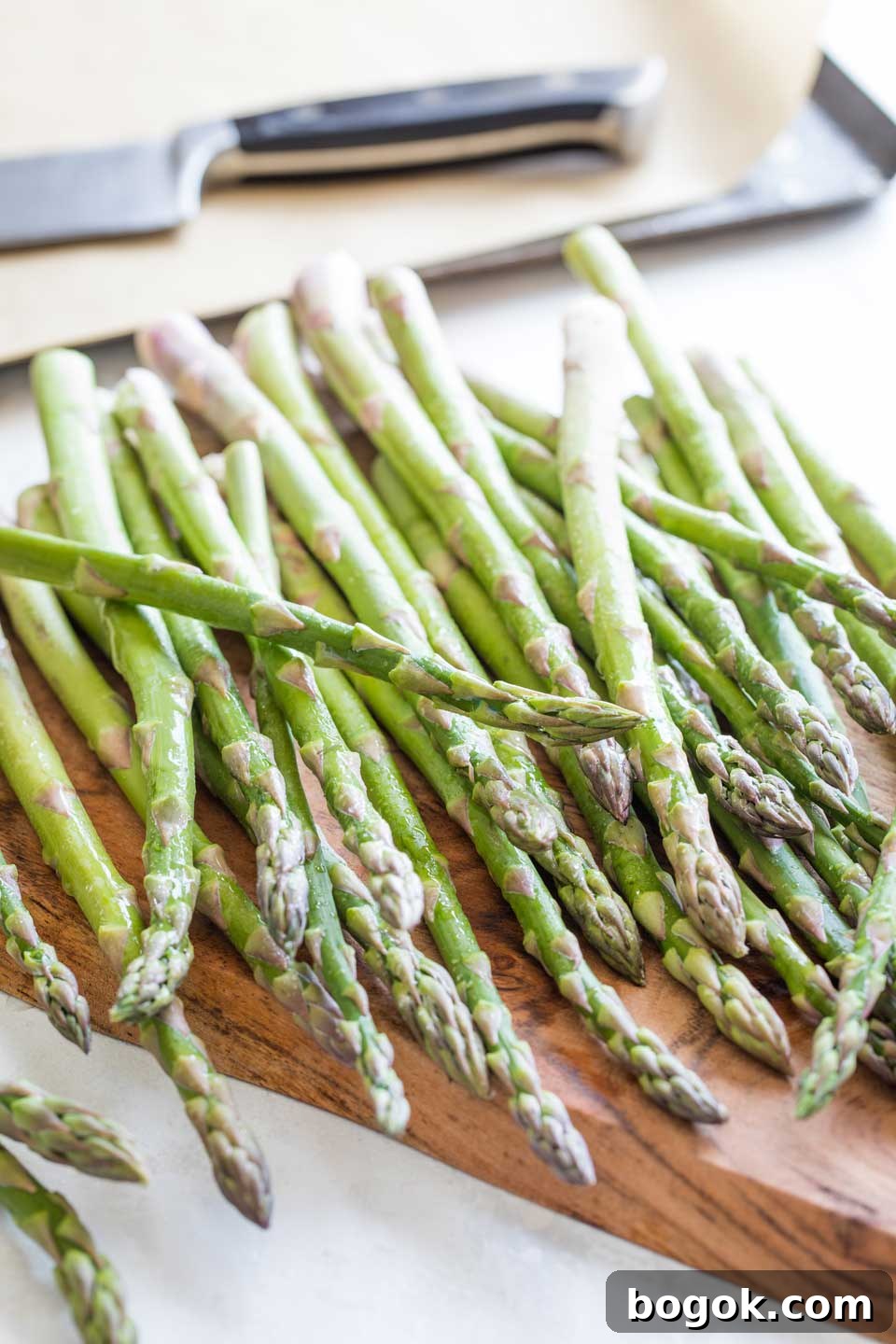
~ Want tips for choosing the freshest, most flavorful asparagus? Here are three specific things to look for, guidance on thick versus thin stalks, and simple storage tips so your asparagus stays delicious once you bring it home. ~
I buy asparagus frequently—it’s one of those vegetables I add to my cart almost every grocery trip.
After a lot of reading and hands-on trial and error, I’ve picked up practical tips that make it easy to choose the best asparagus available.
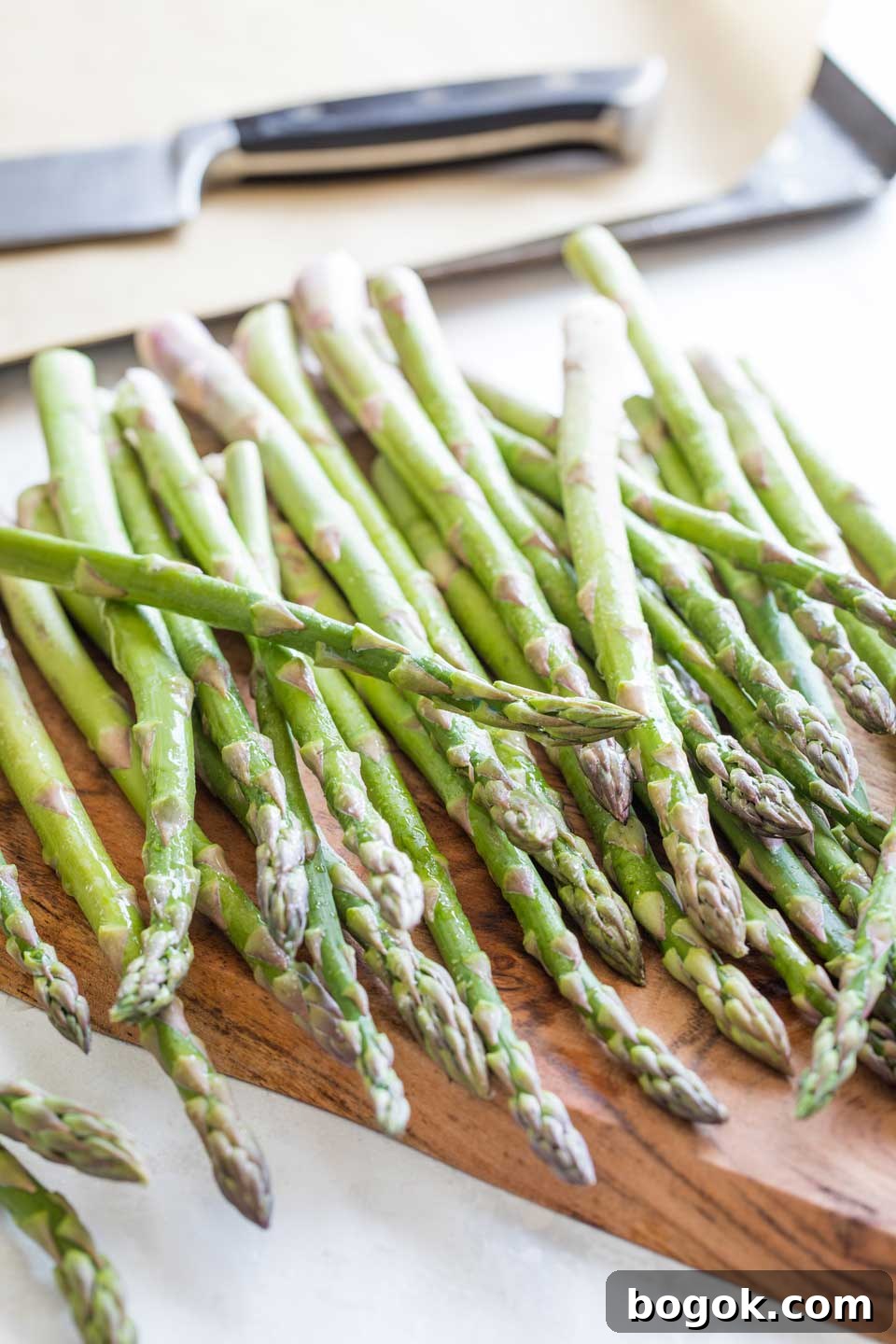
At a quick glance in the store—while I’m inspecting the rubber-banded bunches—I can usually tell if the asparagus will be outstanding or just okay.
Here’s what I look for and what you can check, too:
How to Buy Asparagus That Won’t Disappoint
When selecting asparagus, focus on three things: the condition of the stalks, the condition of the tips, and how the store is presenting and storing the asparagus. One common concern—thickness of the stalks—matters far less than freshness.
#1: The Stalks
Choose firm stalks. Avoid bunches with dried, wrinkled, limp, rubbery or leathery stems. Firmness is a reliable sign of freshness and quality.
#2: The Tips
Inspect the tips carefully. They should be tightly closed and look fresh. Skip asparagus with frazzled, dry, opening, mushy, or slimy tips—those are signs the bunch is past its peak.
In short: freshness is the most important factor. Fresh asparagus looks vibrant from tip to stem.
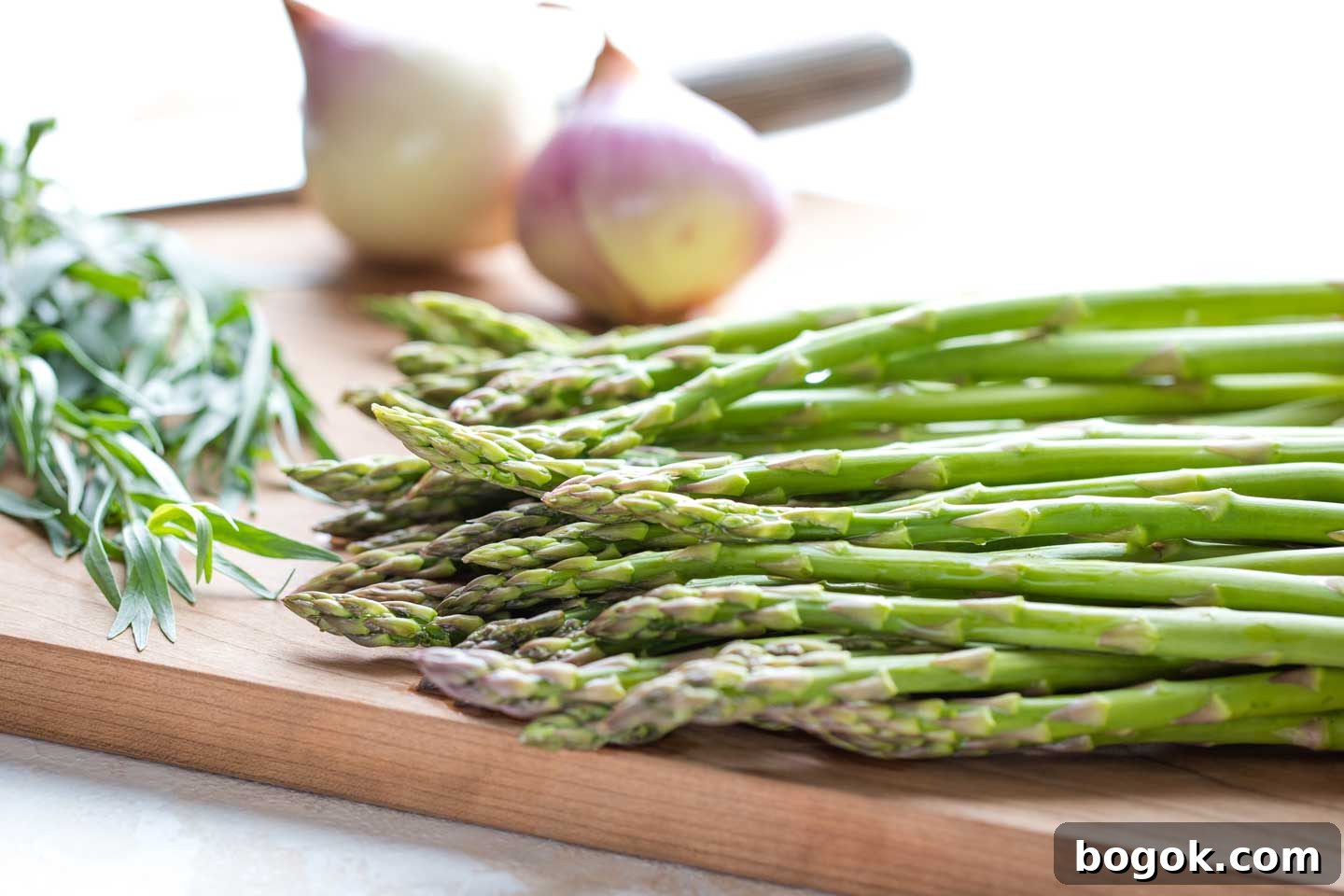
The natural sugars in asparagus begin converting to starch soon after harvest, so the sooner you enjoy it after picking, the sweeter and more tender it will be. Also, the longer asparagus sits, the more of the stem you’ll have to trim away because the ends dry out—meaning less edible vegetable for you.
#3: The Presentation
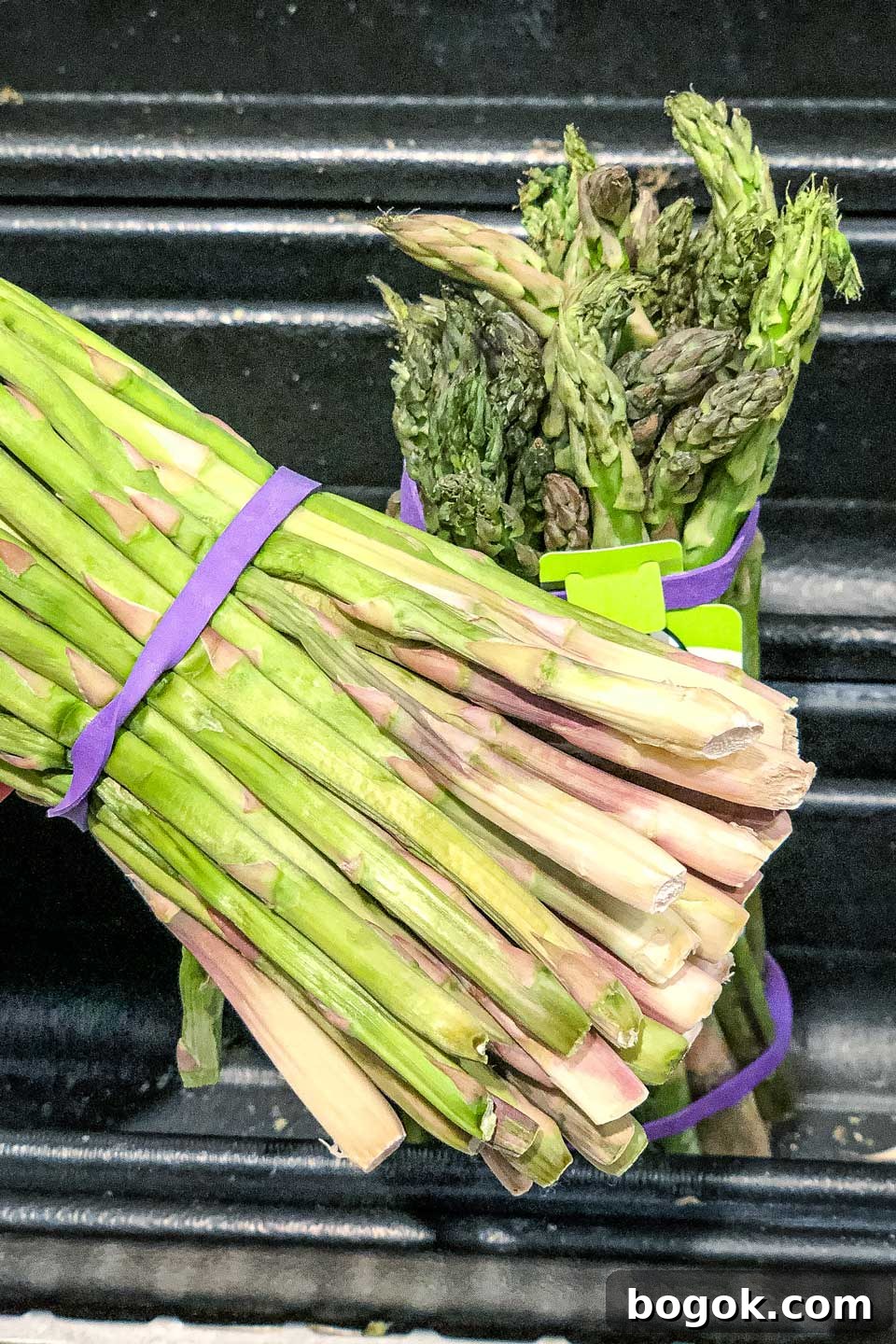
Notice how many grocery stores keep asparagus bunches with their cut ends in shallow water, similar to how florists display cut flowers. That’s intentional and helpful: a moist presentation keeps the asparagus fresher longer.
The opposite—bunches placed in dry trays—often shows signs of decline: dry, frizzy tips and wrinkled, dehydrated bottoms. If the display looks neglected or the tray is dry, pass on those bunches.
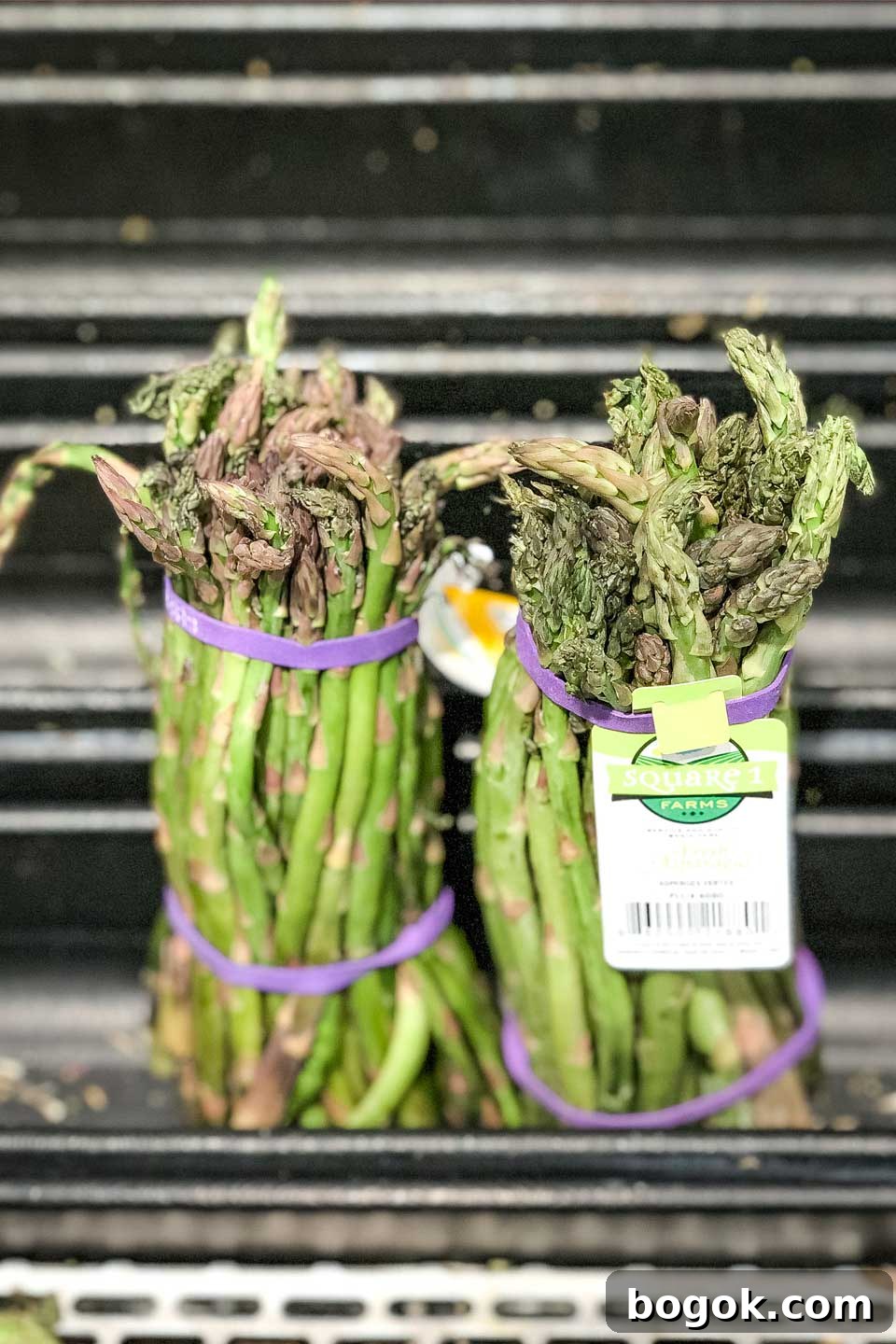
When the trough is empty and the bunches are dry, the asparagus often looks tired and unappealing. That’s a sign to keep looking.
Always choose asparagus that has been stored with the cut ends kept moist. That same approach will also guide how you should store asparagus at home.
See those wrinkly, dehydrated ends? Trust me—walk away.
Is the Most Tender Asparagus Thick or Thin?
The thickness debate matters less than freshness. Size doesn’t determine quality or flavor—thick stalks are simply more mature. Both thick and thin asparagus can be sweet and tender if they’re fresh.
I tend to buy thin to medium-thick stalks, roughly no thinner than a pencil. When roasting, I prefer thinner stalks because they often retain a bit more crispness after cooking. Surprisingly, thinner asparagus can be firmer after cooking because its fibers are more closely packed.
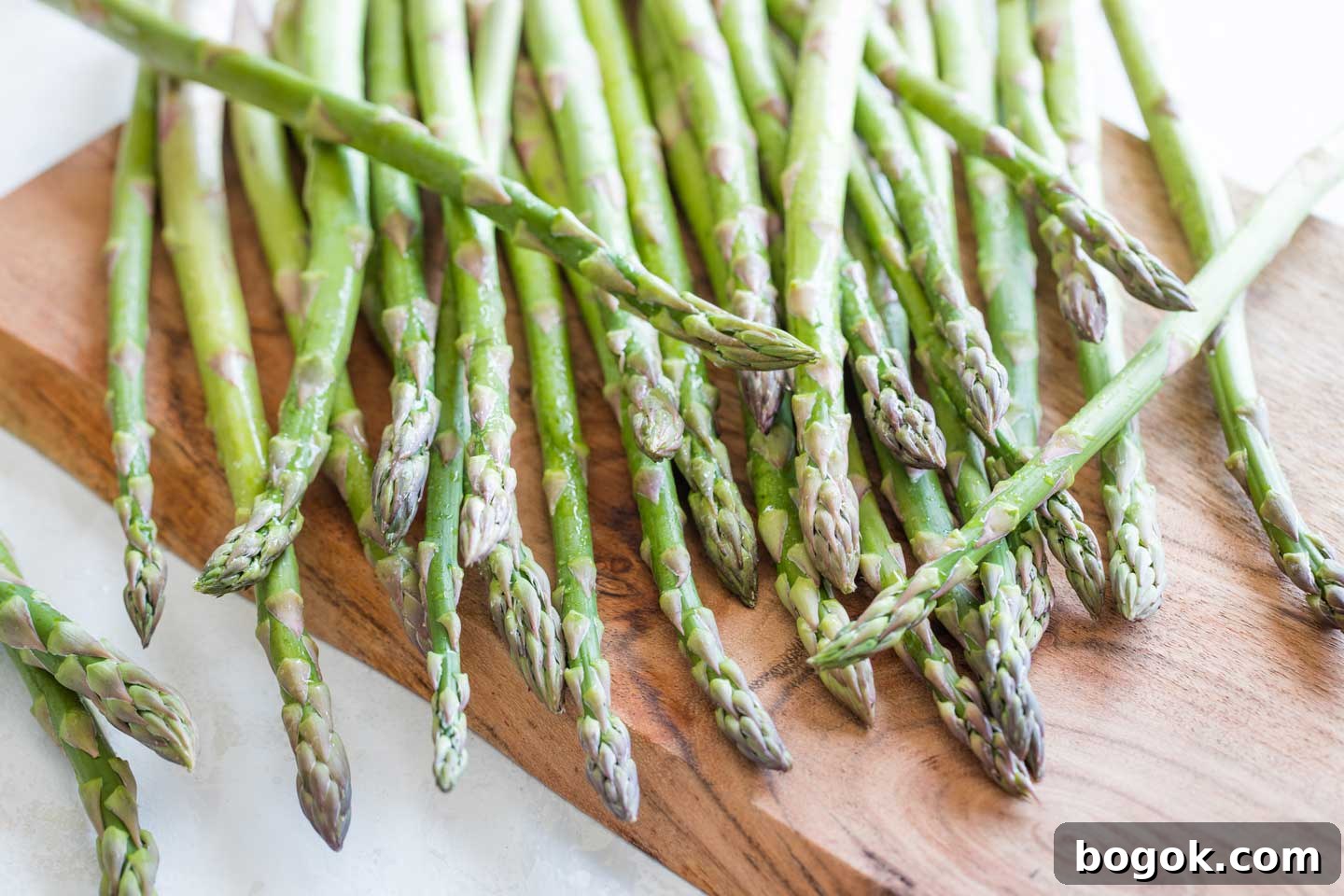
The takeaway: choose based on freshness and how you plan to cook the asparagus rather than its thickness.
How to Store Asparagus at Home
Use asparagus as soon as you can—its sugars convert to starch over time, reducing sweetness. If you need to store it, you can keep asparagus in good condition in the refrigerator for several days with a few simple steps.
Because stores keep cut ends moist, do the same at home. At minimum, wrap the cut ends in a damp paper towel. Even better: trim about an inch from the bottom of the stems, place the bunch upright in a wide-mouthed jar or drinking glass filled with an inch or two of water, and refrigerate—like a bouquet of flowers.
Loosely covering the tips with plastic wrap can help prevent drying if you won’t use the asparagus within a day or two.
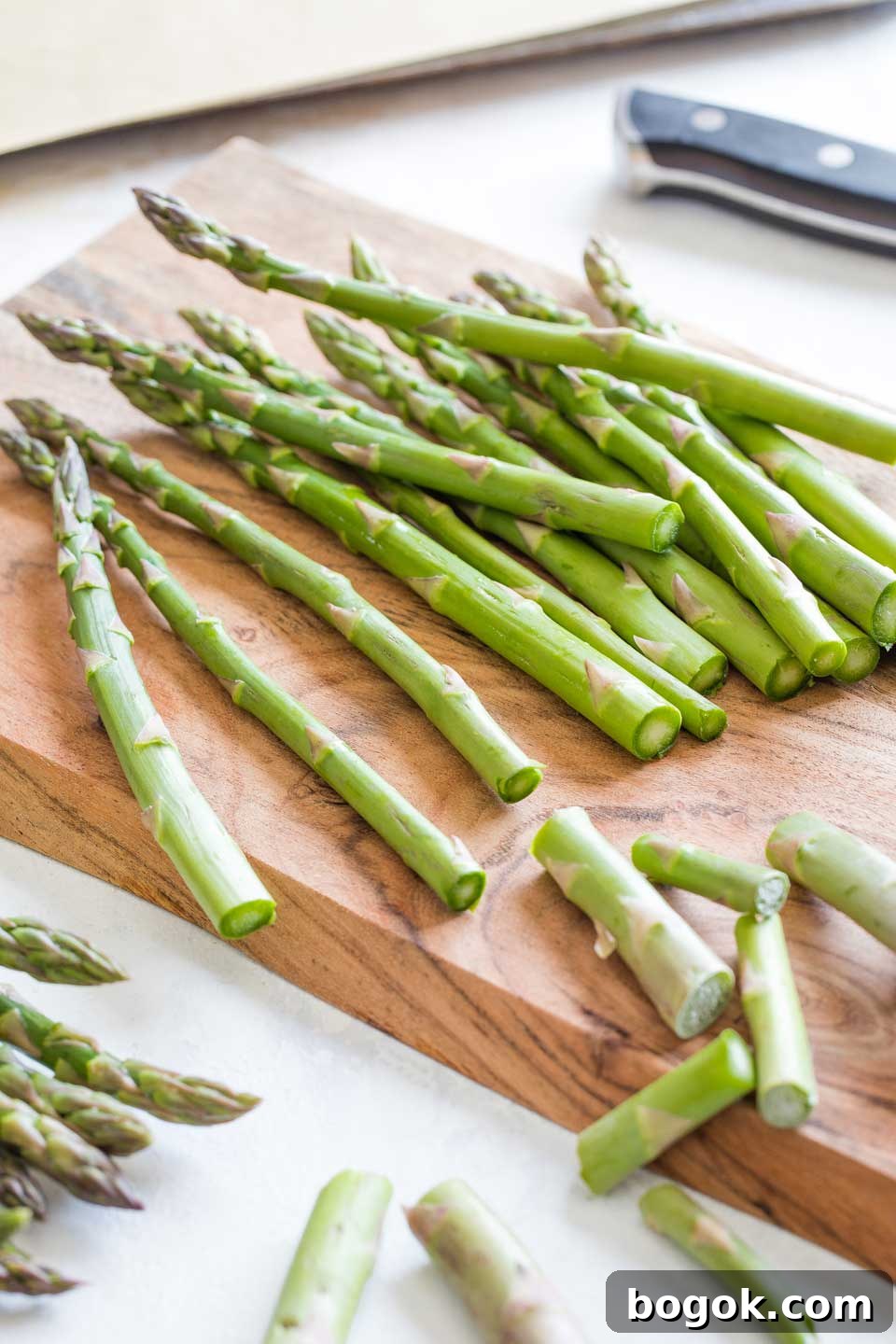
Follow those storage steps and your asparagus will stay fresher longer and taste better when you cook it.
My Favorite Asparagus Recipes
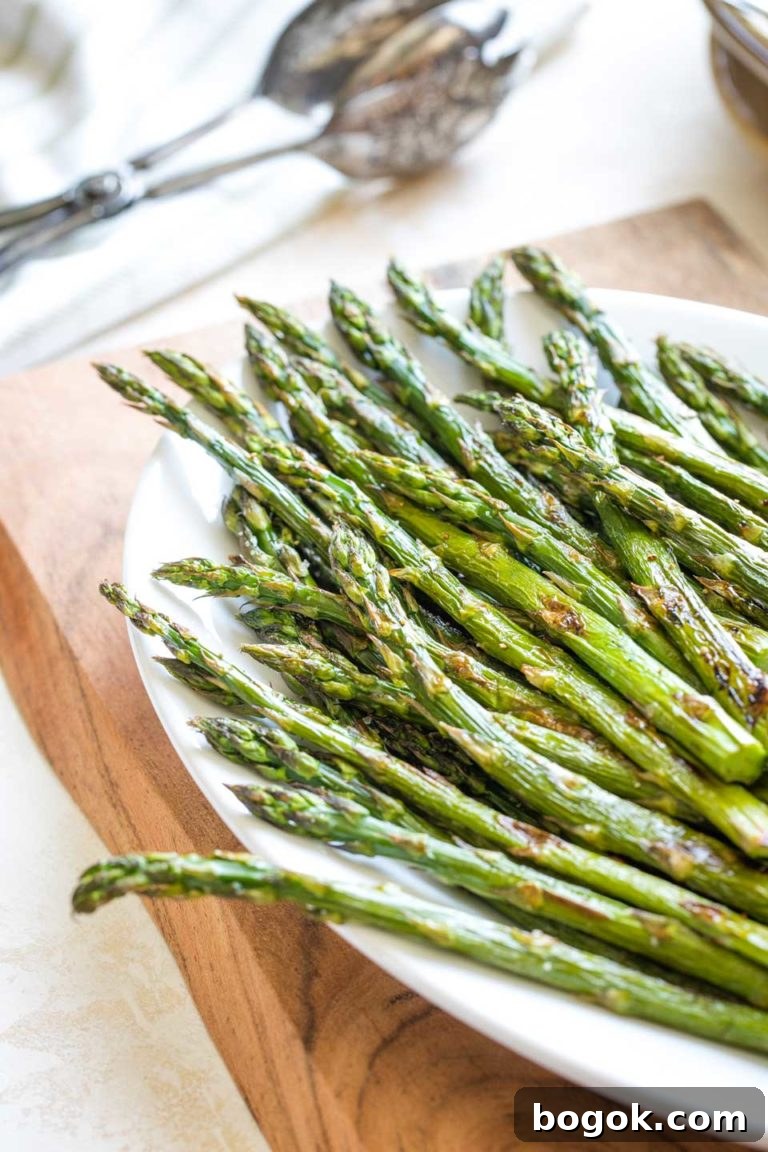
Easy Oven Roasted Asparagus
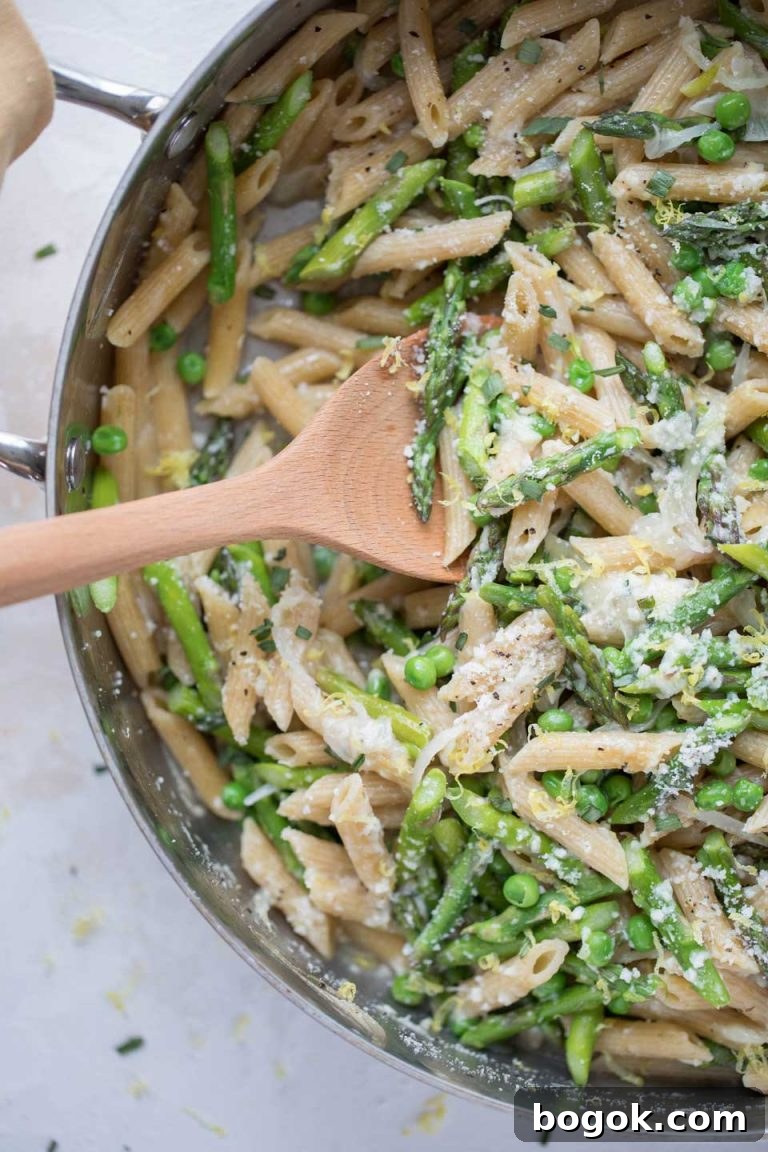
One-Pot Whole-Wheat Pasta with Asparagus, Peas and Parmesan
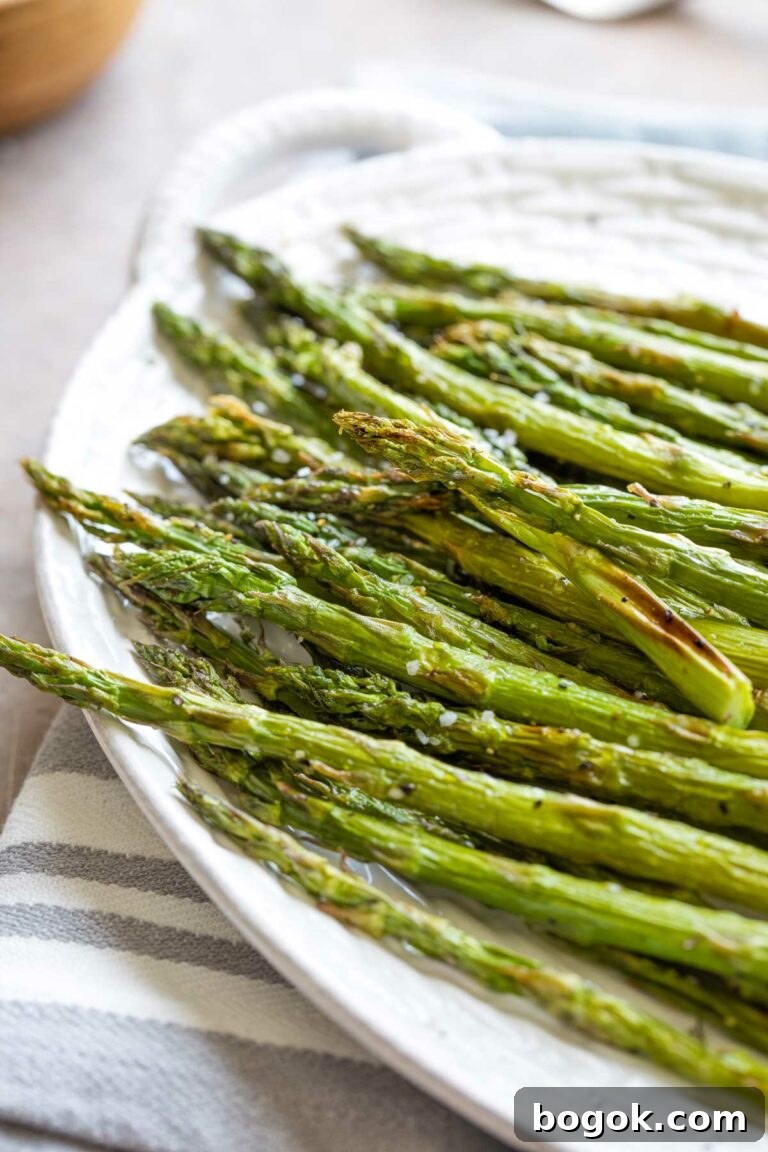
Air Fryer Asparagus (with 7 Easy Tips for Perfection)
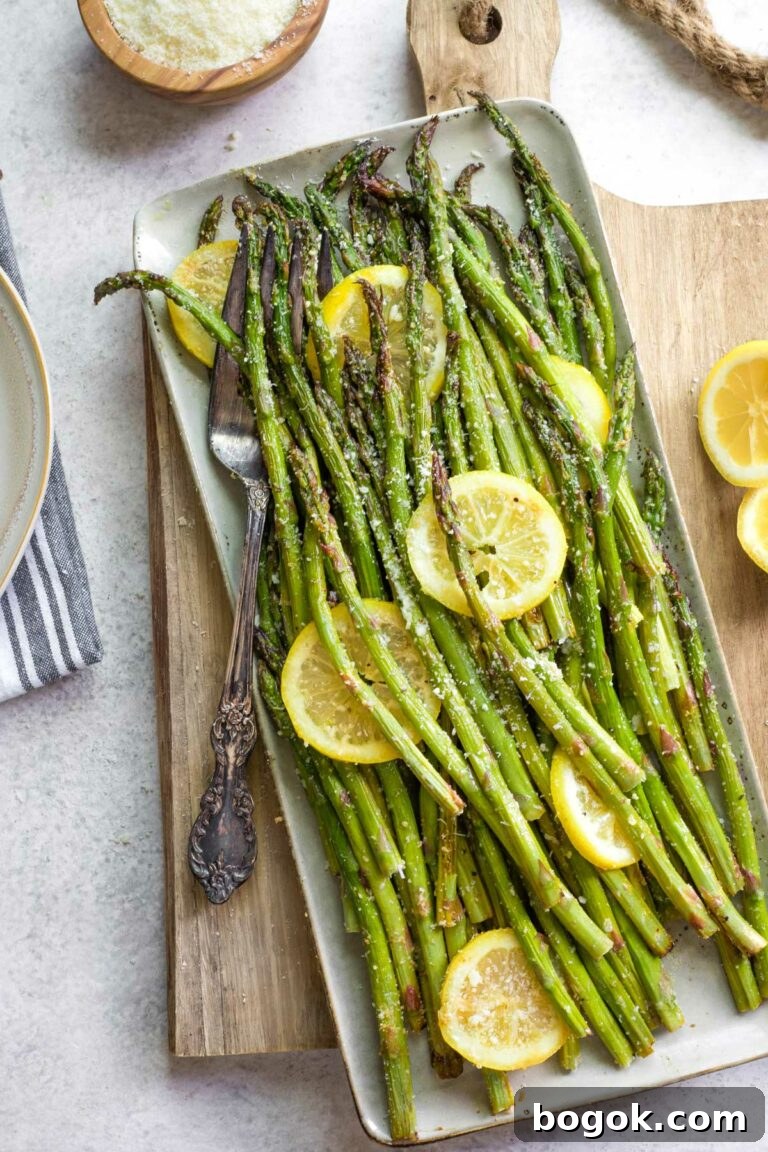
Grilled Asparagus with Parmesan, Lemon and Garlic
Okay—now you know how to pick top-notch asparagus and how to keep it fresh. Head to the store, find that perfect bundle, and start cooking. Delicious asparagus awaits!