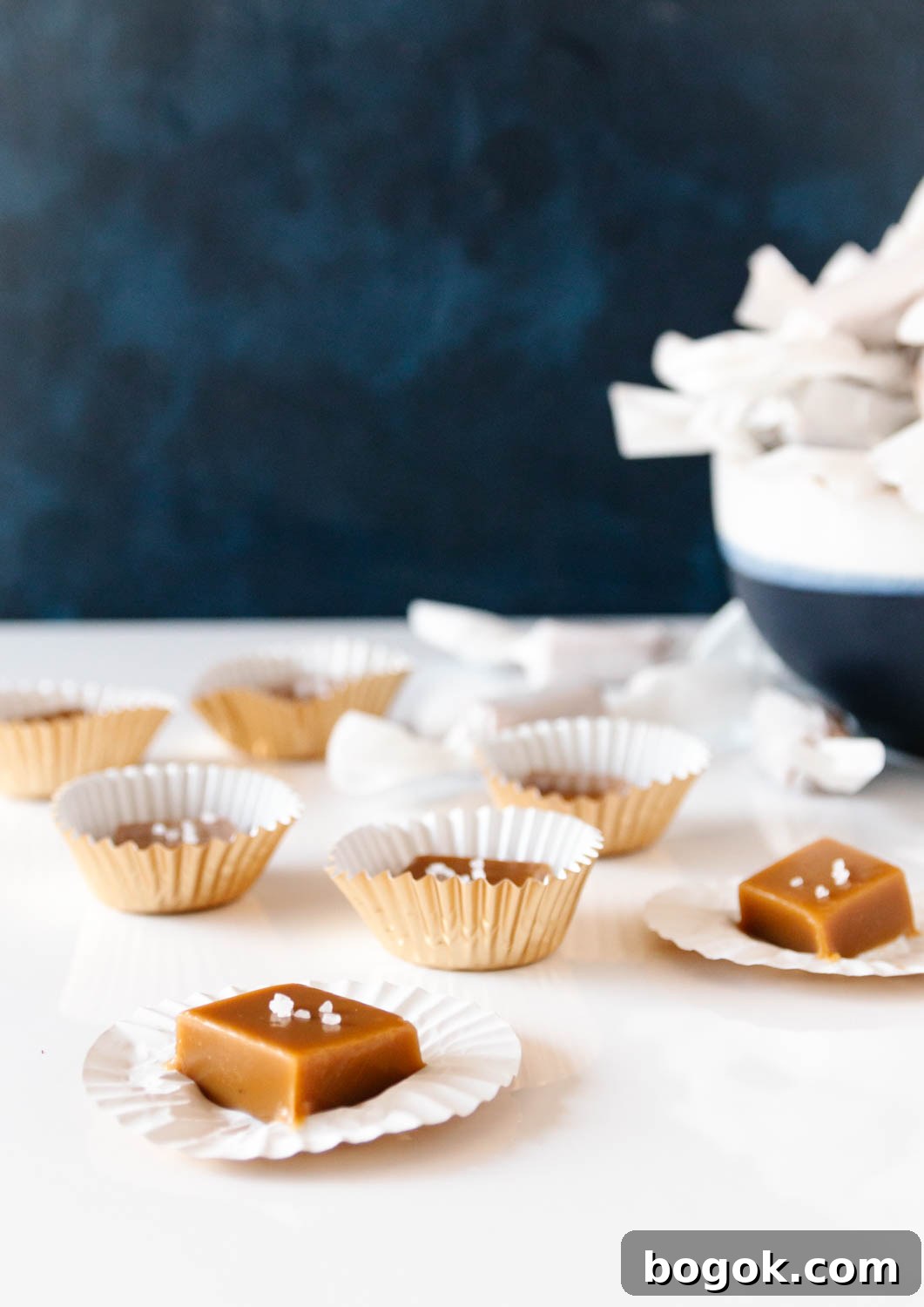
If you love caramels and enjoy a creamy, slightly nutty flavor, Goat Milk Caramels are a wonderful treat. Even first-time candy makers can succeed with this straightforward recipe. Be warned: once you start, they may be hard to stop eating!
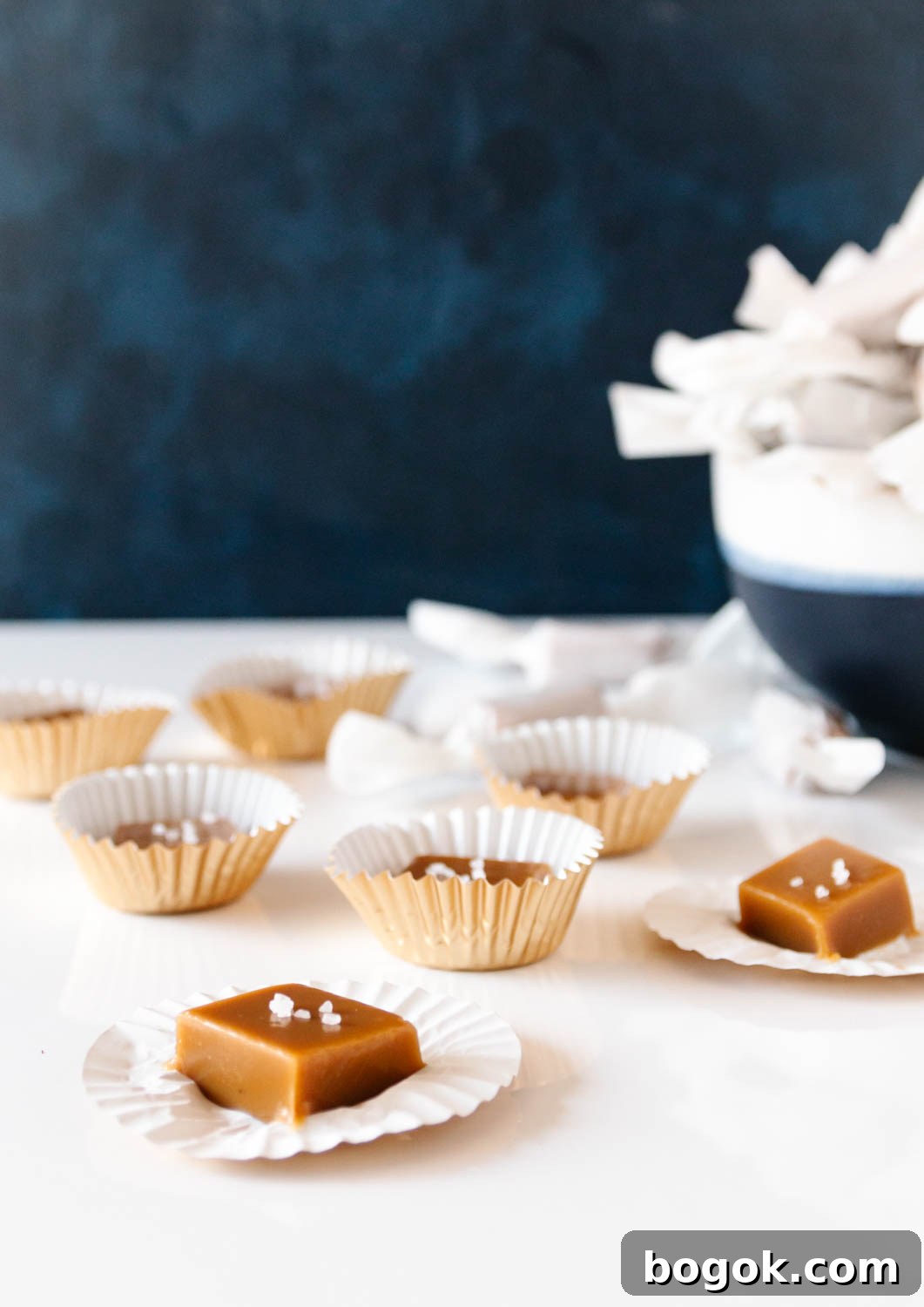
Not sure about goat milk? If your first reaction is “goat milk!?” relax. These caramels don’t taste overtly of goat milk. Instead, the milk and cream enrich the texture and deepen the flavor, producing a richer, more complex caramel compared with using cow’s milk alone.
Goat milk caramels are an excellent way to use extra goat milk, producing a generous batch of soft, chewy candies. Read on to learn everything you need to make them at home.
FYI: Goat milk is not dairy-free or lactose-free. Like most plain caramel recipes, these caramels are naturally gluten-free when no gluten-containing add-ins are used.
How exactly do I make Goat Milk Caramels?
Caramels are cooked on the stovetop, similar to caramel sauce, but to a higher temperature so they set as firm candies. Patience and attention are the keys: combine the ingredients, gently heat and stir until smooth, and cook until the mixture reaches the target temperature. Then pour into a prepared pan, allow to set, and cut into squares once firm.
The method is simple: one-pot cooking, careful stirring, and using a reliable candy thermometer to hit the correct temperature for the texture you want.
What equipment will I need?
Thermometer – An instant-read digital candy thermometer makes this recipe much easier. Glass thermometers work too, but can be fragile. Check your digital thermometer’s calibration by measuring boiling water (212°F at sea level) and adjust mentally if it reads slightly off.
Check to be sure your digital thermometer is calibrated.
If your thermometer reads 102°F in boiling water, mentally deduct 2°F when monitoring the caramel. Small temperature differences affect chewiness and final set.
Candy molds or a rimmed baking pan – A silicone mold is optional; a lined 8-inch square baking pan works well and is easy to use. Line it with parchment and leave a small overhang to lift the set caramel out for cutting.
Pizza wheel or bench scraper – A greased pizza cutter or bench scraper makes neat cuts. A tiny amount of neutral oil or nonstick spray on the blade prevents sticking; don’t overdo it or the caramels will feel greasy.
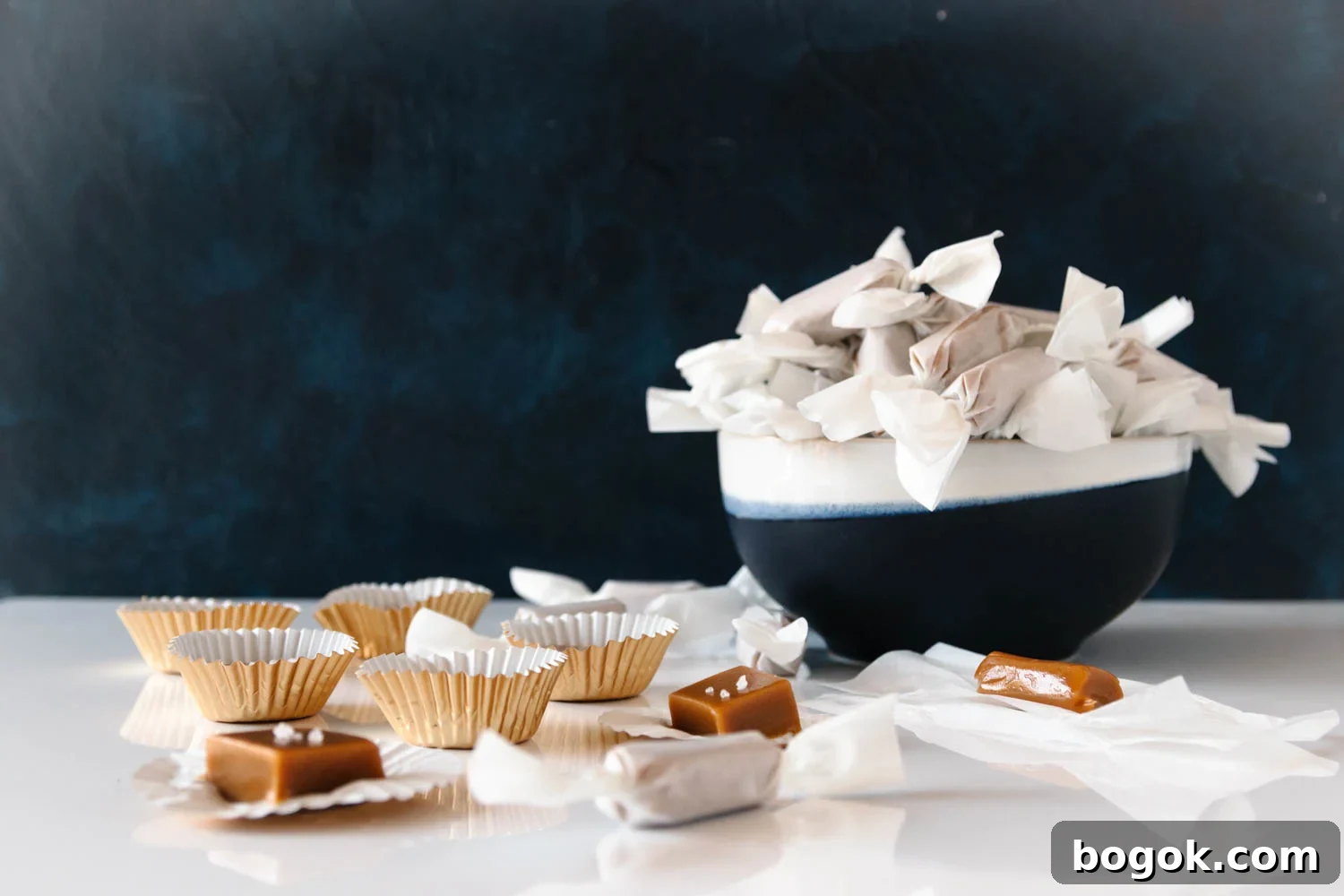
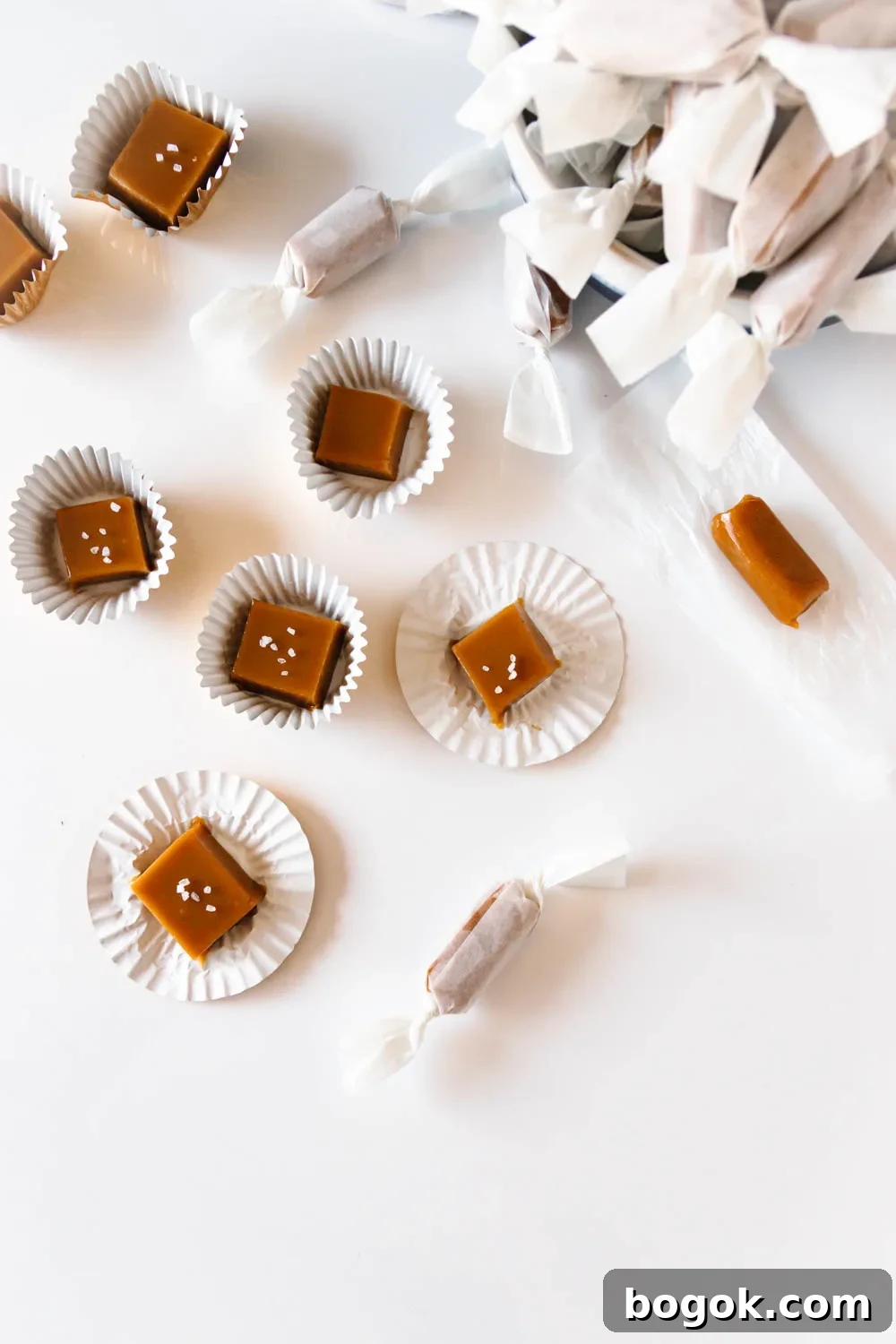
Wax paper or mini cupcake liners – Individually wrap caramels in wax paper to keep them fresh and prevent drying. Mini cupcake liners are a pretty serving option and work well if you’re gifting.
Goat Milk Caramel Ingredients
Goat milk – Use full-fat goat milk and heavy cream for the creamiest result. Whole cow’s milk can be substituted if needed, but the flavor and texture will differ.
Honey or light corn syrup – Honey adds flavor; light corn syrup keeps the texture reliably smooth. Agave is another alternative, though it may alter flavor slightly.
Brown sugar – Light or dark brown sugar both work. The difference is molasses level, which changes flavor subtly. Use fine-grain brown sugar so it dissolves easily.
Unsalted butter – Using unsalted butter gives consistent salt levels; sprinkle coarse sea salt on finished caramels if you prefer salted caramels.
How to serve and wrap your caramels
Finish caramels with a light sprinkle of coarse sea salt, a chocolate dip or drizzle, or leave plain. Properly wrapped and stored, these caramels travel well and make excellent gifts.
Storage: Once individually wrapped, store at room temperature in an airtight container for up to 2 weeks. Refrigerate for 3–4 weeks or freeze in an airtight container for up to 3 months. Thaw frozen caramels at room temperature for about an hour before serving. If shipping, include storage instructions so recipients can enjoy them at their best.
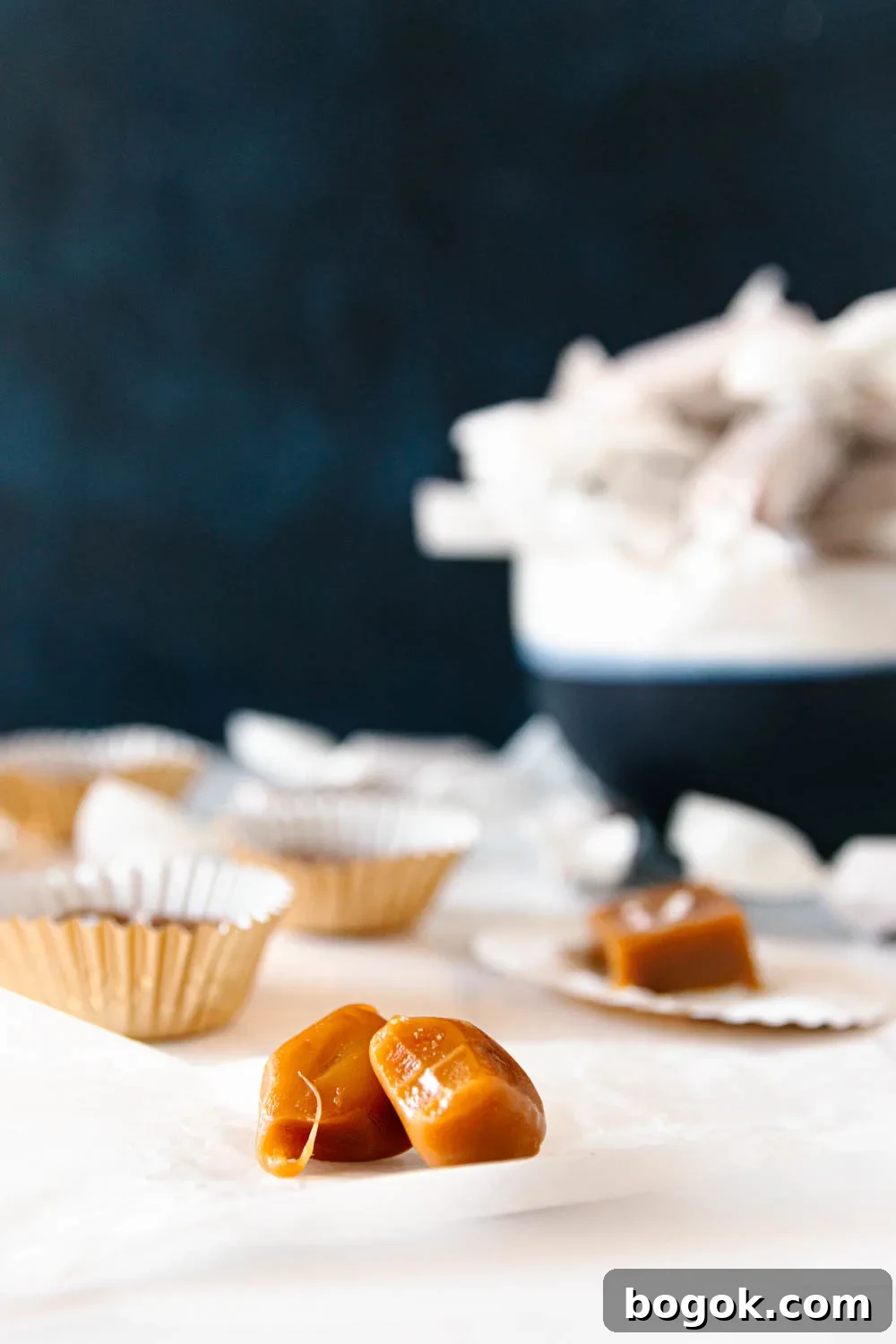
Enjoy your goat milk caramels! If you make them, feel free to share how they turned out.
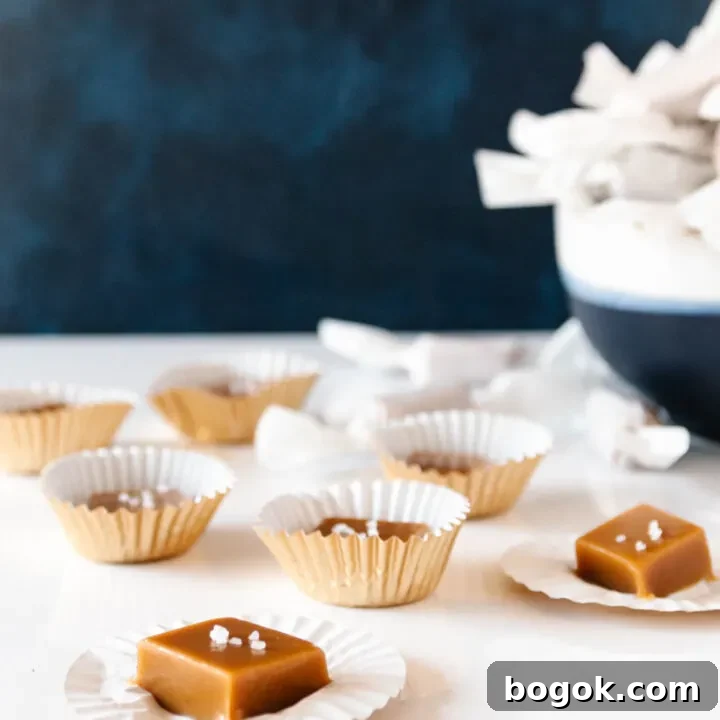
Goat Milk Caramels
64 1-inch square caramels
5 minutes
30 minutes
3 hours
3 hours 35 minutes
Creamy goat milk caramels are an easy candy for beginners. They make lovely gifts and a satisfying make-ahead treat for cravings or gatherings.
Ingredients
- ½ cup butter, cut into slices
- 1½ cups brown sugar, lightly packed
- ¼ cup light corn syrup or honey
- 1¼ cups goat milk
- 1¼ cups heavy cream
- pinch of salt
- 1 tablespoon vanilla extract
- nonstick spray or extra butter for greasing the pan
Optional Touches:
- Coarse sea salt
- Coating chocolate or tempered chocolate for dipping
Equipment:
- 8-inch square baking dish with rim
- parchment paper for lining the pan
- candy thermometer
Instructions
- Grease an 8-inch square baking dish and line it with parchment, leaving an overhang on two sides to create “handles” for easy removal.
- In a heavy-bottomed pot, combine the sliced butter, goat milk, heavy cream, corn syrup or honey, and brown sugar.
- Place the pot over medium-high heat and stir constantly until the mixture is smooth and just begins to simmer.
- Attach a candy thermometer and continue stirring for about 20 minutes until the temperature reaches 245°F. For firmer caramels you can go up to 248°F; for slightly softer caramels aim for 243–245°F.
- When the caramel reaches your desired temperature, remove the pot from the heat. Stir in the vanilla and a tiny pinch of salt, then carefully pour the hot caramel into the prepared pan.
- Let the caramels set at room temperature for a few hours until firm. To speed up setting, refrigerate briefly.
- Grease a pizza wheel or bench scraper. Lift the set caramel from the pan using the parchment handles and place it on a cutting board.
- Cut into 1-inch squares (or the size you prefer). Wrap each piece in wax paper or place in mini cupcake liners. Sprinkle with sea salt or dip in chocolate if desired.
- Store wrapped caramels in an airtight container at room temperature for up to 2 weeks, refrigerated for 3–4 weeks, or frozen for up to 3 months.
Notes
- Slicing the butter helps it melt evenly and prevents small pools of butter in the finished caramel.
- Yield depends on the size you cut: a 1-inch square is typical, but you can cut larger “two-bite” pieces.
- Substitute honey or agave for light corn syrup, knowing they will add their own flavor notes. Both work well in practice.
- A “pinch” of salt is roughly 1/8 teaspoon. That small amount enhances flavor without making the caramels salty.
- Caramel is extremely hot at cooking temperature. Use caution when pouring and consider oven mitts or an assistant to help.
- If you plan to refrigerate caramels, avoid adding coarse salt on top: the salt can dissolve when chilled and then returned to room temperature.
Recommended Products
- Maldon Sea Salt flakes (for finishing)
- Digital candy thermometer (instant-read, pot clip recommended)
- Twisting wax paper or candy wrappers for individual wrapping
Nutrition Information:
Yield: 64
Serving Size: 1
Amount Per Serving:
Calories: 57
Total Fat: 4g
Saturated Fat: 2g
Trans Fat: 0g
Unsaturated Fat: 1g
Cholesterol: 10mg
Sodium: 30mg
Carbohydrates: 6g
Fiber: 0g
Sugar: 6g
Protein: 0g
These nutrition values are estimates. Exact values will vary based on ingredients and quantities used.
Did this recipe inspire you?
Please leave a comment or share a photo if you try this recipe.