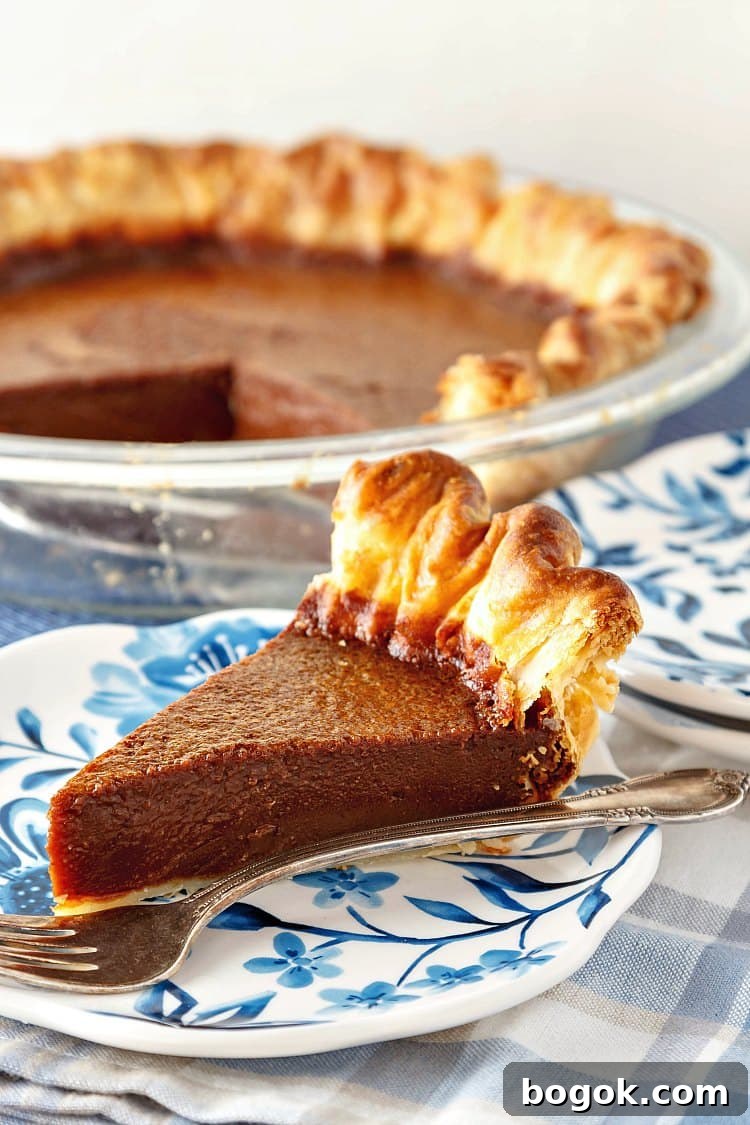
I have a delicious chocolate caramel buttermilk pie for you today. I’m very happy with how this one turned out and I think you will enjoy it. It took a bit of care to combine caramel with buttermilk without curdling, but the attention was worth it.
If you enjoy chocolate pies, try my chocolate chess pie. For fans of old-fashioned pies, check my other classic pie recipes. For convenience, all my pie and tart recipes are collected in one place. Thanks for stopping by!
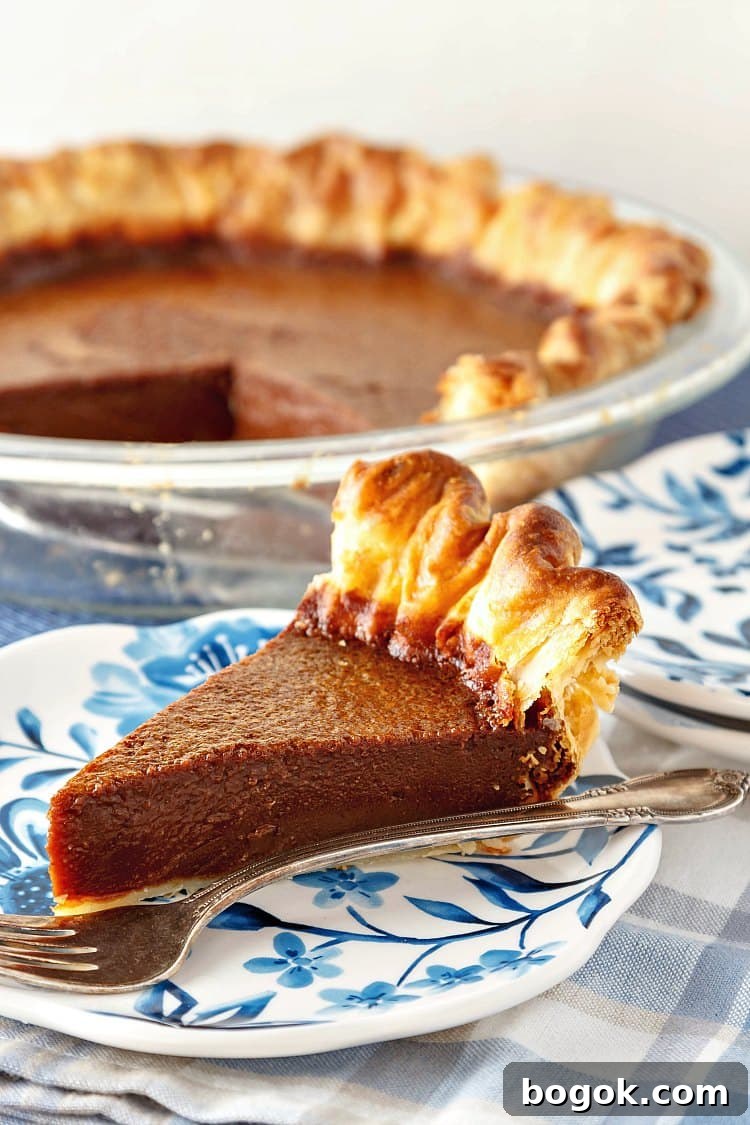
Table of Contents
Can A Pie Be Too Rich?
Here’s how this pie came to be. I originally set out to make a classic buttermilk pie using a well-reviewed recipe, then adapted it slightly — less sugar, a little more salt, and extra vanilla — and paired it with a very buttery laminated pie crust.
That crust is rich and easy to handle, but paired with a filling that included a full stick of melted butter, the result felt overly rich. Yes, a pie can be too rich; the butter began to separate and rise to the top as the pie settled. I trimmed the butter in later versions to avoid that problem.
How To Change a Pie Recipe to Suit Your Tastes
The original buttermilk pie left me wanting more — more complexity, a deeper flavor. To build complexity I started with caramel, which adds depth compared to plain sugar. From there it was easy to make the pie chocolatey by whisking cocoa powder into the base.
I also added a touch of espresso powder to boost the chocolate. Use about 1 teaspoon to reinforce chocolate notes or up to 3 teaspoons if you want a noticeable mocha flavor. Both options are delicious.
That’s how the old-fashioned buttermilk pie evolved into Chocolate Caramel Buttermilk Pie.
Tender and Flaky Pie Crust (Science-y Stuff)
What Are the Ratios for Pie Crust?
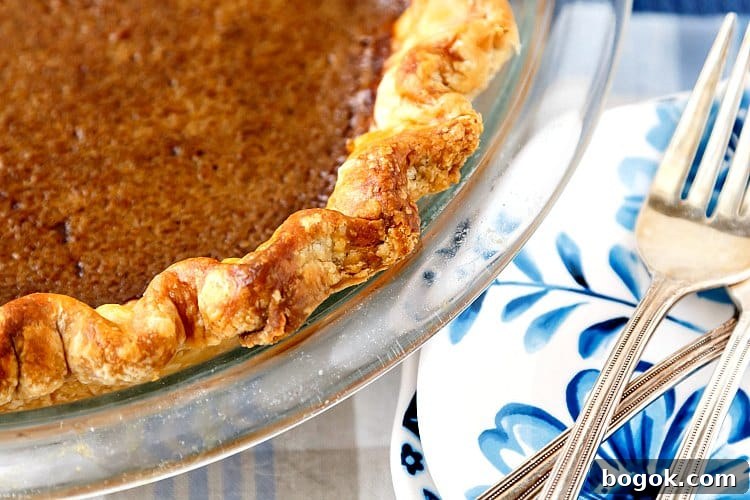
A common baseline ratio for pie crust is 3:2:1 (flour:fat:liquid by weight). It’s a handy rule if you don’t have a recipe on hand — it produces a reliable, tender crust. Bakers often tweak that ratio (for example, a richer 2:2:1 formula) to achieve extra flakiness.
For this pie I chose proportions between those two approaches. I started with 9 ounces of all-purpose flour and used 7 ounces of butter and 3.5 ounces of liquid, including some buttermilk for a tender, slightly tangy dough. The folding and rolling technique adds layers and flakiness.
The dough made enough for a double-crust pie or two standard 9″ pies; I used a deep-dish pan for a single, tall pie.
How to Make This Guy
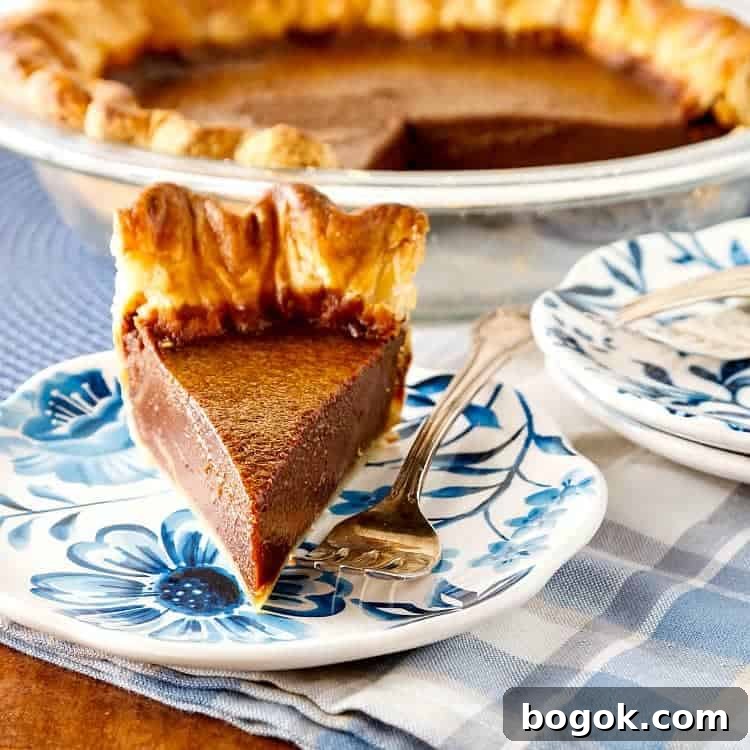
The first attempt kept a full stick of butter in the filling and the butter separated out during cooling. I reduced the melted butter from 4 ounces to 3 ounces in subsequent versions; the pie remains rich but balanced. The buttermilk’s tang keeps the finish lively, so the pie works well warm in summer and as a cozy dessert in winter.
Making the caramel with buttermilk adds steps and requires careful temperature control to avoid curdling. If you prefer a simpler method, you can skip the caramel step and simply whisk the filling ingredients together — it will still be excellent. Notes below offer alternatives for an easier process.
Equipment You May Need
Helpful tools for custard pies: a reliable instant-read thermometer to check doneness, a sturdy pie or deep-dish pan, cooling racks, and a pie server. These items make the baking process smoother and the results more predictable.
A Note About Measurements
All ounce measurements in this recipe are by weight, not volume. Using a scale gives the most consistent results for both crust and filling.
Please take a moment to rate and review this recipe if you try it. Your feedback helps others and helps me improve recipes here.

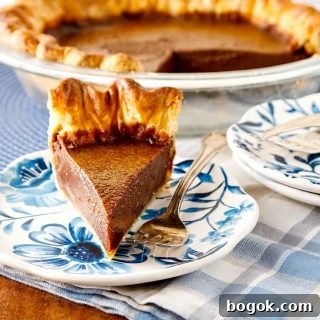
Chocolate Caramel Buttermilk Pie
Jennifer Field
NOTE: All ounce measurements are by weight, not volume.
Pin Recipe
Equipment
- Digital kitchen scale
- 9–9.5″ deep-dish pie pan or standard pie pan
- Pie server and cooling rack
Ingredients
For the Pastry
- 9 oz all-purpose flour (by weight)
- 1 Tablespoon granulated sugar
- 1 teaspoon kosher salt
- 7 oz unsalted butter, cold, cut into pieces
- 2 oz cold water
- 1.5 oz cold buttermilk
For the Filling
- 9 oz granulated sugar (for caramel)
- 1 cup buttermilk
- 4 Tablespoons all-purpose flour
- 3 Tablespoons cocoa powder
- 3 large eggs
- 3 oz melted unsalted butter (about 3/4 stick or 6 Tablespoons)
- 1–3 teaspoons espresso powder
- 2 teaspoons vanilla extract or paste
- 1/2 teaspoon kosher salt
- 3–6 Tablespoons extra granulated sugar (optional, see notes)
Instructions
For the Pastry
- In a large bowl, whisk together the flour, sugar, and salt.
- Cut the cold butter into 10–12 pieces and toss with the flour. Using your fingers, coat pieces of butter with flour; leave some pieces the size of small marbles for flakiness. The mixture should look mealy with visible butter pieces.
- Mix the water and buttermilk together and pour evenly over the flour-butter mixture. Toss to combine, then press the dough against the bowl sides to bring it together.
- Turn the dough onto a floured surface, flour the top, and roll into a rough rectangle about four times as long as tall. Fold both short ends to the center, close like a book, then fold in half to form a fat square. Roll again to about a 10″ square and fold into thirds like a letter. Wrap and chill for about an hour.
- Divide the chilled dough, roll one portion to fit a pie pan (about 14–15″ for deep dish, 12–13″ for standard), loosely fold and transfer to the pan. Ease into the pan without stretching.
- Trim to leave about a 1″ overhang, tuck under to form a double-thick rim, and crimp. Freeze the crust for at least an hour (overnight is fine).
- When ready, prick the crust bottom and sides with a knife. Line with parchment or a coffee filter and fill with pie weights or dried beans. Bake at 375°F for about 15 minutes. Remove weights, brush the crust with egg wash (1 egg beaten with 1 teaspoon water and a pinch of salt), and return to the oven until the bottom is dry, about 10 more minutes.
For the Filling
- Prepare an ice bath in a large bowl and set 2–3 ice cubes aside.
- Place 9 oz sugar in a heavy saucepan and add just enough water to moisten. Heat over medium-high until boiling. Stir as needed. Once boiling, cover for 2 minutes to wash down sugar crystals on the pan sides.
- Remove the lid and watch closely as the sugar turns from pale honey to deep reddish-brown. When it reaches the color you want, remove from heat and set the pan in the ice bath. Carefully add the reserved ice cubes to arrest the cooking.
- Check the caramel temperature — it should be around 140°F. Pour in the buttermilk; the caramel may harden initially. Return the pan to medium-low heat and stir gently until the caramel fully melts into the buttermilk. Keep the mixture below a boil to avoid curdling; this will take about 10 minutes. Keep it around 165°F while melting, then cool to below 140°F before continuing.
- In a separate bowl whisk the eggs, flour, and cocoa powder until smooth. Whisk this mixture into the caramel-buttermilk, then add the melted butter, espresso powder, vanilla, and salt.
- Taste the filling and add 3–6 Tablespoons additional sugar if you prefer a sweeter pie (how much depends on how dark you cooked the caramel).
- Pour the filling into the blind-baked shell. Bake at 400°F for 10 minutes, then reduce heat to 375°F, loosely tent the pie with foil, and bake until the center jiggles but doesn’t slosh, about 30–35 minutes. The center temperature should be about 165°F.
- Remove the pie and cool on a rack. Serve slightly warm. Refrigerate leftovers; the pie is good cold or gently reheated on low in the microwave.
Notes
To simplify this pie:
- Skip caramelizing the sugar: whisk all filling ingredients together and bake as directed; no need to add extra sugar.
- Substitute heavy cream for the buttermilk if you want an easier caramel step. Pour 8 oz heavy cream into the caramel off the heat; it won’t curdle. If you use cream, reduce melted butter in the filling to 2 oz.
Nutrition
Carbohydrates: 64.3 g
Protein: 5.5 g

Hi, y’all! I hope you enjoyed this post and learned something useful. If you like my style, consider signing up for my occasional newsletter, The Inbox Pastry Chef, for updates and behind-the-scenes recipes.
That’s it. I think you’ll love this pie, whether you make the chocolate-buttermilk version or the full chocolate caramel iteration. It’s a little fussy when you caramelize sugar into buttermilk, but the flavor payoff is worth it. See the recipe notes for a streamlined option.
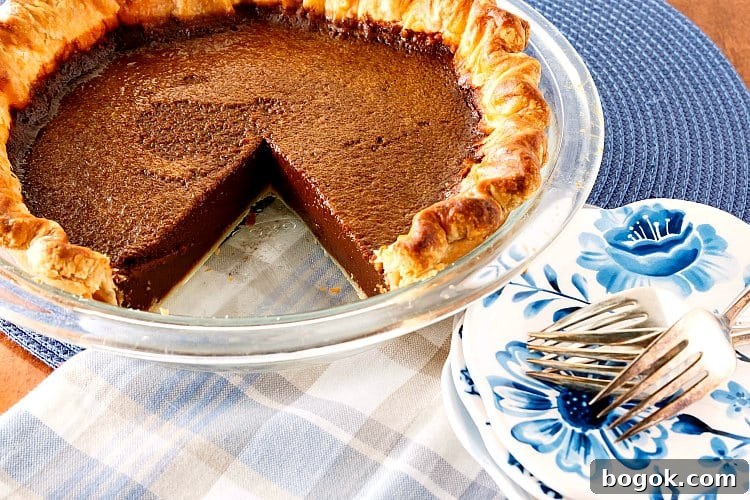
Thank you for spending time with me today. Enjoy the pie, and have a lovely day.