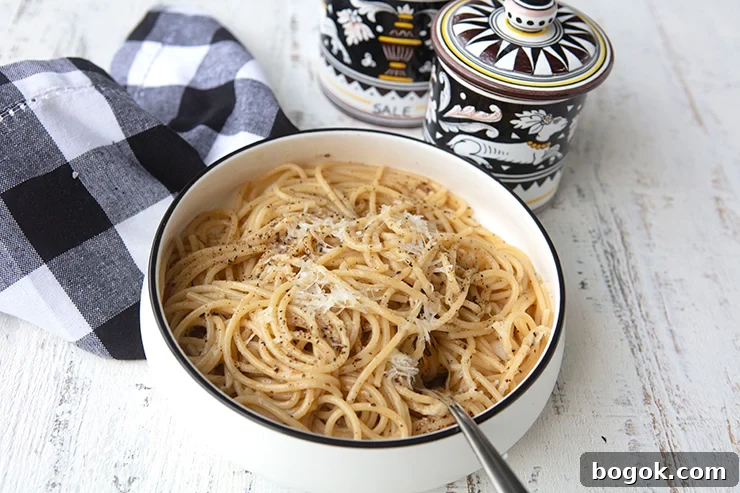
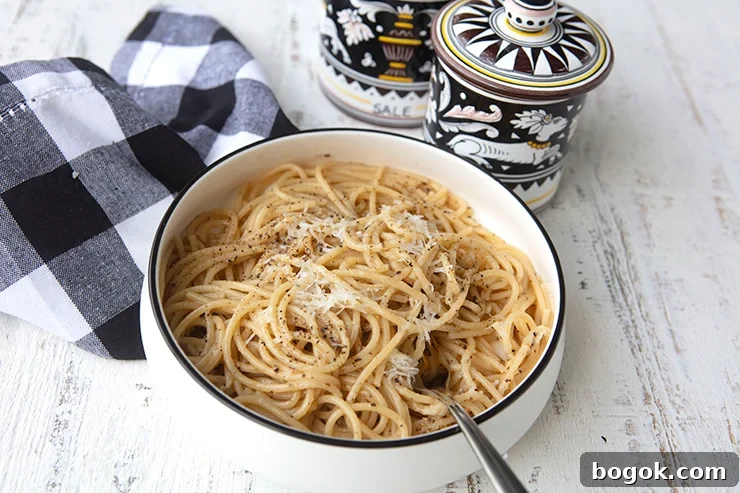
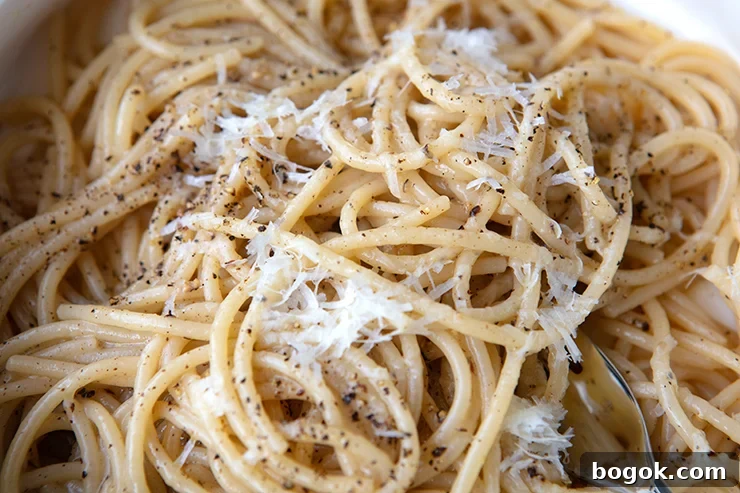
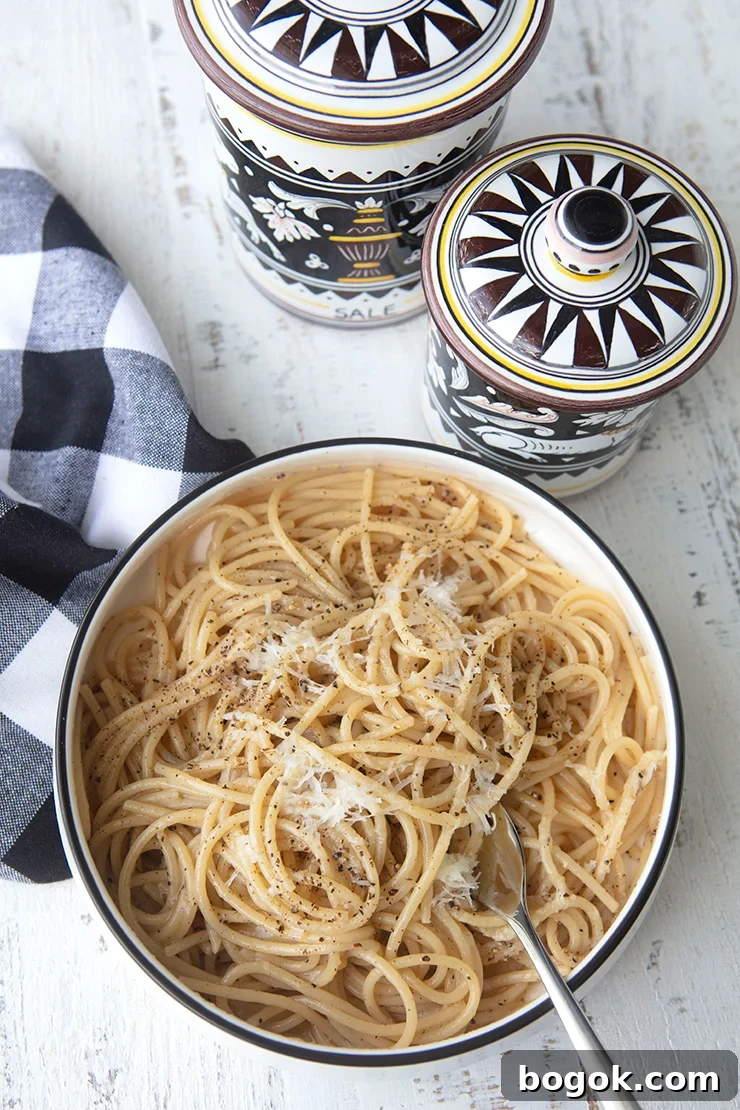
Cacio e Pepe is a classic Roman pasta made with just a few high-quality ingredients: aged Pecorino Romano cheese, freshly cracked black pepper, pasta (traditionally spaghetti), and a little of the starchy cooking water. The starch from the pasta water combined with a bit of olive oil or butter and finely grated Pecorino creates a silky, peppery sauce that clings to the noodles.
My husband co-owns a restaurant in Naples, Florida, where they serve an excellent version of Cacio e Pepe at Bar Tulia Mercato. It quickly became one of my favorite dishes—so much so that I order it there often and also make it at home. You don’t need to travel to Rome to enjoy a memorable bowl of this simple pasta.
For me, Cacio e Pepe is comfort food: economical, fast, and satisfying. Although it originated in Rome, you’ll commonly find it on menus across Umbria as well, where it is sometimes prepared with local pasta shapes such as strangozzi. The technique is simple but relies on timing and ingredient quality.
Use finely grated Pecorino Romano as the base. Some cooks also combine Cacio de Roma with Pecorino, but plain Pecorino Romano works beautifully on its own. The key is freshly cracked black pepper—use coarse, freshly ground pepper rather than pre-ground pepper for the best aroma and flavor. If you enjoy pepper, don’t hesitate to add more.
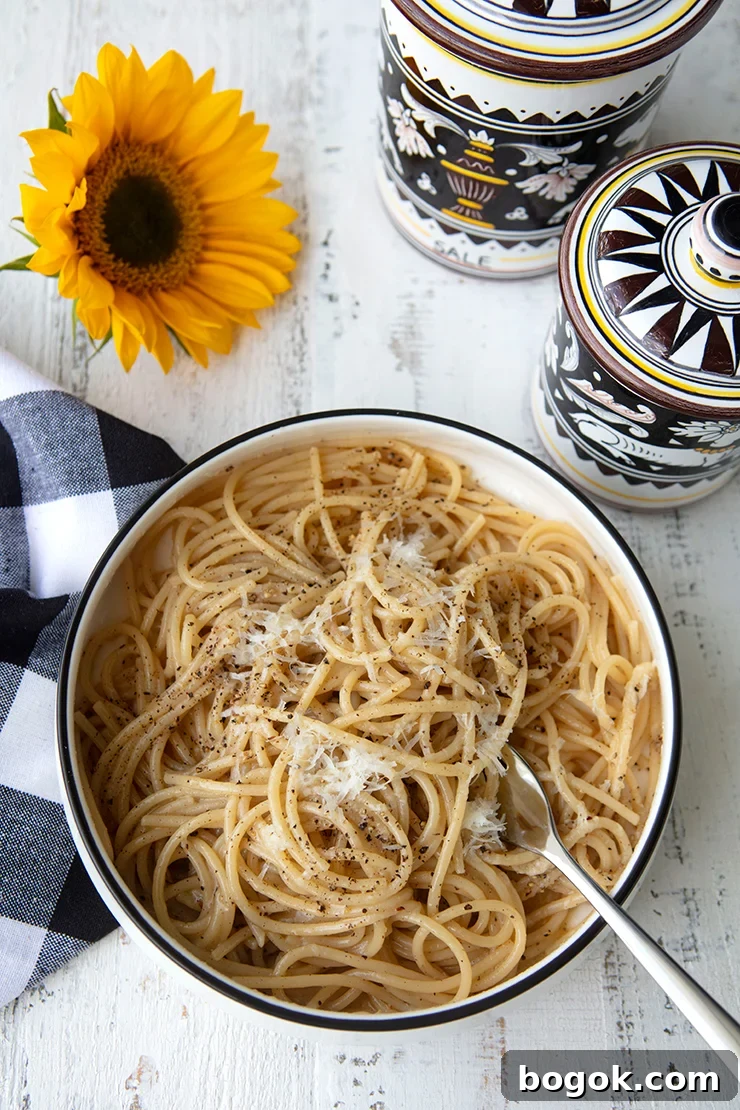
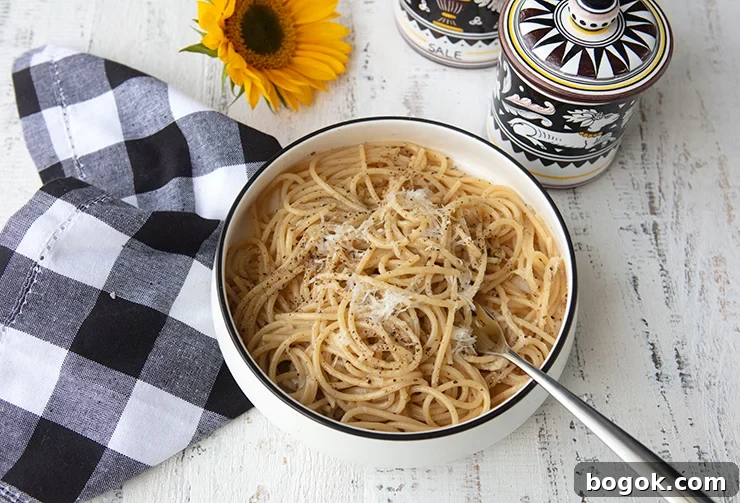
Cacio e Pepe
Serves 4
10 minutes
15 minutes
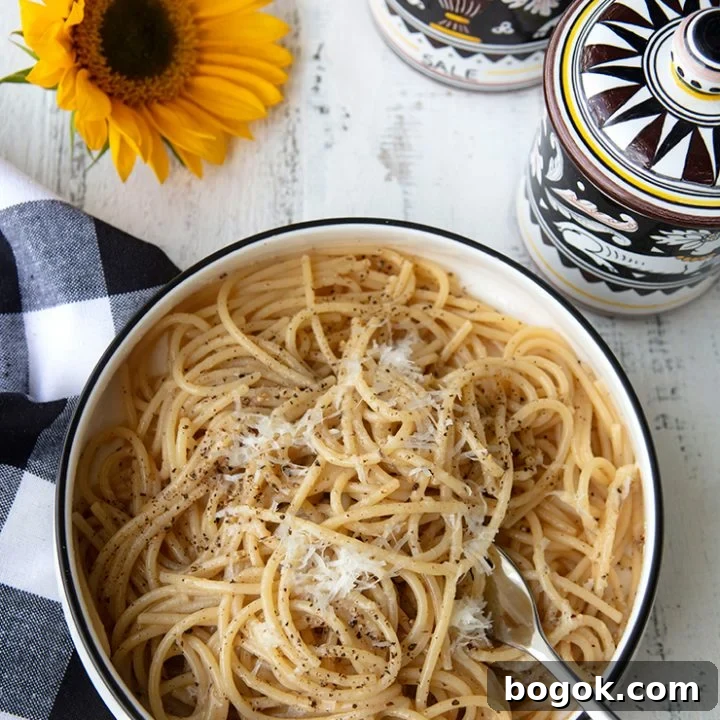
Grated Pecorino, freshly cracked black pepper, and olive oil or butter are all you need to dress spaghetti into a rich, pepper-forward Roman classic.
Ingredients
- 1 pound spaghetti
- 4 tablespoons extra-virgin olive oil
- 2 tablespoons butter
- 2 teaspoons freshly cracked black pepper
- 1 cup finely grated aged Pecorino Romano (reserve 1/4 cup for serving)
- 1/2 cup finely grated Cacio de Roma (or substitute with 1 1/2 cups total grated Pecorino)
Instructions
- Bring a large pot of salted water to a boil. Add the pasta and cook until al dente.
- While the pasta cooks, warm the olive oil in a skillet over medium heat until hot.
- Add the cracked black pepper and toast it for 1–2 minutes until fragrant.
- Drain the pasta, reserving about 1 cup of the starchy cooking water.
- Add 3/4 cup of the reserved pasta water to the skillet with the oil and bring it to a gentle boil.
- Add the butter and stir until it melts and blends with the liquid.
- Return the pasta to the pot or add it to the skillet, then sprinkle the grated cheese over the pasta, stirring continuously to prevent clumping.
- Toss the pasta with the cheese and oil mixture until the sauce becomes creamy and coats the noodles. Add small amounts of additional pasta water as needed to maintain a smooth texture.
- Divide among four plates and finish with the reserved Pecorino and extra cracked black pepper to taste.
Did you make this recipe?
Share your thoughts or a photo on social media—your feedback helps others enjoy this simple Roman classic.
Buon Appetito!
Deborah Mele