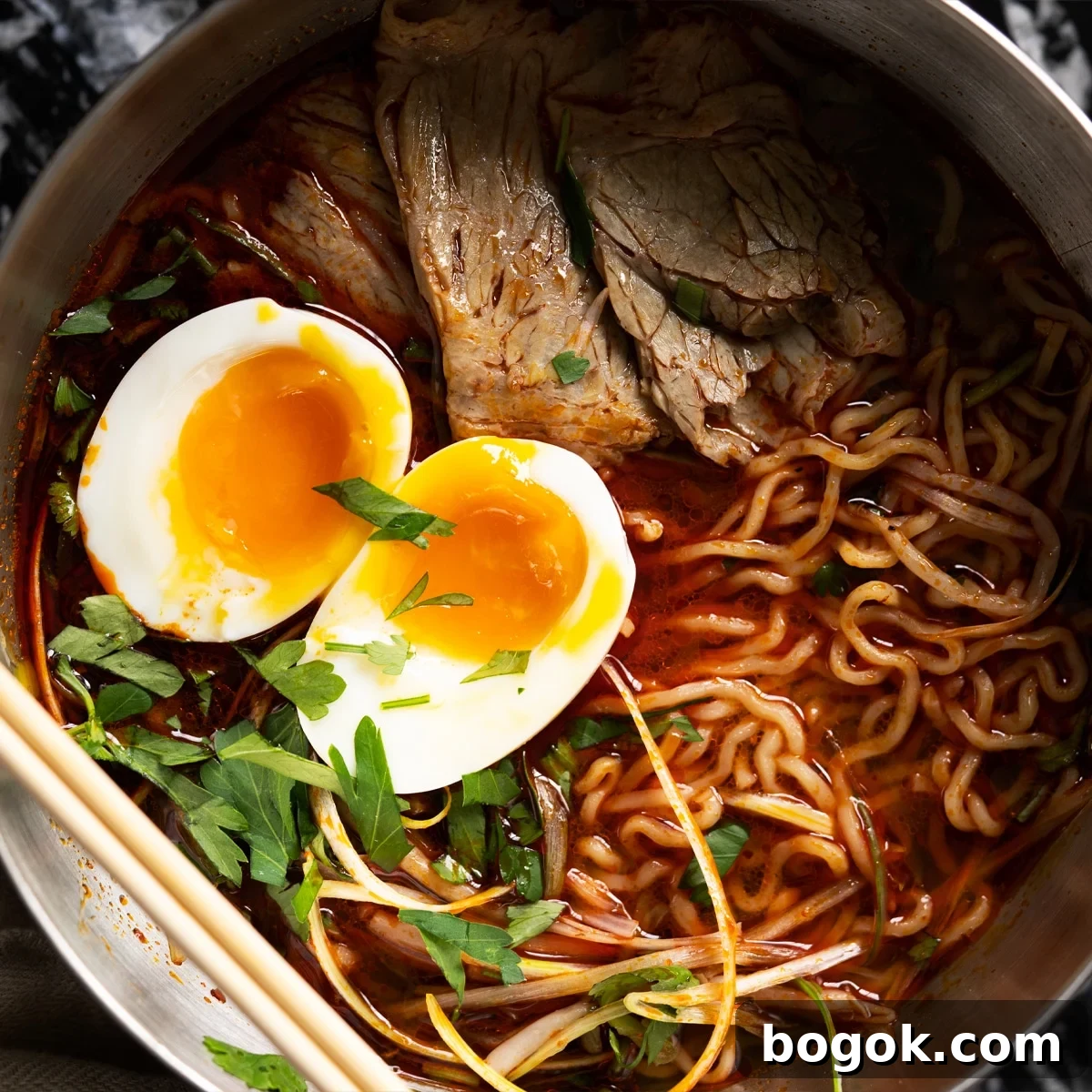
Hearty, ultra flavorful and warm and comforting, this paleo and keto ramen is easy enough for a weeknight dinner and endlessly customizable.
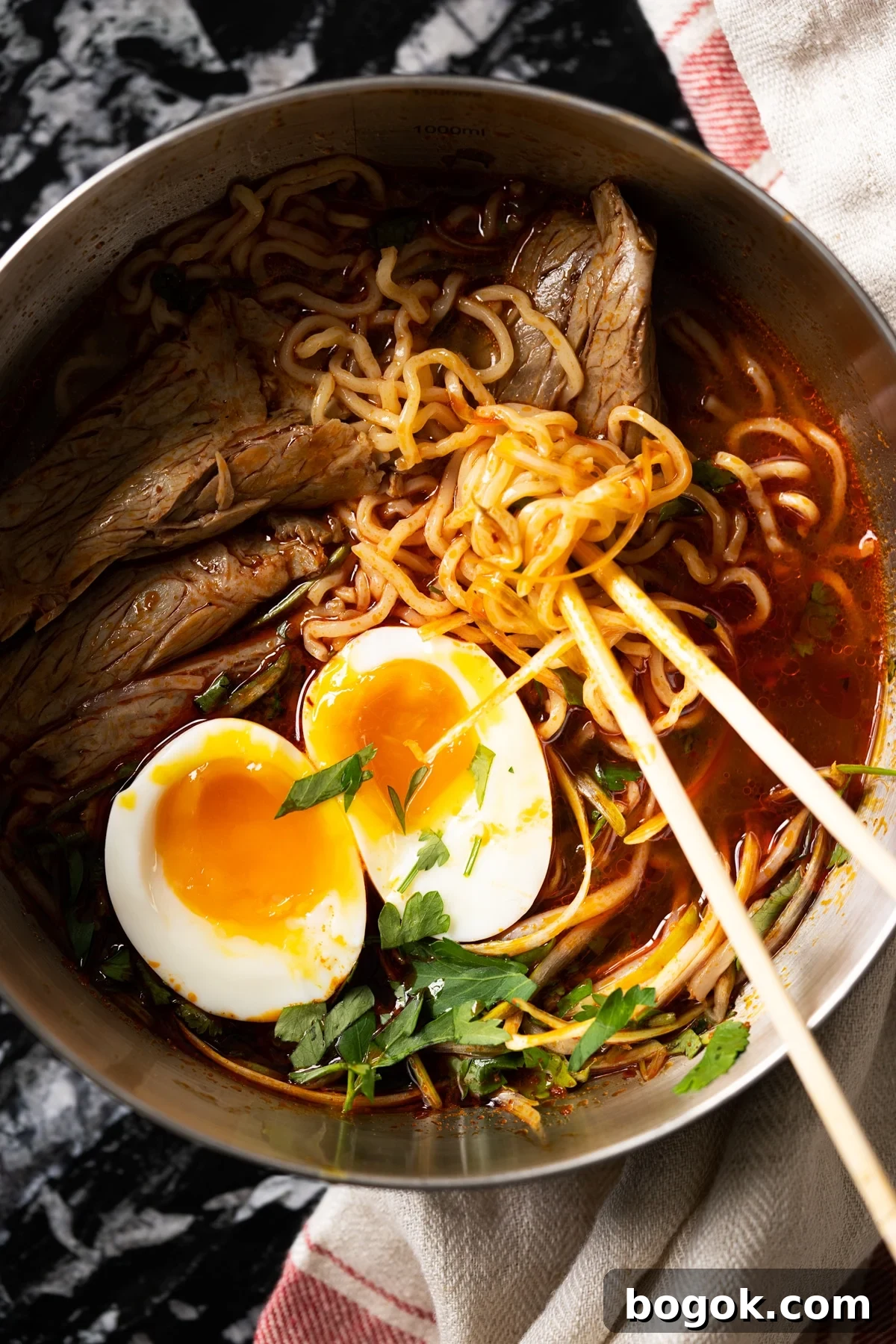
Paleo & Keto Ramen 🍜
With shirataki noodles
This is an Americanized take on ramen designed to work with paleo and keto pantry staples. It still delivers everything you want from a bowl of ramen: comforting, warming, hearty and full of flavor. The recipe is simple to adapt—swap proteins, change vegetables, and adjust seasonings to suit your taste.
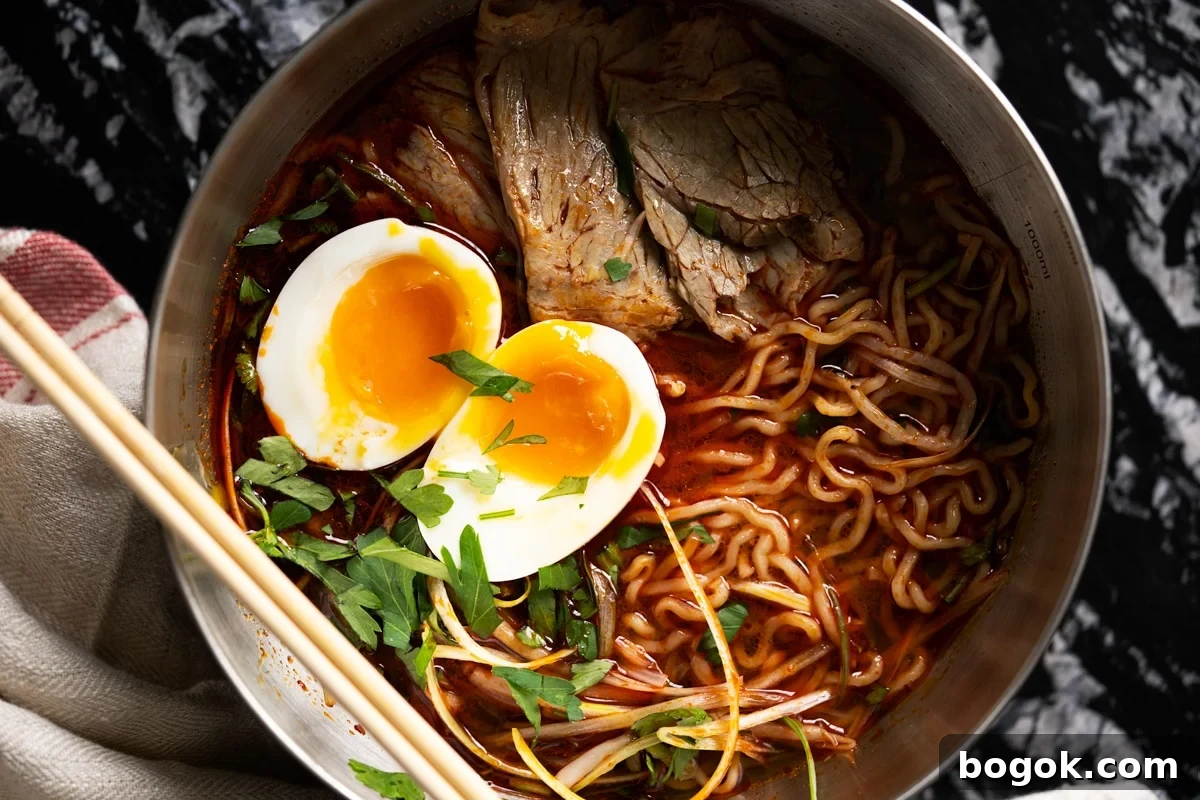
The Shirataki Noodles
Shirataki noodles are made mostly from water and konjac yam, and are often called konjac or miracle noodles. Their appeal for keto and paleo cooks is that they are effectively zero calories and very low in carbs. They have little inherent flavor and pick up the taste of the broth and seasonings.
Texture varies by brand—some are chewier than others—so my top tip is to try a few and pick the one you like best. I prefer versions with added fiber because they tend to be less rubbery and have minimal odor. To prepare them, follow the package directions but rinse well until any konjac aroma is gone: drain, rinse in cold water, boil for two minutes, then dry in a non-oiled pan over medium heat. Properly prepared noodles absorb the broth flavors better.
The Ramen Add-Ins
This recipe uses beef, but you can easily substitute chicken or pork. Ramen is flexible—use whatever vegetables are available. Below are the core components I rely on:
- Good bone broth: beef bone broth gives this ramen a rich base, though chicken or pork broth work well too.
- Flavorful protein: thin strips of beef work great, but sliced cooked chicken or pork would also be delicious.
- Vegetables: shiitake mushrooms and scallions are classic, but bean sprouts, spinach or other quick-cooking greens are excellent additions.
- Aromatics and seasonings: fresh ginger, garlic, toasted sesame oil, tamari (or coconut aminos/tamari if gluten-free), rice vinegar and a splash of fish sauce add depth and umami.
Fish sauce has a strong aroma but lends deep savory flavor. If using coconut aminos, use roughly half the amount because it tends to be saltier.
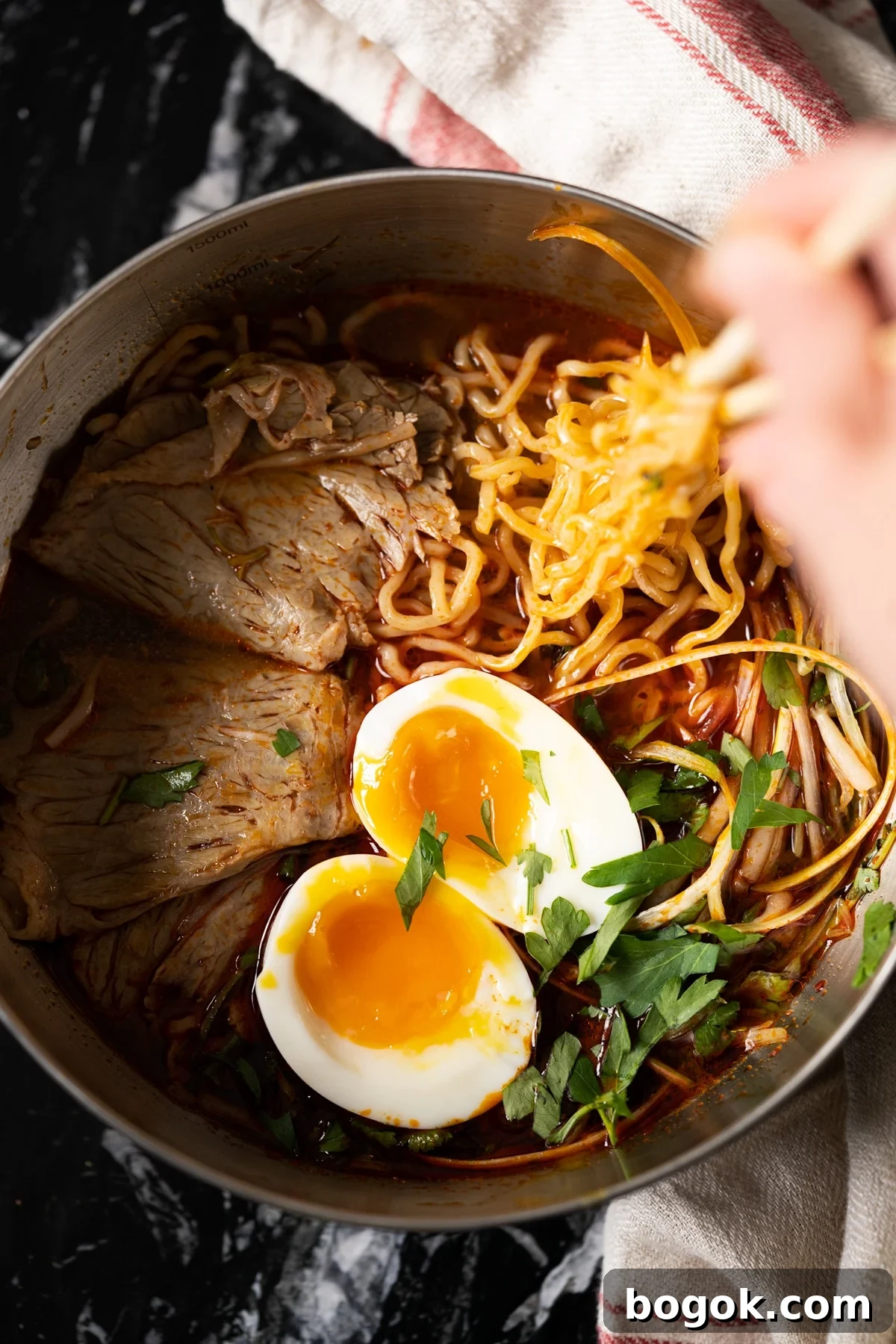
If you enjoy Asian-inspired keto recipes, consider trying other shirataki-based dishes like pad thai or orange chicken for more variety.
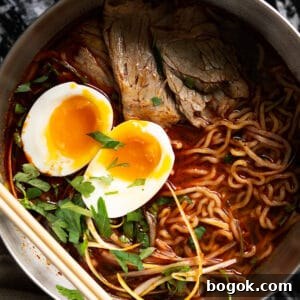
Paleo & Keto Ramen (with shirataki noodles!)
Pin Recipe
Ingredients
- 2 packages shirataki noodles
- 1 lb boneless sirloin steak sliced into thin strips 2-3 inches wide, on the bias
- 2 tablespoons toasted sesame oil
- 3 cloves garlic minced or pressed
- 2 teaspoons grated fresh ginger
- 3 tablespoons tamari or 1 1/2 tablespoons coconut aminos
- 2 tablespoons rice vinegar or 1 tablespoon white wine vinegar
- 2 tablespoons fish sauce
- 6 cups beef bone broth chicken or pork work great too
- 1 oz shiitake mushrooms or bean sprouts
To serve:
- 4 soft boiled eggs
- 3 scallions sliced (or parsley)
- 1 teaspoon red pepper flakes to taste
Instructions
-
Prepare the shirataki noodles: Drain and rinse well under cold water until any konjac aroma is reduced. Boil the noodles for two minutes, then dry them in a non-oiled pan over medium heat. Set aside.
-
Cook the meat: You can cook thin beef strips directly in the hot broth near the end, or brown the steak in a skillet with a little fat and slice it after cooking. If using fresh mushrooms, sauté them in the same pan after the meat. Set aside.
-
Make the broth: Heat sesame oil in a Dutch oven or pot over medium heat. Add garlic and ginger and sauté briefly until fragrant. Stir in tamari, rice vinegar and fish sauce and simmer for a minute. Add the bone broth and dried mushrooms, then simmer 10 minutes. Taste and adjust seasoning—add salt if needed. If cooking beef in the broth, dip thin strips until browned, then remove and set aside.
-
Add the prepared shirataki noodles to the broth and simmer a couple more minutes. Divide among four bowls and top with beef, mushrooms or sprouts, soft boiled eggs and scallions. Serve immediately.
Notes
The Ramen Add-Ins
Top tip: Try a few shirataki brands and use the one with the texture and aroma you prefer. Brands with added fiber often have a better texture and less odor.
Use any protein you like—beef, chicken or pork—and add vegetables that are in season or in your fridge. Typical flavor builders include fresh ginger, sesame oil, fish sauce and tamari or coconut aminos.
- Bone broth: a rich, gelatinous bone broth makes the best base.
- Protein: thinly sliced beef is classic, but cooked chicken or pork work too.
- Veggies: shiitake mushrooms, scallions, bean sprouts or greens are all good options.
- Seasoning: fresh ginger, toasted sesame oil, fish sauce and tamari (or coconut aminos) provide depth.
Fish sauce has a strong smell but adds powerful umami. If using coconut aminos, use about half the amount called for, as it can be saltier.
Nutrition