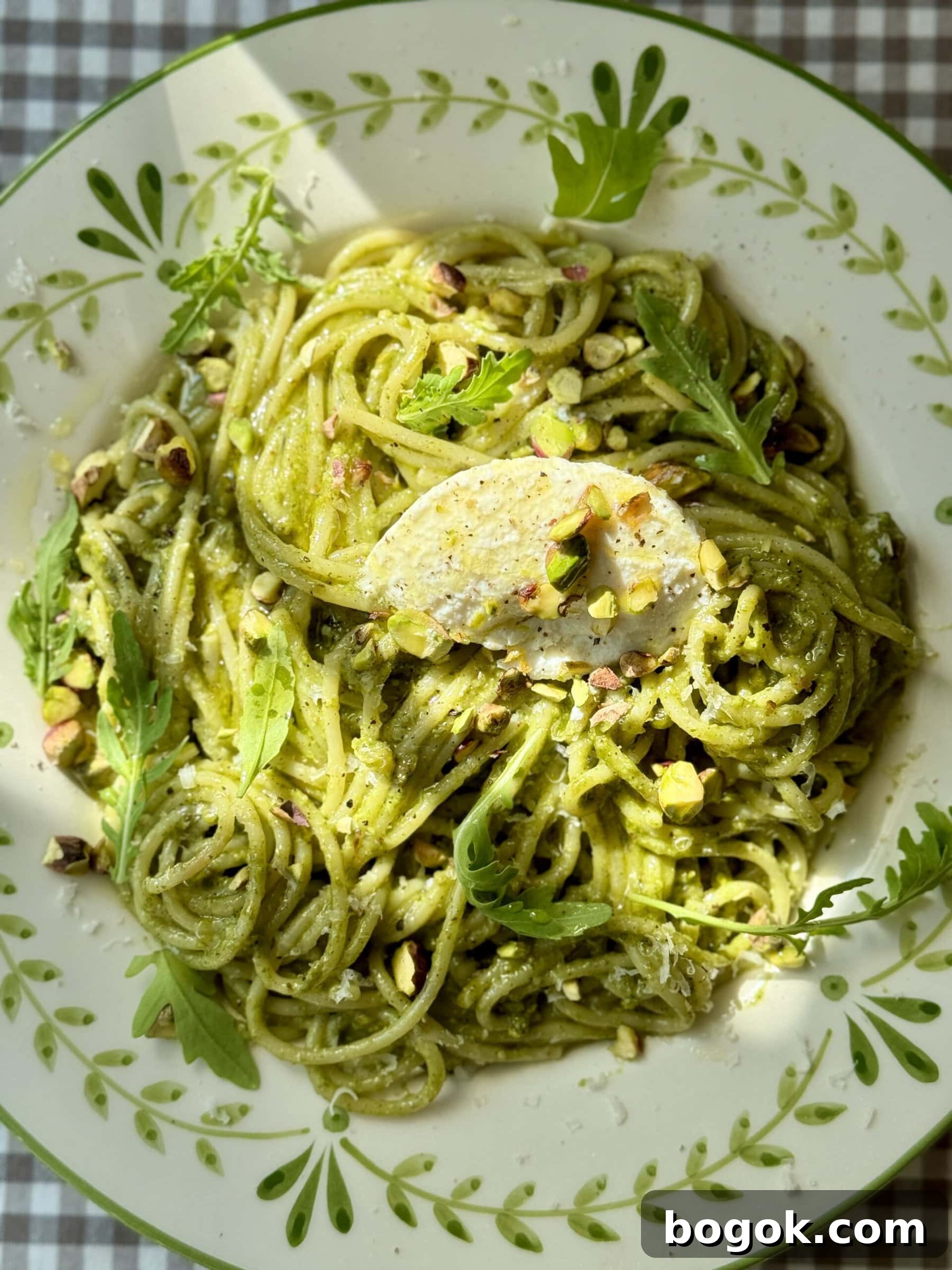
When time is short and energy is low, a bowl of pasta is the perfect quick supper. This Pistachio Pesto Pasta—known in Italy as Pasta al Pesto Pistacchio—is one of my favourites. It’s simple, satisfying and comes together in the time it takes to cook the pasta.
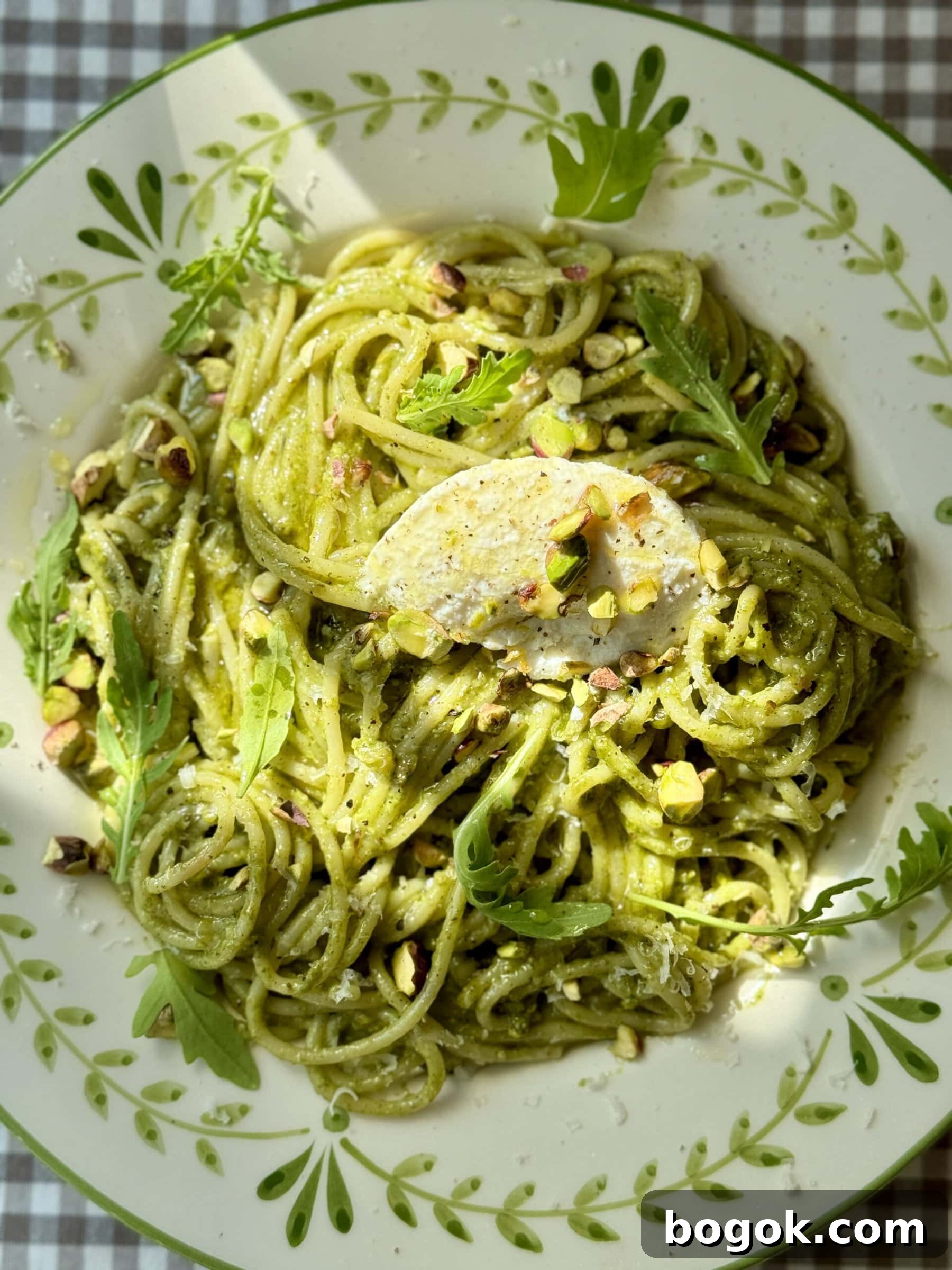
The pesto here is homemade (see the full pistachio pesto notes below). If you have any blender or food processor, it’s very straightforward: blitz the ingredients and stir through hot pasta. The recipe makes a whole jar of pesto, so you can use it for this dish and plenty of others—try it on gratins, flatbreads or as a sandwich spread. For a classic basil version, see my Pasta al Pesto recipe.
Table of Contents
- Why you will love this recipe:
- Ingredients
- Substitutions and Variations
- How to make Pasta al Pesto Pistacchio
- Cooking tips
- Frequently Asked Questions
- More Recipes You Might Like
- Made this recipe and loved it?
- Pistachio Pesto Pasta Recipe
Why you will love this recipe:
- Quick and easy: blitz the pesto, cook the pasta and toss together.
- Makes a whole jar of pesto (around 300–350ml) so you’ll have extra for other dishes.
- Homemade pesto lifts the dish and feels more impressive than it is.
- The nutty, creamy flavour of pistachios transforms everyday pesto pasta into something special.
Ingredients
Pistachios: Shelled, roasted pistachios work best to bring out flavour. If you have raw pistachios, lightly toast them—avoid heavily salted nuts because the parmesan adds salt too.
Fresh basil: A generous bunch of vibrant basil is ideal, but this pesto is forgiving and can use slightly older herbs you need to use up.
Olive oil: Choose a light, fruity olive oil for blending.
Garlic: Fresh garlic gives the best flavour; if you prefer a milder taste, use a roasted clove or a small amount of garlic granules.
Lemon: Zest and juice brighten the pesto and balance the richness of nuts and cheese.
Black pepper: Freshly ground for seasoning.
Parmesan: Parmesan, Pecorino or Grana Padano all work—use a vegetarian alternative if needed.
Salt: To taste; add carefully because the cheese can be salty.
Pasta: Spaghetti is great, but any shape works—twisty shapes like casarecce catch the pesto particularly well.
See the recipe card below for exact measurements and full ingredient list.
Substitutions and Variations
Basil: Try a mix of basil and parsley or add chives for a slightly different herb profile.
Nuts: While pistachios are the star here, this method also works with pine nuts, almonds or walnuts for different pestos.
Cheese: Swap parmesan for pecorino or Grana Padano. Use a vegetarian hard cheese if required.
How to make Pasta al Pesto Pistacchio
This is a straightforward recipe. The full instructions are in the recipe card below, but here’s the basic process:
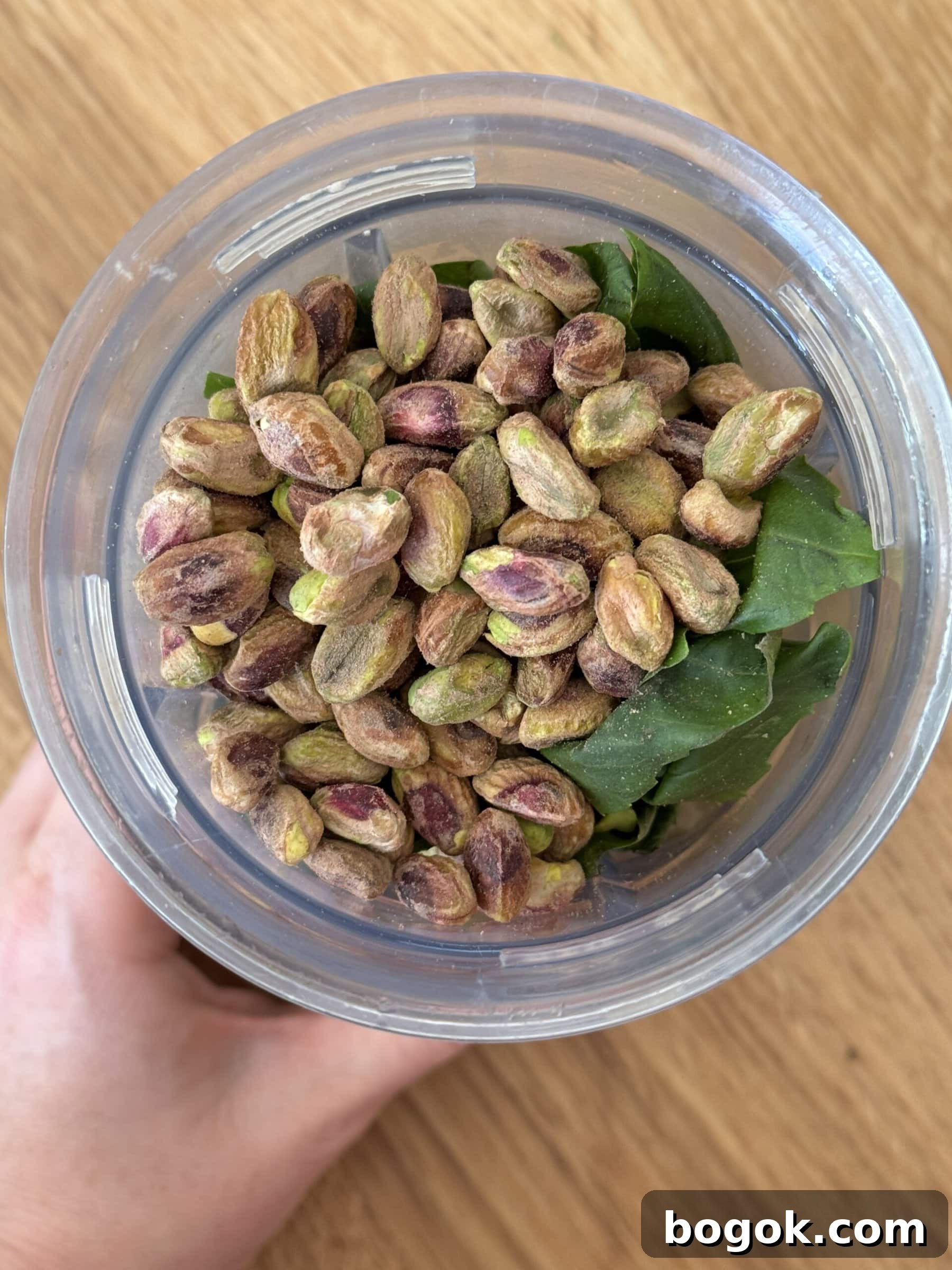
ONE: Add basil, garlic, lemon zest and juice, pepper and olive oil to a blender or food processor.
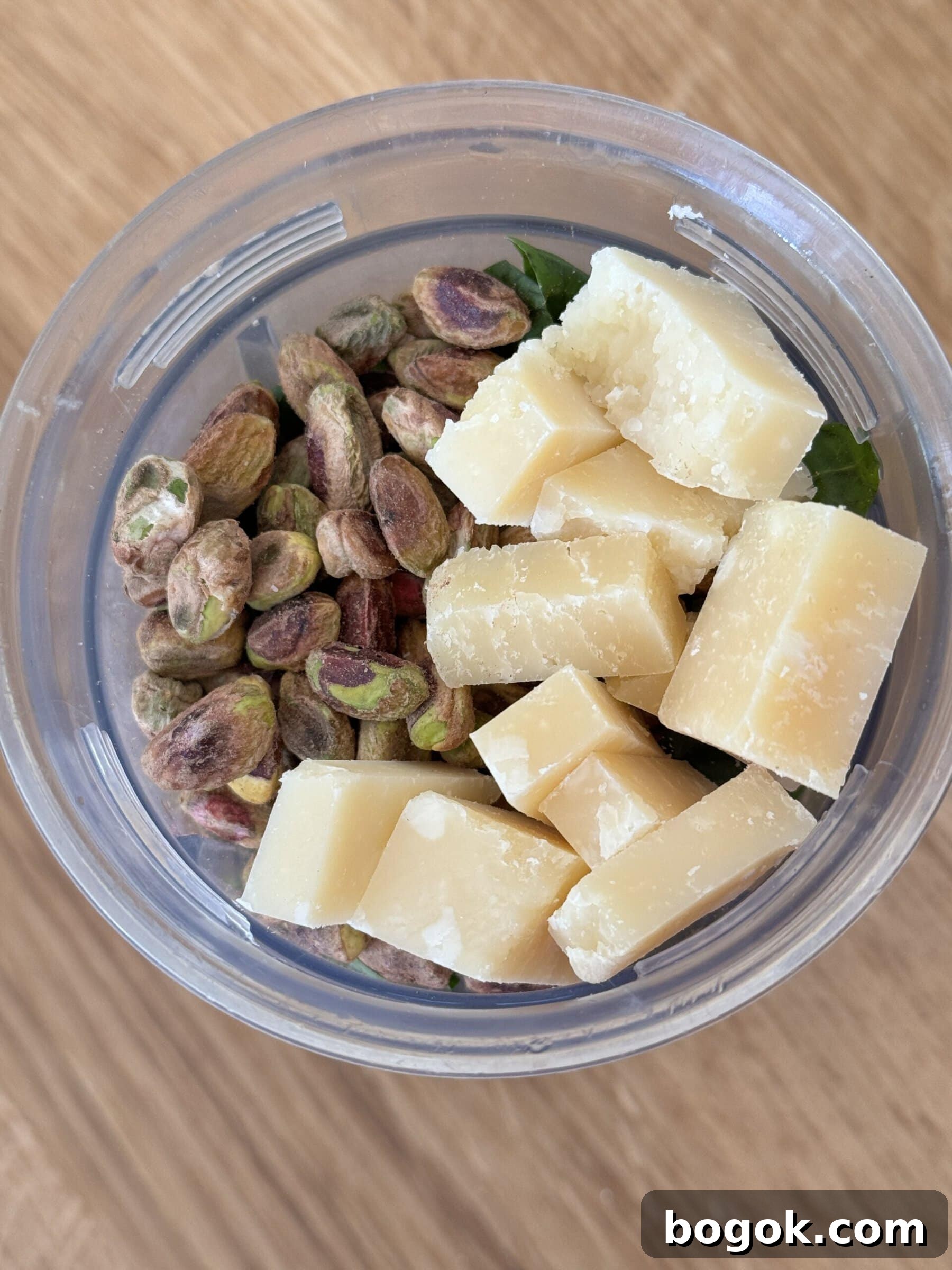
TWO: Add the parmesan (no need to pre-grate; the blender will handle chunks) and the pistachios, then blitz.
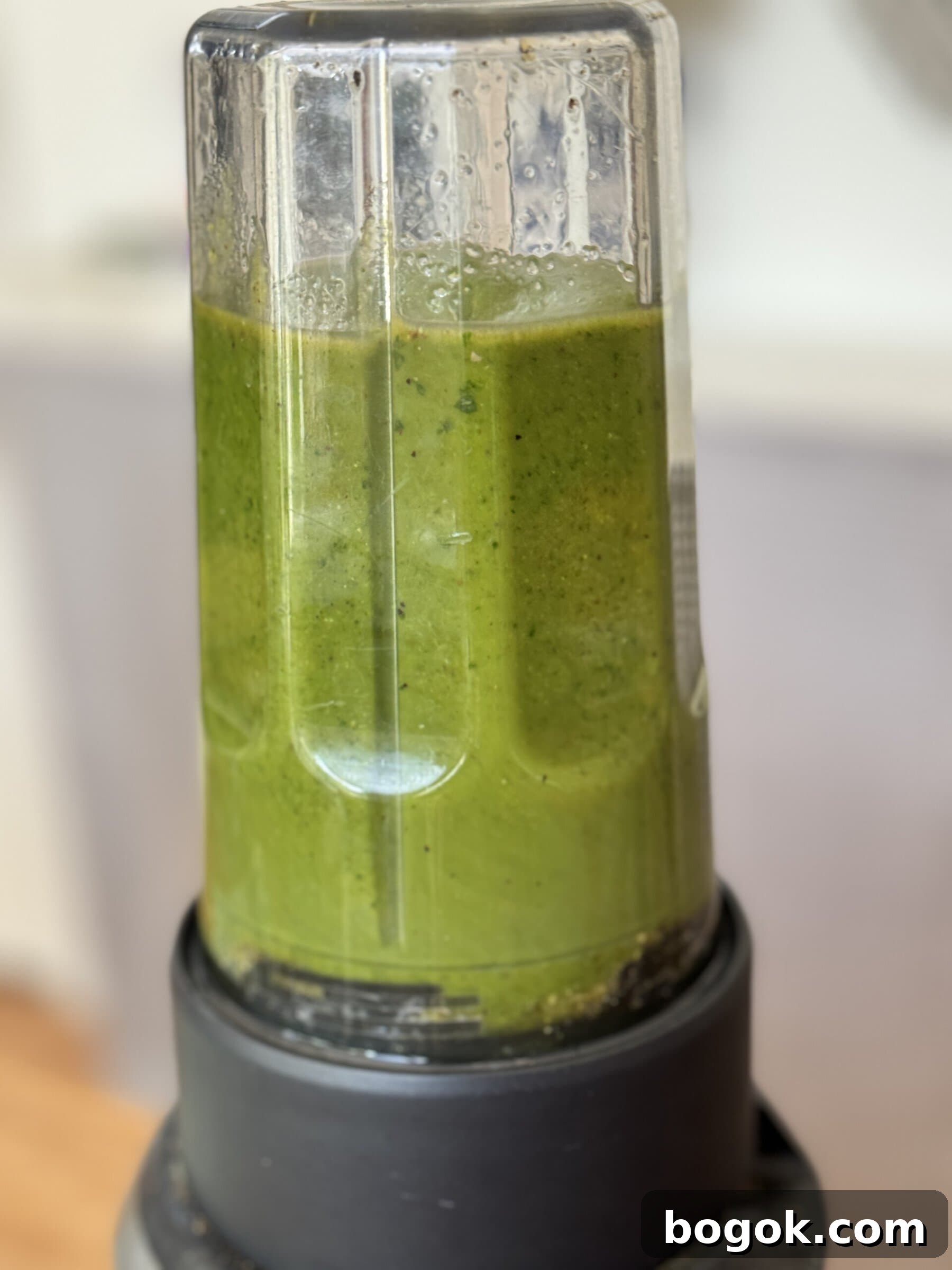
THREE: Blend to your preferred texture—less for chunky, more for smooth. I prefer something in between.
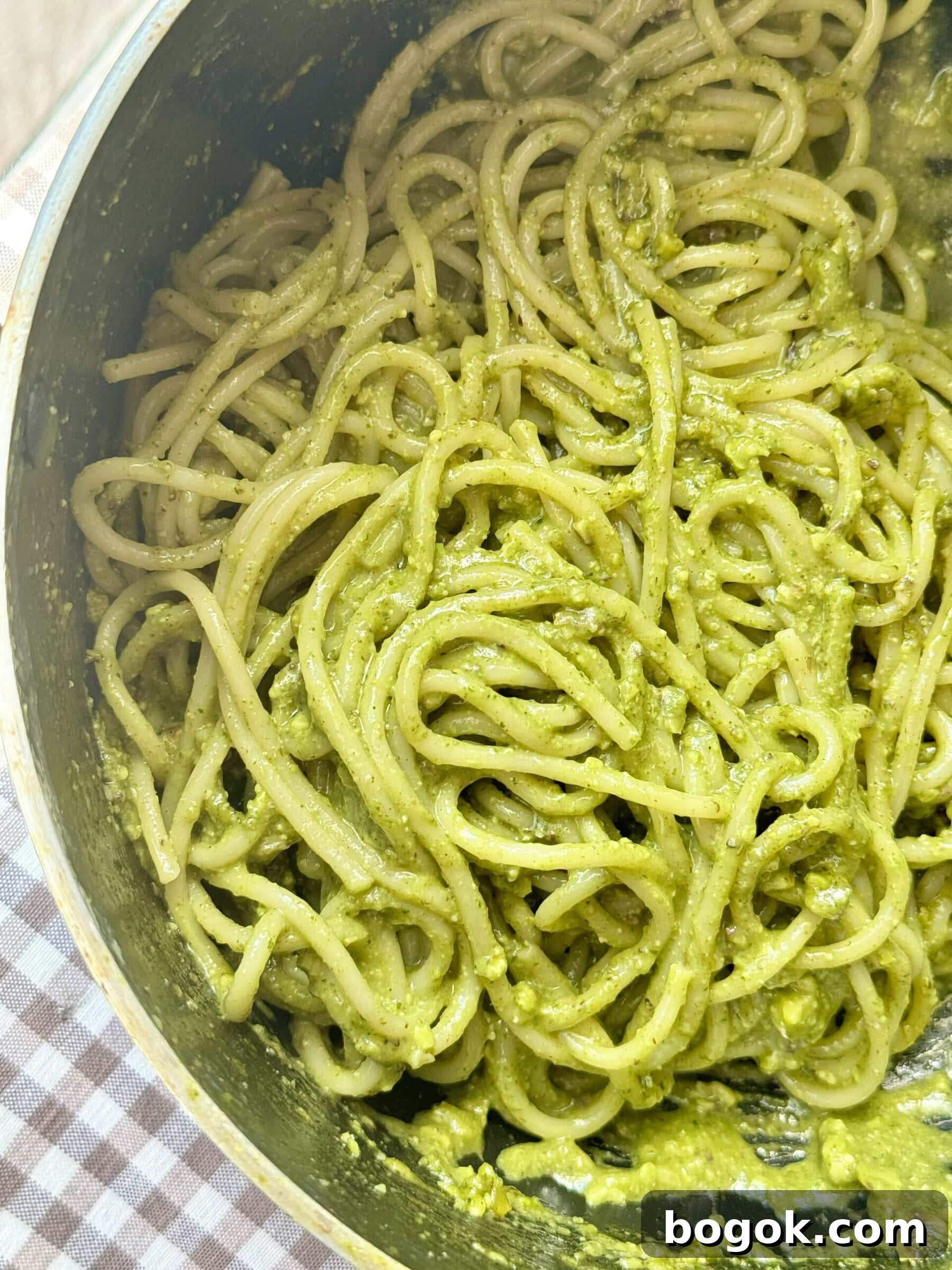
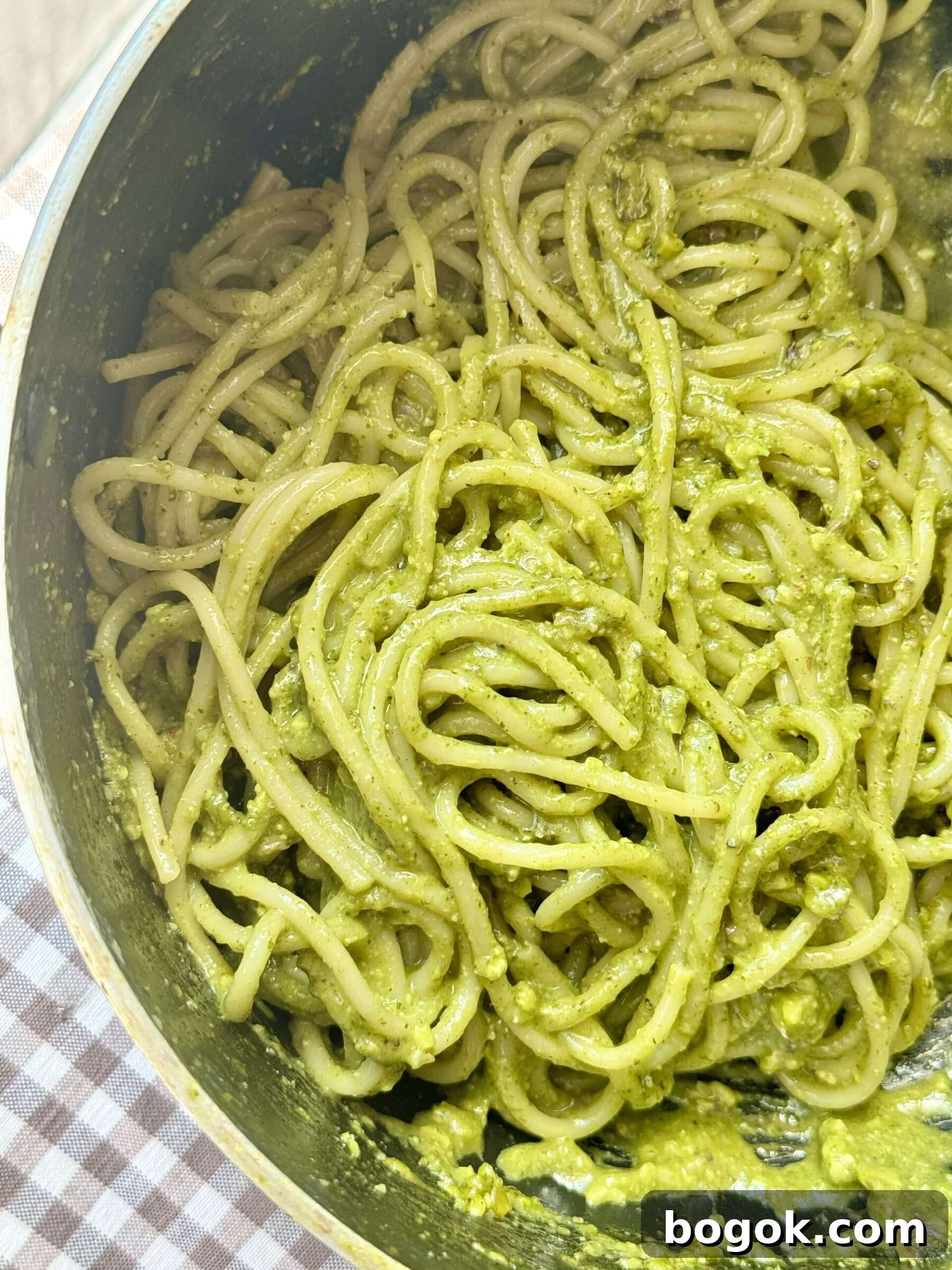
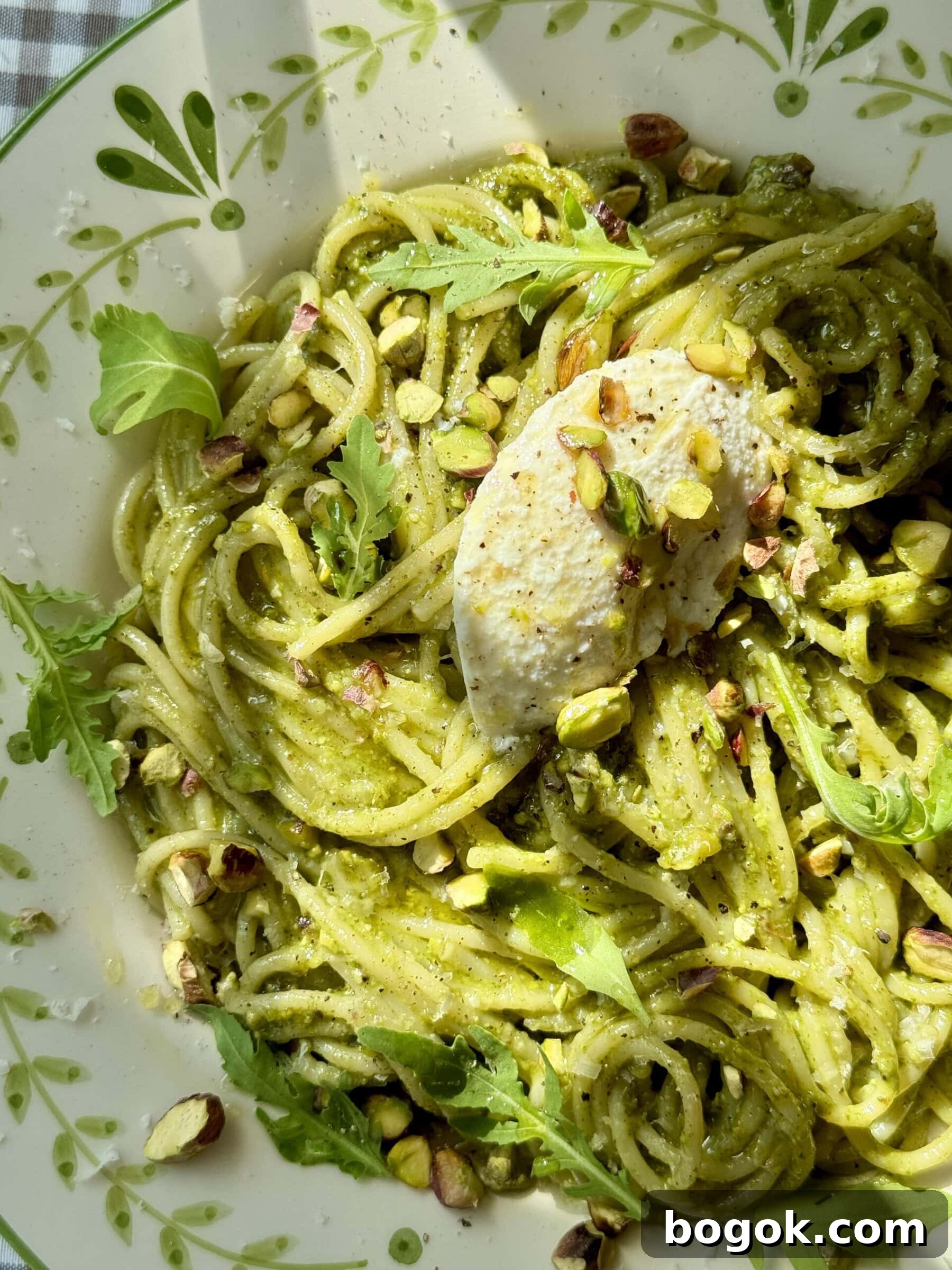
FOUR: Reserve a little pasta water, drain the pasta and return it to the pan. Stir in a few tablespoons of pesto with a splash of pasta water to loosen and coat the pasta. Serve with extra grated cheese and a dollop of ricotta or burrata if you like.
Cooking tips
Toasting pistachios: Toast pistachios in a dry pan over medium-high heat for 5–7 minutes, stirring frequently, until fragrant. Let them cool before blending. Oven toasting works but requires careful monitoring to avoid burning.
Storing pesto: Store in an airtight jar in the fridge for a week or two. For longer storage, level the pesto in a jar and pour a thin layer of olive oil over the top to seal it. The oil may solidify in the fridge but will melt when warmed or mixed into hot pasta.
Keeping basil fresh: Trim the stems and place the bunch in a small glass with 1cm of water. Cover the leaves with a clean sandwich bag and leave at room temperature; this helps basil stay fresh for about a week.
Frequently Asked Questions
Yes. Use a pestle and mortar, starting by pounding garlic and salt, then adding basil gradually, followed by the nuts and finally the cheese, lemon and olive oil. The texture will be more rustic than a blender version but still delicious.
Stored in the fridge in an airtight jar, it will keep for a week or two. For longer life, level the jar and add a thin layer of olive oil on top to slow oxidation.
The pesto yields around 300–350ml—more than needed for two servings of pasta—so you’ll have leftovers to use on other dishes.
Yes. Freeze in airtight containers, ice cube trays or freezer bags for up to three months. Colour may darken slightly but flavour remains good.
You can make the pesto up to a week ahead and refrigerate it. For best results, cook the pasta just before serving and toss with hot pasta so the sauce coats it nicely. For a pasta salad, use a short pasta and chill; bring to room temperature before serving.
Leftovers keep for about three days in the fridge. Reheat gently in a pan with a little extra pesto or butter and some grated cheese, stirring until evenly warmed.
More Recipes You Might Like
If you have extra pesto, try it with chicken and white beans, on lamb burgers, or on toast with goat’s cheese and parma ham. Pesto is also excellent in sandwiches—try it with roast chicken and bacon or in your favourite toasted sandwich.
Easy Lamb Recipes
One-Pan Slow Cooked Lamb with Baby Potatoes & Oregano
Pancake Recipes
Kaiserschmarrn (Traditional Austrian Pancakes)
High Protein Recipes
High Protein Dinner Recipes
Easy Baking Recipes
Cornflake Dream Cake with Mini Eggs
Made this recipe and loved it?
I’d be thrilled if you left a review in the comments or shared a photo on Instagram—tag @desertislanddishes so I can see your version!
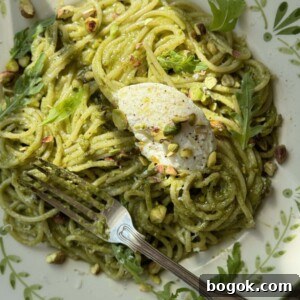
Pistachio Pesto Pasta (Pasta Al Pesto Pistacchio)
Rate Recipe
Print Recipe
Ingredients
For the pesto (this makes a whole jar of pesto around 300-350ml – you won’t need all of it for 2 servings of pasta):
- 100 g shelled pistachios, ideally roasted
- 100 g basil
- 200 ml olive oil
- 1 garlic clove, optional
- 1 lemon, zest and juice
- ½ tbsp freshly ground black pepper
- 70 g parmesan
- salt, to taste
For the pasta:
- 200 g pasta, any shape
- Parmesan/pecorino, grated
- Ricotta/mozzarella/burrata, to top (optional)
Instructions
-
Bring a large pot of salted water to the boil. Add the pasta and cook according to package instructions (about 10 minutes).
-
Put all pesto ingredients into a blender or food processor and blitz until you reach your desired texture. Taste and add salt only if needed.
-
Reserve a little pasta water, drain the pasta and return it to the pan. Add a few tablespoons of pesto and a splash of pasta water, toss well to coat. Serve with extra grated cheese and, if you like, a spoonful of ricotta or burrata on top.
Notes
Make ahead: The pesto can be made up to a week ahead and kept in the fridge. Cook the pasta just before serving for best texture. For a pasta salad, cool the mixed pasta and serve at room temperature—use a short pasta shape and add a little extra olive oil or a splash of balsamic to loosen the dressing.
To store the pesto: Keep in an airtight jar in the fridge for a week or two. To prolong life, level the pesto and pour a thin layer of olive oil over the top to seal it.
To store the pesto pasta: Refrigerate in an airtight container for up to 3 days. Reheat gently in a pan with extra pesto or butter and cheese.
To freeze: Freeze pesto in airtight containers, ice cube trays or freezer bags for up to 3 months. Colour may darken slightly but flavour remains good.
Without a blender: Make the pesto with a pestle and mortar by pounding garlic and salt, then adding basil, nuts and cheese gradually, and finishing with olive oil to emulsify.
Nutrition
Nutrition information is automatically calculated and should be used as an approximation.