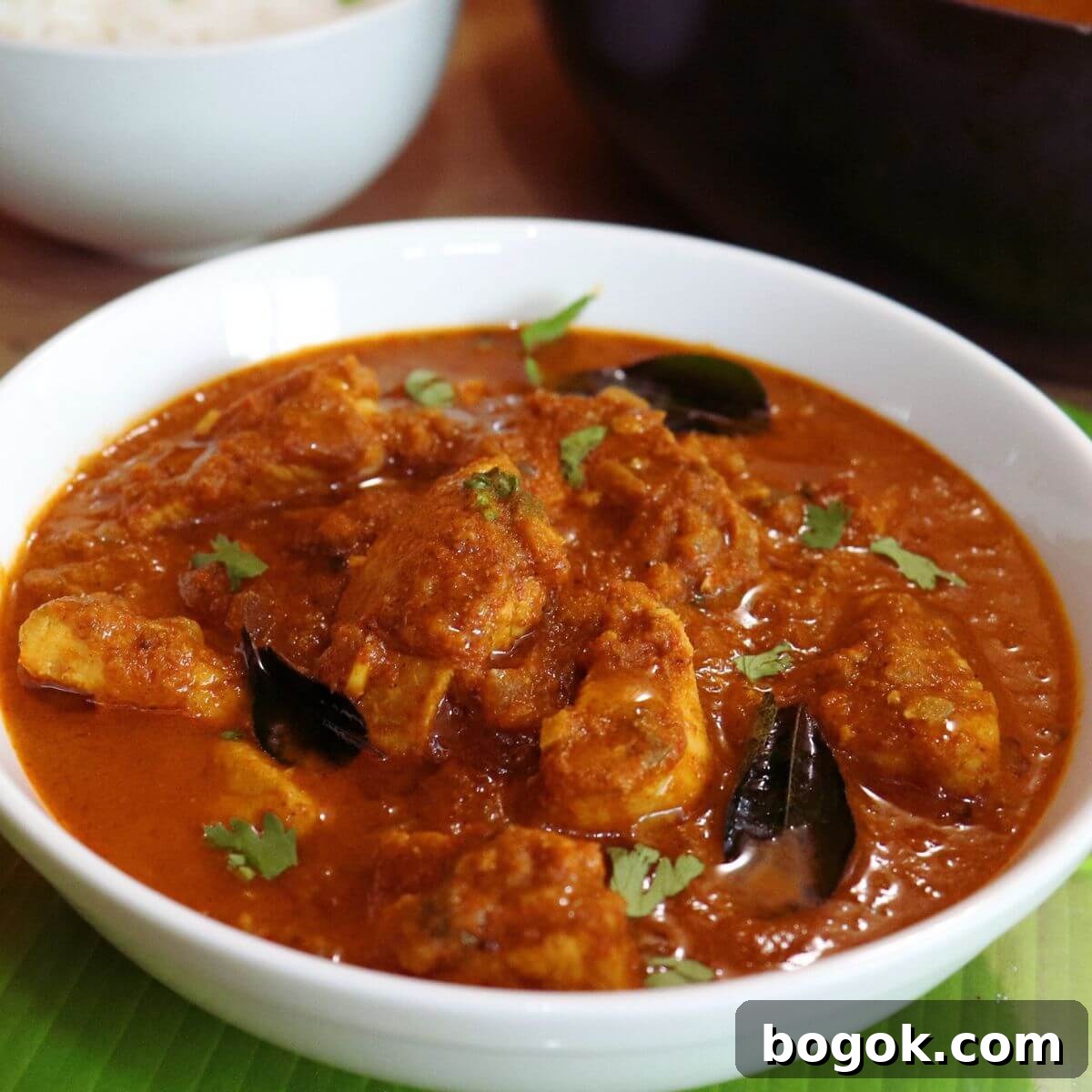
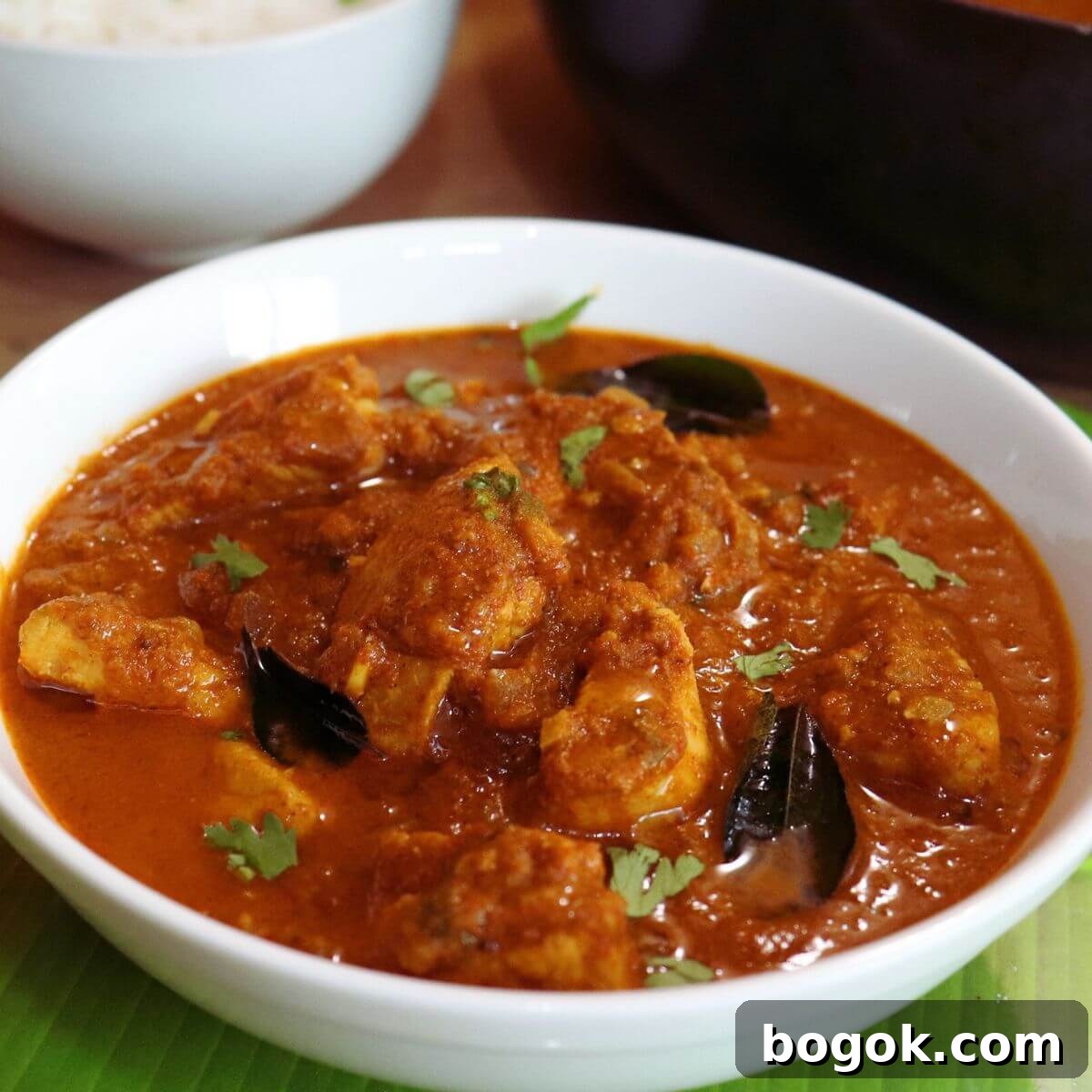
Madras chicken curry with step-by-step photos and a video recipe. Chicken Madras is a classic Indian-inspired dish celebrated for its bold aroma and spicy, tangy flavors. This British-Indian restaurant-style curry takes inspiration from Madras (now Chennai) in Tamil Nadu, India. If you enjoy heat and complex spice blends, this recipe will be right up your alley. Serve it with steamed rice or naan for a satisfying meal.
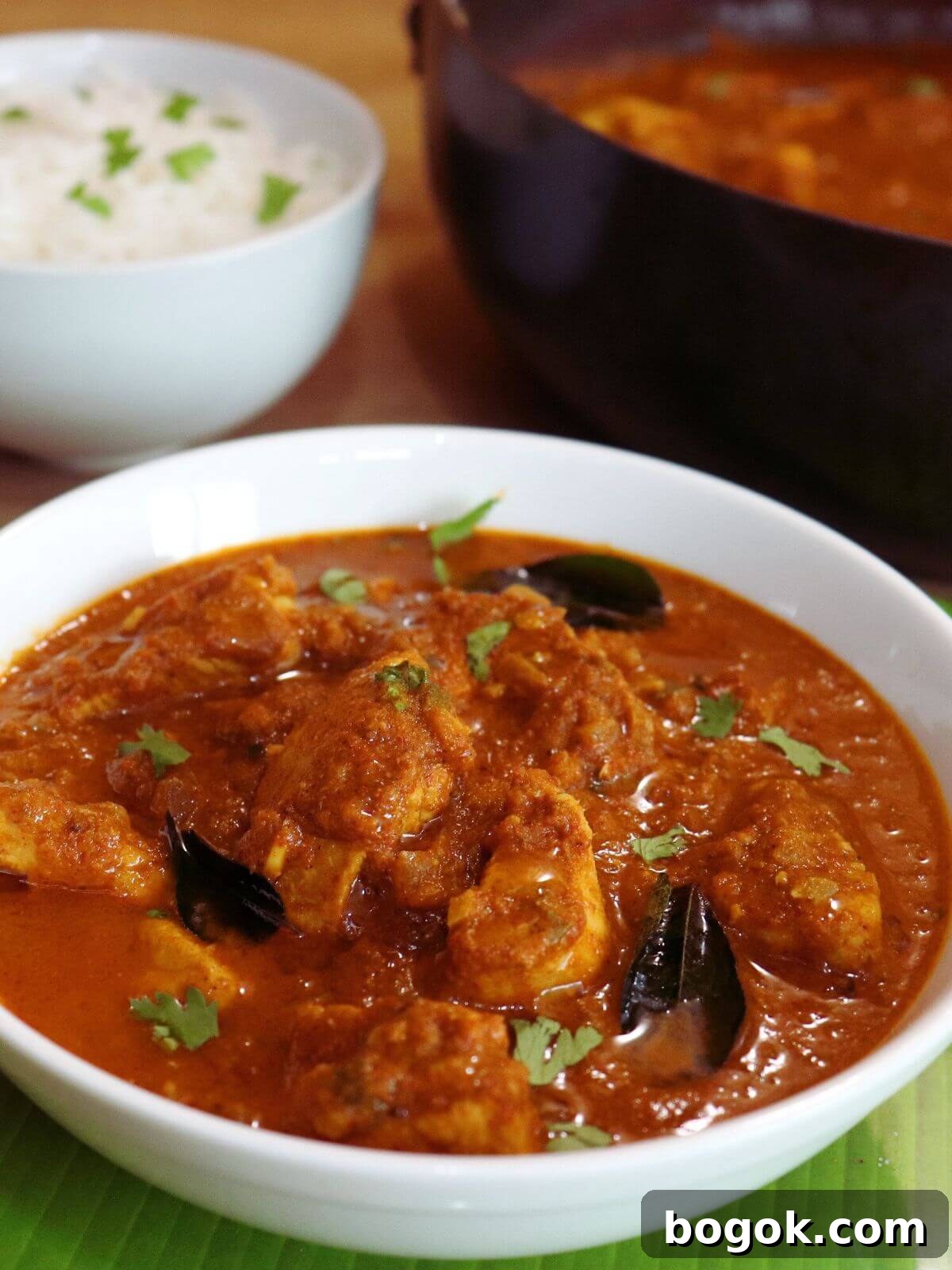
Tender chicken pieces are simmered in a thick, flavorful sauce seasoned with aromatic Madras curry powder. The curry powder brings heat while tamarind and tomatoes add tang, and coconut milk contributes a creamy, slightly sweet balance. The result is a rich, well-rounded Madras curry perfect for spice lovers.
About this recipe
This post explains how to make a Chicken Madras using Madras curry powder as the defining spice. I used a homemade Madras curry powder—a fragrant mix of coriander, cumin, fennel, black pepper, cinnamon, turmeric, cloves, cardamom, and other warming spices—which gives the curry its distinctive heat and aroma.
If you don’t have time to make your own powder, a good store-bought Madras blend works well. You can also boost a standard curry powder by adding ground red chilies, paprika, or cayenne to increase the heat and more closely mimic a Madras profile.
Note: this recipe follows the British-Indian restaurant-style Madras rather than a strictly traditional regional version you might find in India. Chefs adapt recipes, so feel free to tweak ingredients and spice levels to suit your family’s taste.
You may also like these popular chicken recipes:
- Chicken Masala
- Chicken Kali Mirch
- Chicken Korma
- Balti Chicken
- Chicken Tikka Masala
- Chicken Pathia
- Indian Butter Chicken
- Restaurant Style Chicken Jalfrezi
Why You Need This Recipe
- Clear step-by-step instructions with photos and video.
- Quick to prepare — about 20 minutes of active cooking time.
- Highly customizable — adjust spices and ingredients to taste.
- One-pot dish — simple to make and easy to clean up.
- Make-ahead friendly — refrigerate in an airtight container for up to 2 days.
- Dairy-free and gluten-free as written.
Ingredients and Substitutions
- Chicken – boneless skinless chicken breasts are used here; boneless thighs or curry-cut bone-in chicken also work.
- Onion – red onion is used; shallots or yellow onions are fine substitutes.
- Fresh ginger and garlic – essential for authentic curry flavor; a ginger-garlic paste can be used instead.
- Green chili – adds heat; omit for milder curry or for children.
- Curry leaves – optional but add a fragrant, South Indian note; omit if unavailable.
- Kashmiri red chili powder – gives color without excessive heat; substitute paprika or adjust to taste with cayenne or regular red chili powder.
- Madras Curry Powder – homemade gives the best flavor, but store-bought works. Regular curry powder can be spiked with extra ground red chilies to mimic Madras heat.
- Fresh tomato puree – you can substitute tomato passata or blended canned tomatoes.
- Tamarind paste – provides tangy-sour notes; substitute lemon or lime juice with ½ teaspoon sugar if needed.
- Coconut milk (full fat) – adds creaminess and balances heat; you can use grated coconut blended with water if preferred.
- Salt to taste.
- Oil – use a neutral oil with a high smoke point like sunflower oil; ghee or coconut oil can be used for richer flavor.
See the recipe card below for exact ingredient quantities and measurements.
How to make Madras Chicken Curry (step-by-step)
Preparations
- Chop the onion, ginger, garlic, and green chilies and set aside.
- Puree fresh tomatoes if using and keep ready.
- Have spices and coconut milk measured and within reach.
Making Madras Chicken Curry
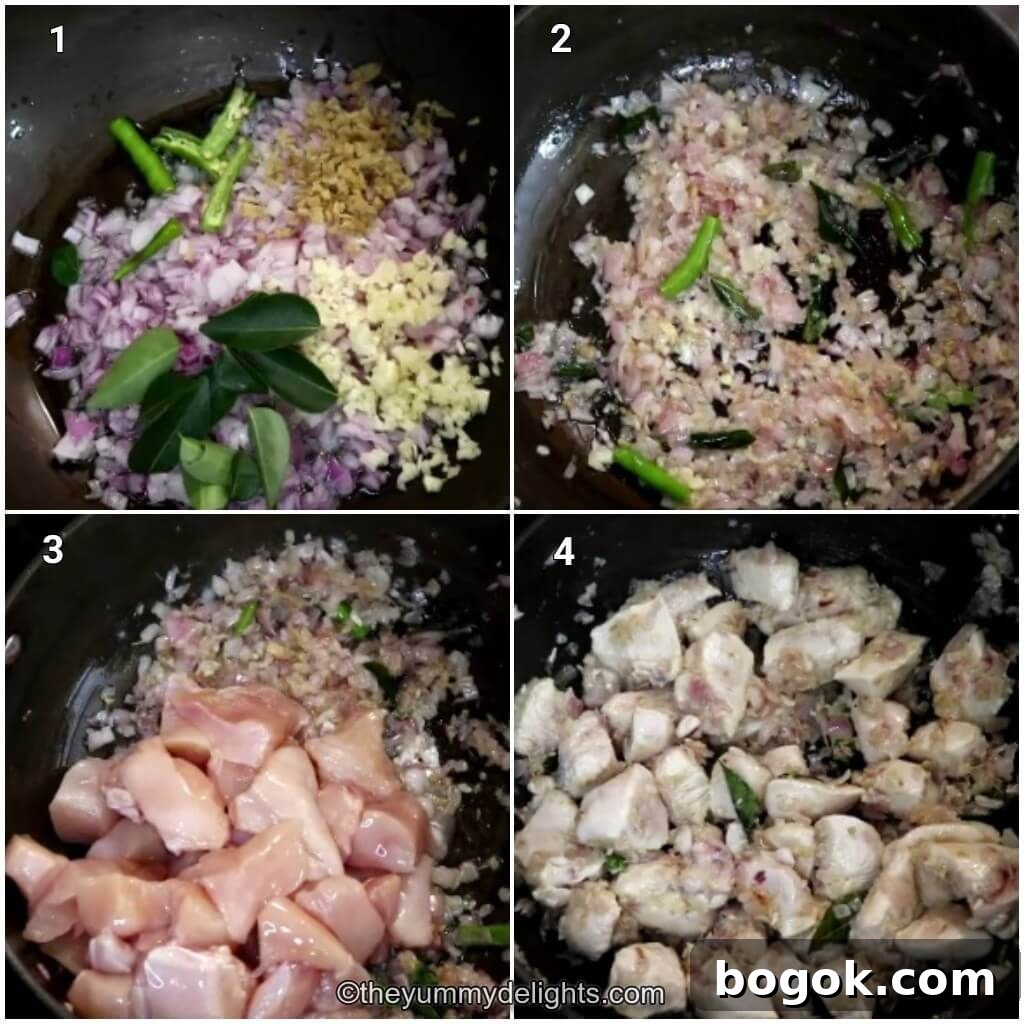
- Heat 2 tablespoons of oil in a heavy-bottomed pot over medium heat.
- Add onion, ginger, garlic, green chilies, and curry leaves (if using). Sauté until the onions begin to turn golden.
- Add the chicken, stir, and cook until the pieces lose their pink color.
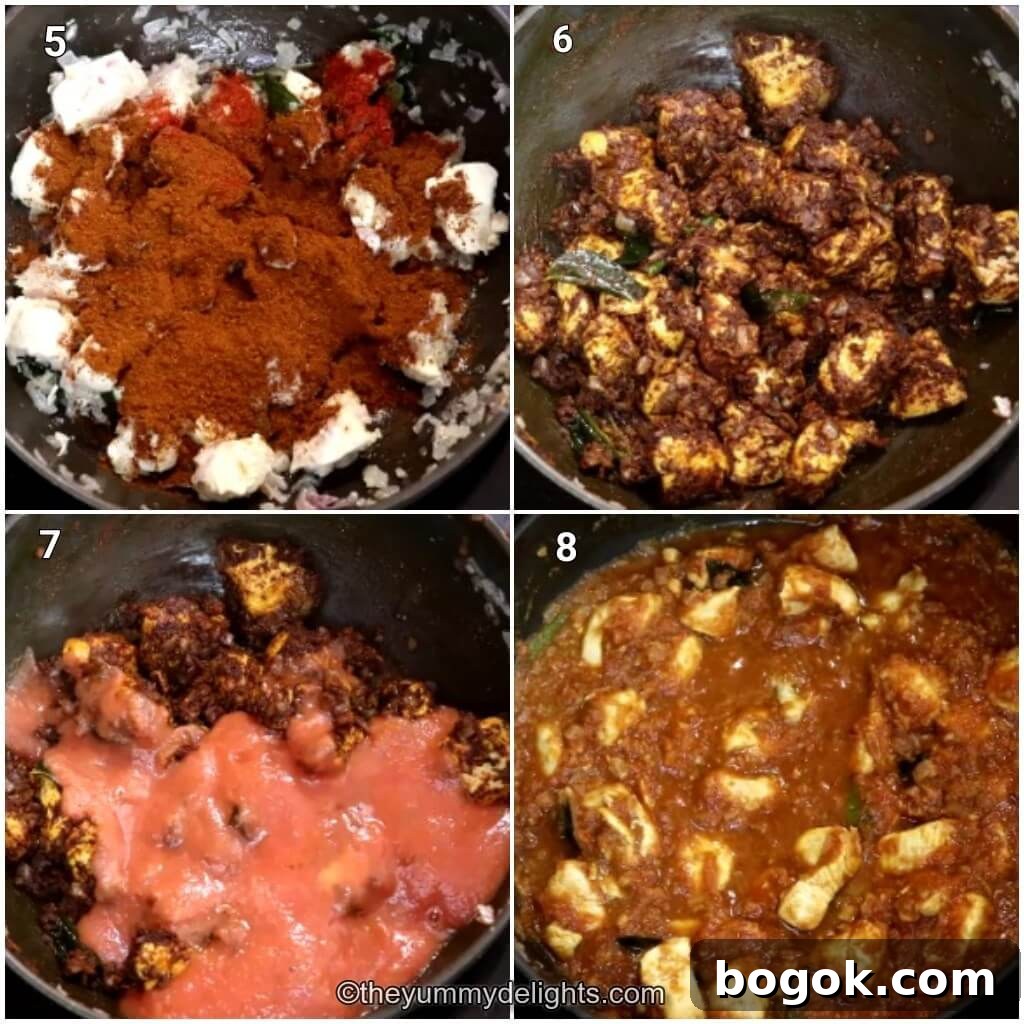
- Stir in salt, Kashmiri red chili powder, and Madras curry powder. Cook for a minute to toast the spices.
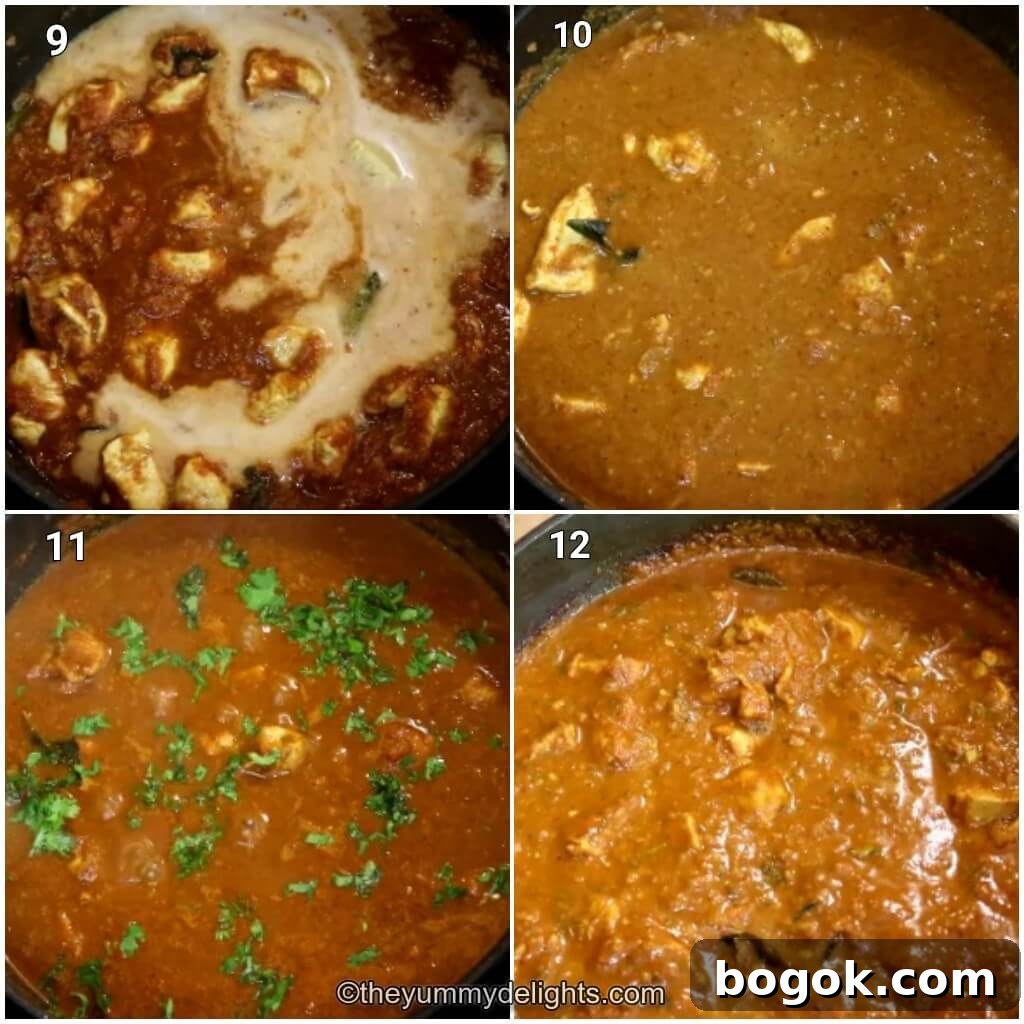
- Add the tomato puree (or passata) and tamarind paste. Bring the mixture to a boil and then reduce the heat.
- Lower the heat and stir in the coconut milk. Cook, stirring, until it reaches a gentle simmer.
- Cover and cook on low heat until the chicken is fully cooked and tender.
- Garnish with fresh coriander leaves and remove from heat.
- Serve hot with steamed rice, pulao, or naan.
Cooking Tips
- Deseed the green chili to reduce heat if desired, or omit for a mild curry.
- If you don’t have tamarind, substitute with lemon or lime juice plus ½ teaspoon sugar for balance.
- Start with 1 tablespoon of Madras curry powder and increase to taste—it’s the main source of heat.
- Omit Kashmiri red chili powder if you want less spice, or add more for extra heat.
- After adding coconut milk, stir continuously and bring it to a gentle boil to prevent splitting.
Frequently Asked Questions
Chicken Madras is hot and spicy with a bold, tangy profile. Madras curry powder provides a fiery kick, tamarind and tomatoes contribute tanginess, and coconut milk adds creaminess and slight sweetness. Spice levels are easily adjustable to suit different preferences.
“Chicken curry” is a broad term that can describe many styles from mild to spicy. Chicken Madras specifically denotes a fiery, tangy curry influenced by South Indian flavors, marked by Madras curry powder, tamarind, and tomato notes.
Yes. If using homemade coconut milk, use the second extract for cooking and stir continuously until it gently simmers. Add the first, richer extract toward the end, bring briefly to a gentle boil, then remove from heat to avoid curdling.
Garam masala and Madras curry powder have different flavor profiles. Substituting garam masala will change the taste and won’t replicate a true Madras flavor, but it will still yield a tasty curry.
Storage Suggestions
- Cool the curry to room temperature and store in an airtight container within two hours of cooking.
- Refrigerate for up to 2 days.
- To reheat, warm gently on the stovetop or in the microwave with a splash of water, stirring until heated through. Avoid prolonged high heat if the curry contains coconut milk.
- This recipe is not ideal for freezing, as coconut milk can split when frozen and reheated.
Serving Suggestions
Serve Madras chicken curry with any of the following:
- Steamed basmati rice
- Pulao or pilaf
- Jeera rice
- Naan or roti
- Sliced bread or pav
- Neer dosa
- Raita
- Papads
- Pickles
Variations you can try
- Substitute lamb for chicken (increase cooking time to tenderize the meat).
- Make a vegetable Madras using potatoes, carrots, bell peppers, or tofu for a vegetarian option.
If you make this recipe, please leave a comment and a starred review below.
And consider following on social media to stay connected.
Recipe Card
Madras Chicken Curry
Equipment
-
1 heavy-bottom pot with a lid
Ingredients
- 1 onion, peeled and finely chopped
- 2 tsp garlic, finely chopped or minced
- 1 tsp ginger, finely chopped or grated
- 1 green chili, slit (optional)
- 10 curry leaves (optional)
- 500 g boneless skinless chicken breasts, cut into bite-size pieces
- 1 tsp Kashmiri red chili powder or paprika
- 2–3 tbsp Madras curry powder
- 400 ml fresh tomato puree (or passata)
- 1 tsp tamarind paste
- 200 ml full-fat coconut milk
- Salt to taste
- Fresh coriander leaves for garnish
Instructions
Preparations
- Chop onion, ginger, garlic and green chilies. Set aside.
- Puree fresh tomatoes if using and keep ready.
- Measure spices and coconut milk and keep them within reach.
Making Madras Chicken
- Heat 2 tablespoons of oil in a heavy-bottom pot over medium heat.
- Add onion, ginger, garlic, green chilies and curry leaves. Sauté until the onion is slightly golden.
- Add chicken, stirring until the pieces turn opaque.
- Stir in salt, Kashmiri red chili powder and Madras curry powder; cook for a minute.
- Add tomato puree and tamarind paste, bring to a boil, then reduce heat.
- Add coconut milk, stir continuously until gently simmering.
- Cover and cook on low heat until the chicken is cooked through.
- Garnish with coriander leaves and remove from heat. Serve with rice or naan.
Notes
- Deseed or omit the green chili to reduce spiciness for children or sensitive palates.
- Substitute tamarind with lemon or lime juice plus ½ teaspoon sugar if needed.
- Madras curry powder adds significant heat—start with a smaller amount and adjust to taste.
- Avoid prolonged high heat after adding coconut milk to prevent curdling.
Nutrition
Nutrition information is automatically calculated and should be used as an approximation.